





























































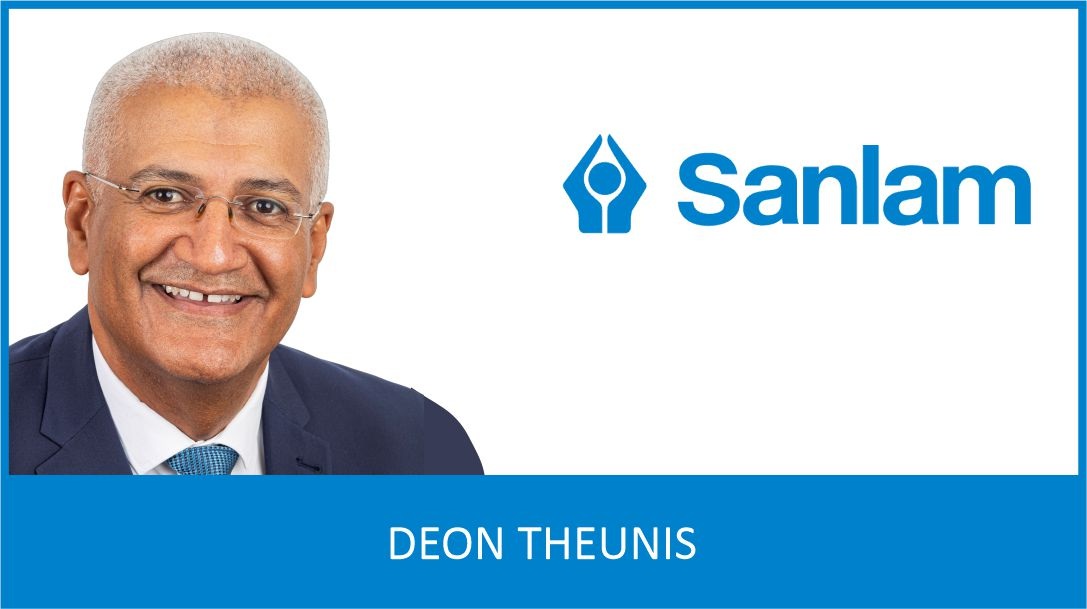
Deon Theunis, Head of Intermediary Support for Sanlam Risk & Savings
In Sanlam’s latest Financial Confidence Index, 78% of respondents reported having either a funeral policy or funds set aside to cover death costs. But while South Africans are covered for death, many have a blind spot when it comes to their insurance cover. What happens if you suffer a serious illness or a catastrophic medical emergency… and live?
“Clients are better prepared for death than for survival,” says Deon Theunis, Head of Intermediary Support for Sanlam Risk & Savings. He warns that inadequate living benefit cover is a growing risk as healthcare technology improves.
Theunis recently ran a poll of 144 financial advisers. Of these, 43.8% identified loss of income during recovery as the financial consequence of survival that clients most often overlook.
“The results reflected what we’re seeing in Sanlam’s claims data,” says Theunis. “Clients clearly understand the risk of death, and that’s what they prepare for. But survival is something that needs to be addressed.”
Living benefits are the insurance benefits that pay out if you survive a serious illness or disability: a disability lump sum, disability income and a severe illness benefit. Theunis points to a limited understanding of what these benefits do, and of how likely survival is. “Medical technologies have advanced to the point where people don’t necessarily die after a catastrophic illness nowadays,” he says. “You survive, but then what is your quality of life like?”
Loss of income is the biggest blind spot. “The financial impact of that is very much underestimated,” says Theunis. In his view, this is not because South Africans fail to appreciate the risk, but because many believe they are already covered. In the survey, 45.8% of advisers said clients assume that medical aid, group cover or employee benefits will protect them if they become seriously ill or disabled, while 39.6% said clients confuse living benefits with medical aid, gap cover or employee benefits.
“You need to understand what medical aid covers, what gap cover covers, and what employee benefits do,” says Theunis. “Then if you’re looking at insurance from a living benefit perspective, you need to know what each of your disability lump sum, disability income and severe illness benefits does. If you suffer a stroke, for example, your medical aid will cover you while you’re in hospital, but it won’t give you the same protection when you’re at home recovering.” Medical aid may fund some recovery costs, but it does not replace the income you lose while you can’t work.
Temporary income protection is designed for periods like these. It replaces a portion of your income while you recover, which keeps your financial commitments on track and your long-term plans intact while you focus on getting better.
“Recovery can take weeks or months, and the costs don’t pause while you heal,” says Theunis. “Having an income stream during that time gives you the space to follow your doctor’s advice and return to work when you are ready, not when you are forced to. With income protection, a period of illness or injury stays a temporary setback instead of becoming a long-term financial one.”
Income protection is one layer, and Severe Illness Cover is another. Severe illness cover pays a tax-free lump sum if you are diagnosed with one of the conditions the benefit covers. This sits alongside temporary income protection, not in place of it, Theunis explains. “The income benefit replaces your salary while you can’t work, and the lump sum can absorb the once-off costs that a serious diagnosis brings,” he says. Sanlam’s Comprehensive Severe Illness Benefit covers more than 300 critical health cases, including cancer, cardiovascular disease and serious illnesses such as motor neuron disease. Together, the two benefits protect both your income and your savings.
The consequences can be severe, both physically and financially, if adequate cover is not in place. “A serious illness or disability can affect your ability to work and earn an income, which could reduce your ability to service your debt,” Theunis warns. “You might then have to start tapping into your savings or your retirement capital, which puts further strain on yourself and your family – both now and in the future.” Access to retirement savings is restricted, although the two-pot system now allows limited withdrawals from the savings component.
Theunis would rather not frame this as a scare story. “Rather than fearmongering, I think we need to change the conversation,” he says. “Most clients take out death cover because they want to provide for their loved ones when they are no longer around. But think about it this way: if you’re alive and unable to earn an income, then you’re not providing for them either.”
The severity of the risk often only hits home when people face it. In the survey, 46.5% of advisers said their clients typically engage seriously with planning for illness, disability or income protection after seeing a friend or family member affected. “Many clients don’t engage before a trigger event… But then it’s almost too late,” says Theunis. Once someone has received a serious diagnosis, cover can be difficult or costly to obtain.
Most people understand why insurance matters. What is less understood is what they are actually covered for, and where the gaps are. “People will happily insure their depreciating car or their depreciating smartphone,” Theunis concludes. “But what about your life, which has more value than all those things combined? We tend to procrastinate on that, because we think we’re bulletproof. And we’re so worried about what happens when we die, that we don’t stop to ask: ‘What happens if I live?’”
ENDS