
































































Sanisha Packirisamy, Group Economist; & Tshiamo Masike, Economist; at Momentum Investments
Read Momentum Investments’ full note here.
Old Mutual
Rates may be on hold but Inflation is rising. It’s time to tighten our belts
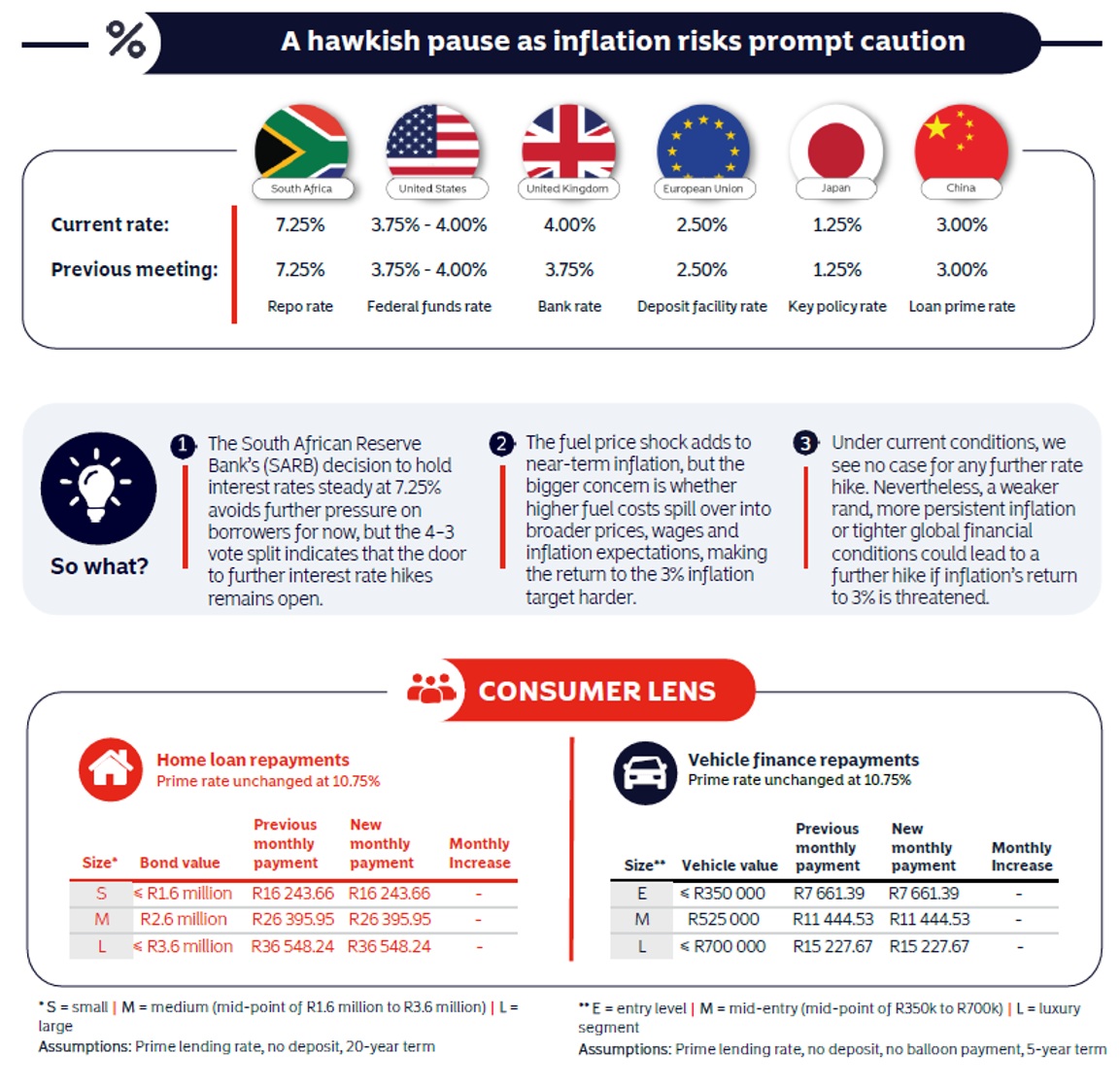
South Africans are facing a growing financial squeeze as inflationary pressures rise, with October’s inflation rate climbing to 5.2% from 4.5% in September. While the South African Reserve Bank (SARB) has kept interest rates unchanged at its latest Monetary Policy Committee meeting, following a 25-basis-point increase in September that took the repo rate to 7.25%, the latest inflation figures are a reminder that household budgets remain under pressure. For consumers already navigating rising living costs, this is a timely opportunity to take a closer look at their finances and prepare for continued financial pressure.
With the cost of everyday essentials putting pressure on disposable income, borrowing costs remain another layer of strain, particularly for households carrying debt such as home loans, vehicle finance and personal loans. Although interest rates have been kept unchanged, the cost of servicing debt remains higher following the September increase, leaving some consumers with less money to cover other expenses.
The challenge is that these pressures do not happen in isolation. When food, transport, electricity and other essentials become more expensive, households have less room to absorb additional costs. Higher debt repayments can make an already stretched budget even tighter.
This is therefore a good time for consumers to reassess their spending, revisit their budgets and identify where they can make adjustments. It may mean cutting back on non-essential purchases, being more deliberate about credit use, reviewing recurring expenses and prioritising the repayment of high-interest debt.
Consumers should also avoid making significant new financial commitments without first considering how borrowing costs could affect their monthly cash flow.
While households cannot control inflation or interest rate decisions, they can take practical steps to strengthen their financial resilience. The priority is to understand where the money is going, make informed spending decisions and ensure that the household budget has enough room to absorb unexpected increases in costs.
With inflation moving higher and borrowing costs remaining elevated, tightening our belts is no longer just good financial advice. It may be a necessary step towards protecting our financial wellbeing.
Frank Blackmore, Lead Economist at KPMG South Africa
The Monetary Policy Committee of the South African Reserve Bank today decided to keep interest rates unchanged at the current levels. The Governor highlighted that the inflation outlook had improved slightly. He also emphasised that households suffered from increasing costs, and as a baseline, the economy starts to recover from the second half of this year.
Petrol and diesel prices have eased slightly, although they remain elevated, and the exchange rate is relatively stable at a level where it approximately it started the year.
However, he did highlight that the risk factors remain skewed to the upside for inflation and to the downside for economic growth. As a consequence of this, they have decided, by a ratio of four committee members to two, to keep interest rates unchanged at current levels.
I think this will come as a relief to many South Africans, as it means that no further interest rate increases are expected for this year. We hope that those won’t be necessary come January, with inflation showing signs of easing between now and then.
Hayley Parry, Money Coach and Facilitator at 1Life’s Truth About Money
While the Reserve Bank’s decision to hold interest rates steady provides some welcome stability, it doesn’t necessarily translate into financial relief for South African households.
With inflation and the cost of everyday essentials continuing to put pressure on household budgets, an interest-rate hold simply means borrowing costs aren’t increasing further for now. It doesn’t mean consumers suddenly have more disposable income.
As we head into the festive season, there’s a real risk that consumers mistake stability for affordability. December spending can have consequences long after the celebrations are over, particularly when purchases are funded through credit.
My advice is to focus less on what the Reserve Bank might do next and more on what you can control today. Review your spending, prioritise expensive debt and plan ahead for January’s financial commitments.
Financial resilience isn’t built when economic conditions are perfect. It’s built through the everyday decisions we make, especially when money is tight. An interest-rate hold gives us stability, but it’s what we do with that stability that matters most.
ENDS