

































































Dr. Lerato Ntuli, Economist at Anchor Capital
South African (SA) consumers head into Black Friday under considerable financial strain. While there are pockets of resilience, rising living costs, higher interest rates, stagnant real income growth and a weak labour market continue to erode household spending power. As a result, consumers are likely to remain highly price-sensitive, with purchasing decisions increasingly shaped by discounts, promotions and value for money.
Income growth is offering little relief. Real personal disposable income grew by just 0.1% QoQ in 1Q26 and 0.2% QoQ in 2Q26, with much of the improvement attributable to investment income rather than labour earnings. Wage growth remains weak. The latest PayInc Net Salary Index, which tracks the average nominal net salary (take-home pay) of c. 2.1mn salary earners whose payments are processed through the National Payment System (NPS), showed that nominal net salaries were unchanged at R21,680 in October. In real terms, net salaries are 2.9% lower than a year ago and have declined by an average of 2.3% YTD.
The labour market remains a further constraint. The official unemployment rate rose to 33.7% in 3Q26, with total employment declining by 215,000 YoY and the number of unemployed people increasing by 571,000. Although formal-sector employment improved during the quarter, the broader employment picture remains weak, limiting the extent to which households can benefit from income growth.
At the same time, the cost of living has risen sharply. Headline inflation accelerated to 5.2% YoY in October from 4.5% in September, reaching its highest level since May 2024. The increase was driven primarily by transport inflation, which surged to 15.2% YoY as fuel prices climbed 42.9%. Core inflation also edged higher, reaching 4.2%. In response, the South African Reserve Bank (SARB) raised the repo rate twice this year, in May and September, before holding rates at 7.25% in November. Higher borrowing costs, alongside rising essential expenses, are leaving households with less room in their budgets for discretionary purchases.
Signs of mounting financial pressure are increasingly evident in credit data. The TransUnion SA Consumer Credit Index (CCI) fell to 49 in 2Q26, slipping below the neutral 50 level for the first time since 2024. Repayment behaviour continues to deteriorate, while greater utilisation of revolving credit facilities suggests that more households are relying on credit to meet everyday expenses rather than fund discretionary purchases. This points to growing pressure on household expenses and reduced capacity to take on additional spending.
Consumer confidence has stabilised but remains fragile. The FNB/Bureau of Economic Research (BER) Consumer Confidence Index improved to -13 in 3Q26 from -19 in 2Q26, driven largely by an improvement among lower-income households. However, confidence among higher-income consumers remains subdued. This is noteworthy given their greater sensitivity to interest rates and their importance as contributors to discretionary retail spending.
Retail activity reflects these pressures. Real retail sales increased by 1.5% QoQ in 3Q26, although much of the gain was concentrated in July, when sales rose 2.3% MoM. Momentum subsequently weakened, with retail sales declining for two consecutive months, including a 0.3% MoM contraction in September. Annual real growth also slowed to 2.4% from 3.2% previously.
Although nominal retail sales were 3.9% higher YoY, the implied increase in retail inflation of around 1.5% remained well below headline inflation. This suggests that the latest inflation shock has been concentrated in fuel and transport costs rather than on retail shelves. Nevertheless, higher transport expenses are absorbing an increasing share of household budgets, leaving consumers with less disposable income for discretionary spending.
There is, however, some near-term relief in sight. Temporary fuel levy reductions of R1.50/litre on petrol and R3.00/litre on diesel prevented a further increase in fuel costs in November, while lower international oil prices point to a meaningful petrol price reduction in December. This should provide modest support to consumer finances over the festive season.
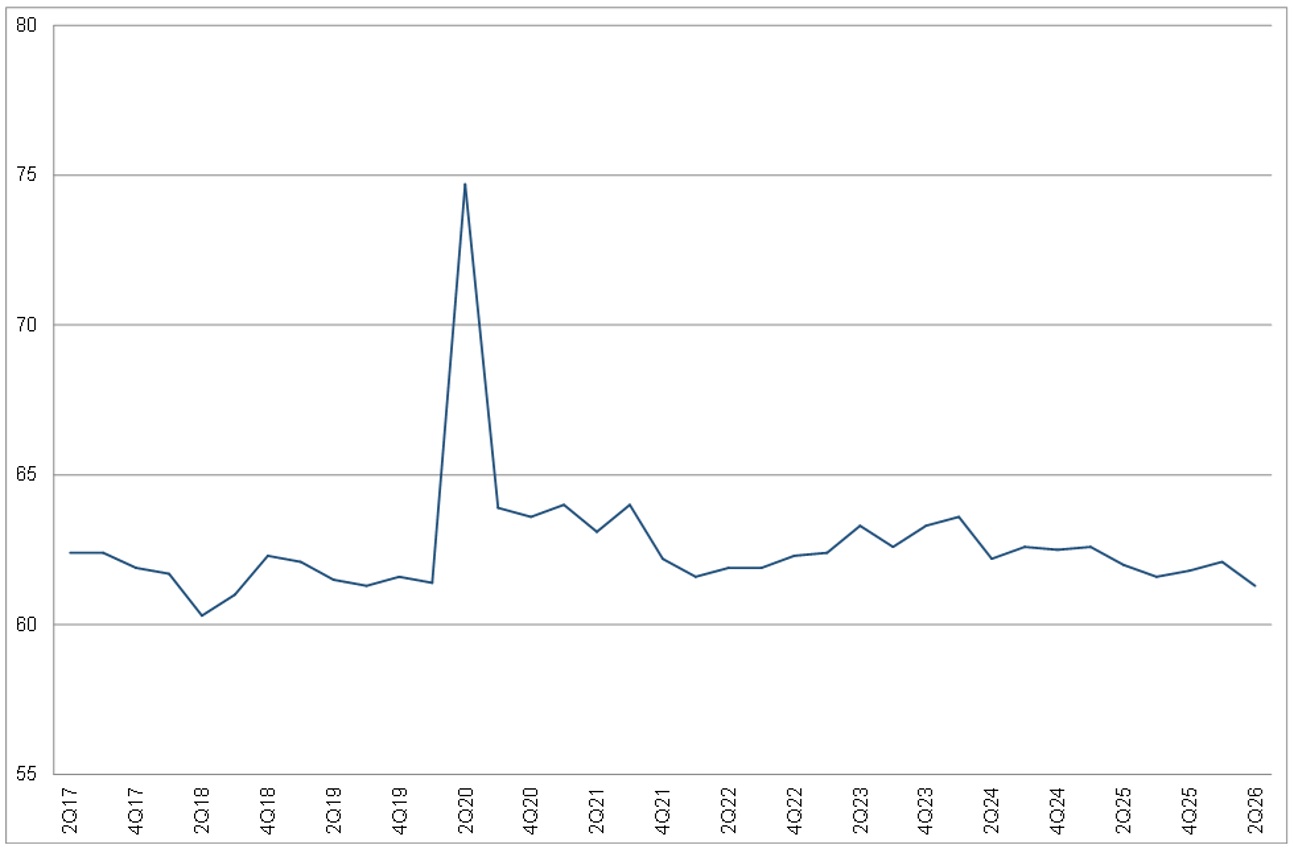
Figure 1: SA household debt as % of disposable income
Source: SARB, Anchor Capital
South African households have made some progress in repairing their balance sheets, with household debt declining to around 61% of disposable income from a peak of 75.2% during the COVID-19 pandemic lockdown period, when disposable incomes fell far more sharply than outstanding debt. However, household indebtedness remains elevated and continues to leave many consumers vulnerable to higher borrowing costs.
At the same time, pressured real incomes, persistently high unemployment, tighter credit conditions and subdued consumer confidence are weighing on household finances. While lower fuel prices may provide some short-term relief, consumers remain cautious and highly price-sensitive heading into Black Friday and the festive season. While targeted, value-driven promotions should capture selective demand, consumers remain heavily skewed toward essential goods, signalling continued headwinds for discretionary retail volumes.
ENDS