







































































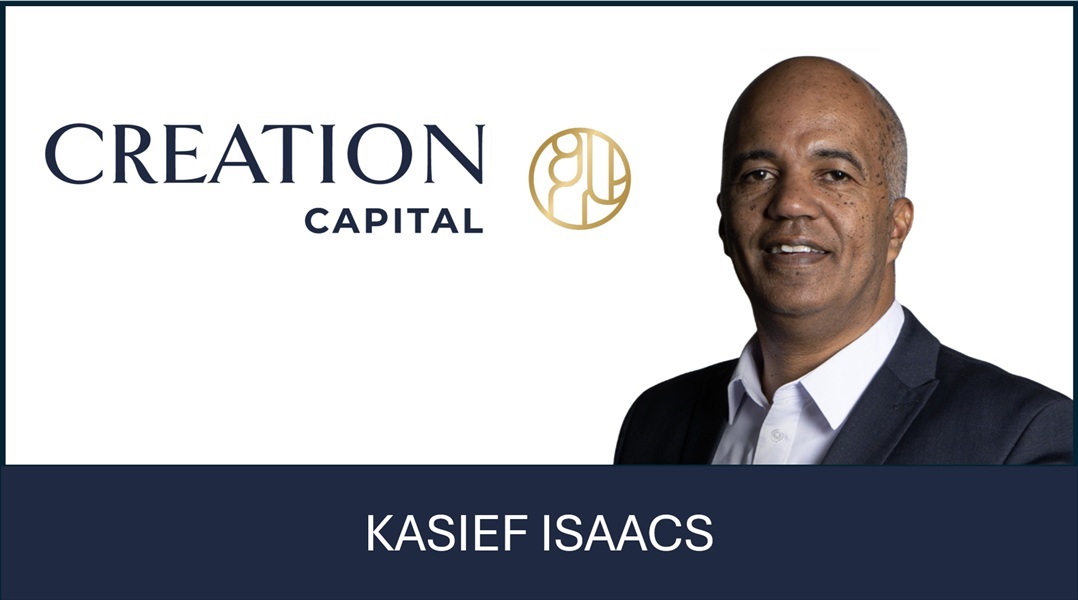
Kasief Isaacs, CEO of Creation Capital
The Financial Stability Board’s (FSB) May 2026 report on private credit vulnerabilities globally has added an authoritative voice to a debate that has been building for months. With a market estimated at between $1.5 and $2 trillion globally, the FSB’s findings of complex bank interlinkages, deteriorating borrower credit quality and valuation opacity are serious and warranted. But for South African investors, the more important question is not whether global private credit has problems; it is whether those problems are our problems.
Global scrutiny: why the debate matters
The FSB’s concern is largely a US and, to a lesser extent, a European story. In early 2026, pressure emerged in parts of the US private credit market where funds have substantial exposure to leveraged technology and software borrowers, including SaaS companies that faced weaker revenue growth in the face of changing business models. This led to heightened investor concern and, in some cases, redemption pressure at funds with concentrated exposure to the sector. In addition, the global private credit market has grown rapidly and, as the FSB notes, remains largely untested through a prolonged economic downturn. The key reminder is simple: private credit should never be assessed on yield alone.
South Africa is a different market
Direct comparisons between South Africa and the US are tenuous at best. Domestic private credit is far smaller and, generally, more conservatively structured. Local funds do not typically employ the aggressive leverage or the perpetual-life vehicles that are under pressure in the US. South African managers are largely invested in plain-vanilla corporate credit, SMEs and infrastructure, without the same concentration in leveraged technology borrowers now under scrutiny in the US. Furthermore, South Africa is unlikely to experience direct contagion from stress in US private credit. Any impact would be indirect, through currency volatility, investor risk appetite or higher funding costs, rather than through a direct deterioration in local debt quality.
The real local issue: rates and the prime-linked dynamic
The more immediate challenge domestically is the pressure of rising input costs as the impact of higher fuel costs starts filtering into the economy, coupled with the SARB’s MPC raising interest rates by 0.25% on Thursday, striking a balance between demonstrating a willingness to defend the inflation target of 3% or hold interest rates to protect a struggling economy. (Inflation hit a 20-month high of 4% in April, and the SARB held at 6.75% in March specifically because of upside inflation risks from elevated fuel costs.)
This matters directly for private credit investment managers and their investors, whose lending rates are generally prime-linked. Prime-linked lending is a double-edged sword: when rates rise, borrowers face higher debt-service costs, but investors receive higher returns. When rates fall, borrowers get relief, but investor returns compress. So, a 25 -basis-point hike from the MPC will push prime to 10.50%, simultaneously increasing the cost burden on borrowers while lifting returns for investors.
Higher interest rates can lift returns for private credit investors, but only if borrowers can afford the higher repayments. If rising interest costs significantly weaken borrowers’ ability to service debt, the extra yield may simply be masking growing credit risk. This is why assessing cash-flow strength, debt-service cover and strong covenant protection upfront are crucial to disciplined risk assessment and management.
How disciplined managers navigate the cycle
A higher-rate environment does not make private credit a bad asset class. It makes undisciplined private credit a bad investment. Investment managers that stress-test their borrowers’ ability to service their loans at rates above current levels are generally better positioned than those that chase deal volume during the low-rate years. So are those that insist on covenant protection and price for risk, rather than competing on yield alone. For best-practice managers, these disciplines should be deeply embedded in the credit process; multiple stress scenarios should be run to assess changes in revenues, operating costs, and interest expenses upfront before advancing a loan. The same discipline should apply when assessing the appropriate covenants and security package.
Portfolio construction forms the second dimension of managing a robust private credit portfolio. Leading managers assess risk at portfolio level as robustly as they do at specific asset / loan level. Loans with different risk and return profiles will require different levels of post-investment support and will affect overall fund performance in different ways. A disciplined manager carefully calibrates the balance of assets with higher and lower risk and return profiles to construct a robust portfolio that can weather different interest rate environments.
At this point in the cycle, the tools that separate disciplined managers from the weaker ones are active monitoring, early identification of potential stress, and frequent engagement with management teams to assess the real-world impacts of increasing fuel prices, increasing inflation and now rising interest rates.
Private credit remains relevant, but discipline is what matters now
Borrowers in South Africa, especially the SME and underbanked middle-market still need flexible, relationship-driven capital. SMEs employ an estimated 60% of South Africa’s workforce and contribute around 34% to our GDP. Investors still need differentiated sources of return. Private credit addresses both, but the environment has shifted. The rate cycle, global scrutiny and tightening borrower conditions are a reminder that the asset class rewards managers who have never strayed from first principles: know your borrower, price for risk, structure for protection, and monitor actively. The next phase will not reward growth at all costs. It will reward discipline.
Ed’s note: For more on private markets, watch EBnet’s podcast series, Inside Private Markets, here.
ENDS