



































































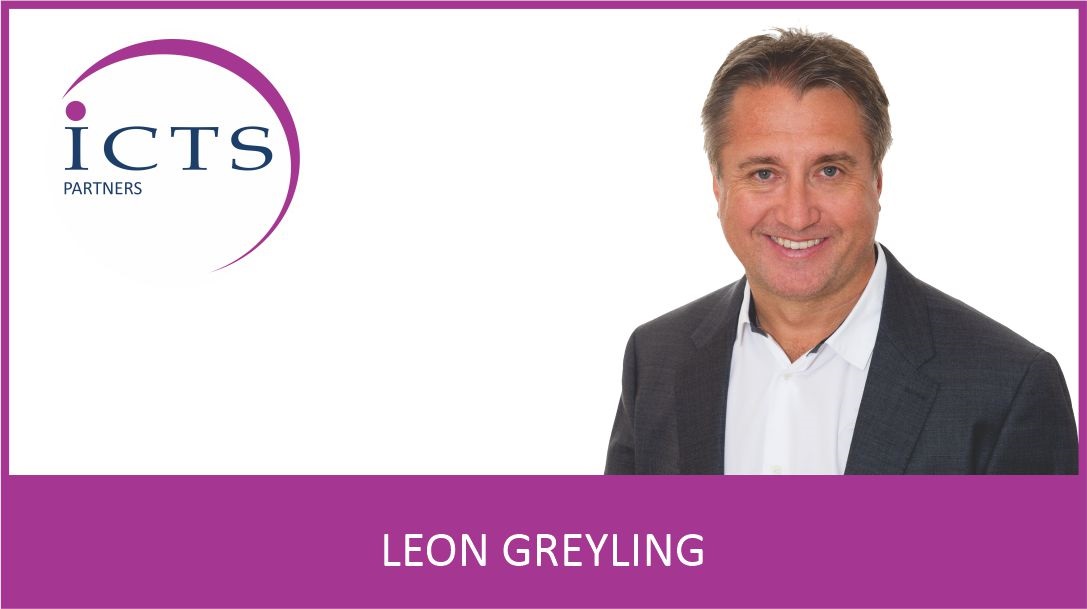
Leon Greyling, COO of ICTS Partners
Allocating to private markets requires a fundamentally different due diligence mindset than selecting traditional public-market managers. Public equities offer daily liquidity, transparent pricing, regulatory filings and readily available benchmarks. Private markets, by contrast, involve multi-year lock-ups, information asymmetry, illiquidity and performance that hinges almost entirely on the General Partner’s (GP) ability to source proprietary deals, create value operationally and exit at the right time. For South African pension funds and institutional investors, the stakes are high: capital committed today may not return for a decade or more, and the difference between a top-quartile and bottom-quartile manager can run to hundreds of basis points in net IRR.
This is why a robust GP due diligence process must be exhaustive. We utilise a proprietary, comprehensive General Partner Due Diligence Questionnaire – a 19-page document spanning seven major sections and well over 100 targeted questions. It goes far beyond marketing presentations to probe the realities of the business, the people, the process and the alignment of interests.
Section 1 (General) alone contains more than 30 questions on corporate history, shareholding structure, profitability ratios (gross margin, EBIT margin, ROE, interest coverage), liquidity, debt service, personal guarantees, outsourcing arrangements, culture and competitive edge. It also examines fundraising plans, co-investment policies, target fund size, pro-forma budgets across fund lives, historical J-curve illustrations and detailed performance metrics – net and gross IRR – plus granular analysis of every exited deal (change in multiple, EBITDA, debt and investment value at exit) and, crucially, examples of investments that delivered a TVPI (Total Value to Paid-In Capital) below 1.0x, what went wrong, lessons learned and when outside experts were brought in.
Section 2 (Investment Strategy and Process) drills even deeper with questions on leverage tolerance, diversification by geography and sector, control versus minority preferences, hostile transactions, covenant breaches, risk factors and mitigation, management incentives at portfolio companies, and the specific methods used to create value (restructuring, operational improvements, multiple expansion). It asks for case studies. It probes the robustness of proprietary deal flow, screening checklists, investment committee composition, valuation discipline versus relevant guidelines, and any deviations from GIPS in marketing materials. ESG receives dedicated treatment (CRISA commitment, UNPRI status, designated ESG professionals, exclusion examples and how material ESG risks are identified and managed).
Sections 3–6 turn the lens on people and alignment. They examine team bios and shared work history, key-person policies and past events, carry allocation and vesting, GP commitment financing, clawback history, management-fee calculation, transaction and monitoring-fee splits, and succession planning. Governance questions cover conflicts of interest, valuation controls, personal-account dealing, material non-public information handling, insurance coverage, fraud and negligence prevention, capital-movement procedures, and disaster-recovery plans. B-BBEE ownership, employment equity, skills development and socio-economic contributions are examined in detail – essential context for South African investors.
The final sections address monitoring, reporting templates and ILPA (Institutional Limited Partners Association) best-practice compliance.
Now here’s the catch
Even the most thorough questionnaire, however, is only as good as the experience brought to bear when reviewing the answers. Seasoned practitioners learn to read between the lines. Vague or generic responses to questions about underperforming investments or past key-person events often signal deeper issues. Overly optimistic pro-forma budgets or J-curve projections without supporting evidence, reluctance to provide granular exited-deal data, or inconsistencies between team bios and actual track record are red flags. Conversely, GPs who provide balanced, data-rich answers – openly discussing what did not work and how processes were improved – demonstrate the intellectual honesty and operational maturity that correlate with long-term outperformance.
Because of this complexity, investors increasingly seek truly independent second opinions. We are regularly asked by pension funds, boards, investment consultants and CIOs to review opportunities from a purely objective standpoint – unencumbered by existing relationships or placement-agent dynamics. This independent lens helps trustees fulfil their fiduciary duty by stress-testing assumptions, identifying hidden risks and confirming whether the GP’s story holds up under rigorous scrutiny.
Private markets will continue to grow as South African retirement funds seek diversification and higher long-term returns. The managers who succeed will be those prepared to subject themselves to searching examination. A well-designed, experience-informed due diligence process – exemplified by comprehensive discussion, led by rigorous questioning and a transparent approach, remains the single most effective way to separate genuine opportunity from costly illusion.
ENDS