































































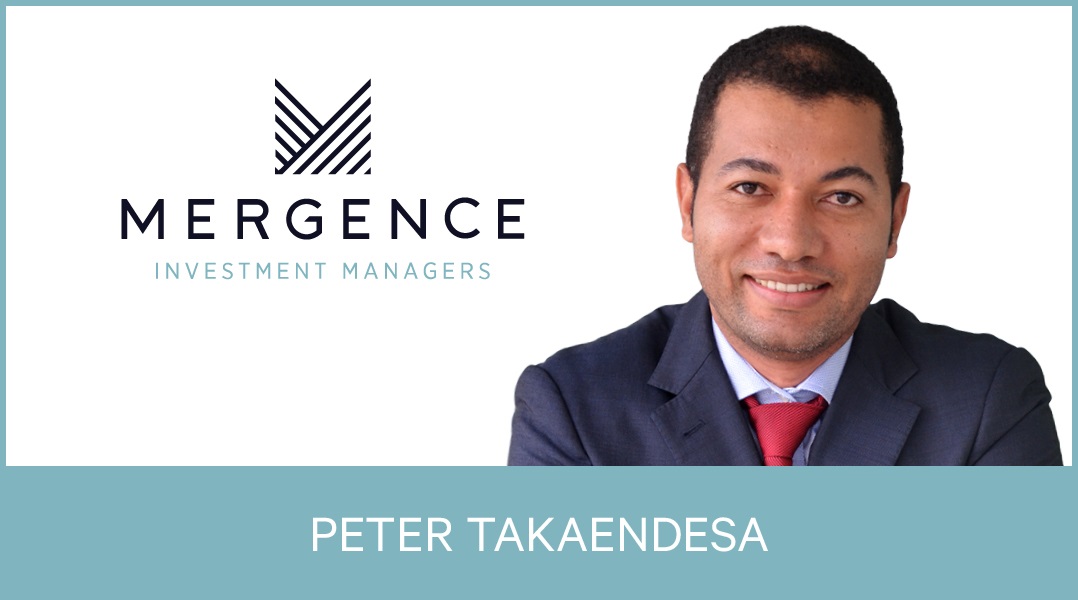
Peter Takaendesa, Chief Investment Officer at Mergence Investment Managers
The resources trade has reshaped market leadership
One of the defining features of equity markets over the past 18 months has been the dominance of the resources sector in driving index performance. During 2025, the JSE’s resources complex materially outperformed the broader market, with resources-related returns well ahead of the SWIX benchmark.
This created a challenging environment for investors applying traditional quality, valuation and ESG disciplines, as a significant share of market performance was concentrated in a narrow group of commodity-linked shares. Gold counters together with other mining companies materially outperformed broader industrial and financial shares, reinforcing index concentration and rewarding commodity exposure over more diversified stock selection. Many higher-quality defensive non-resources businesses struggled to keep pace despite relatively stable fundamentals and attractive absolute returns during the year.
The rally also illustrated the extent to which macroeconomic and geopolitical forces have outweighed company-specific fundamentals in the short term. In this phase of the cycle, commodity exposure has been a more important determinant of relative performance than earnings quality or valuation discipline alone.
Gold had broken its traditional relationship with interest rates until recently
A major driver behind the strength of the resources trade has been the extraordinary performance of gold shares. Sustained central-bank buying, structurally strong investment demand and elevated geopolitical risk have all contributed to a looser relationship between gold and the traditional pattern associated with higher real interest rates.
Historically, rising real interest rates would normally place pressure on gold prices because investors can earn stronger real returns from fixed-income assets. But this cycle had turned out differently until the US-Iran war started to disrupt some of those dynamics. Central banks had continued to add to gold reserves at historically elevated levels, helping to support demand even while real rates remained relatively high.
The implication was that gold increasingly functioned as a geopolitical hedge rather than simply an inflation or interest-rate trade. We have started to see some central banks selling gold into the market post the Iran war and price-following retail investors also selling gold ETFs into gold price weakness recently. While some of the structural reasons for gold demand such as high government debt levels and reserve diversification are likely to remain in place, what is clear is that gold is no longer a one-way bet.
China’s weakness hurt non-gold resources
While gold shares performed strongly, the industrial metals resources complex had continued to face headwinds from subdued Chinese domestic demand and a still-fragile property sector for most of 2025 and only started to play catch up this year mainly driven by copper.
China has historically been the main engine of global commodity demand, particularly for industrial metals, bulk commodities and platinum group metals. However, slower economic growth, continued property sector weakness and softer industrial demand reduced support for many mining shares during the year.
This created greater differentiation within the RESI sector itself. Relatively higher-quality dual-listed diversified miners such as BHP and Anglo American were viewed less favourably in favour of lower-quality or purely cyclical precious metals producers. This was another challenge for investment processes that favour structural quality and through the cycle valuation measures.
Copper has been growing in importance, reflecting structural themes linked to electrification, renewable energy infrastructure and AI-related power demand, which continue supporting the longer-term investment case for selected diversified miners.
AI enthusiasm is being tested by profitability concerns
Artificial intelligence remains one of the dominant global equity themes in 2026, but the market narrative has become far more selective as investors scrutinise capital expenditure, monetisation and the pace at which earnings can justify the scale of infrastructure spending.
In the United States, investor sentiment has become more discerning as the largest technology companies continue to commit vast sums to AI infrastructure. Some platforms are still being rewarded for execution and revenue momentum, while others are facing tougher questions about margins, returns and the timing of payback. Within emerging markets indices, South Korean and Taiwanese technology shares have dominated fund flows, supported by the hardware and semiconductor parts of the AI value chain.
Chinese large technology stocks, by contrast, have remained more uneven, including Naspers and Prosus through their exposure to Tencent. Even so, the longer-term investment case for Tencent still rests on the breadth of its digital ecosystem, spanning gaming, fintech, advertising and a wide base of consumer internet services.
The broader AI theme is therefore evolving from enthusiasm around infrastructure spending into a more mature assessment of monetisation, platform strength and earnings durability. Markets are increasingly distinguishing between businesses with scalable AI-related earnings potential and those benefiting primarily from short-term market enthusiasm.
Geopolitics has complicated the interest rate outlook
At the start of the year, investors broadly expected central banks to continue easing as inflation moderated. That outlook has become less straightforward as geopolitical tensions and energy-price volatility have complicated the disinflation story and forced policymakers to reassess how quickly rates can fall.
Higher oil and energy prices feed quickly into transport, manufacturing and consumer inflation, making it harder for central banks to cut rates aggressively even where economic growth remains uneven.
This environment has increased investor preference for high-quality companies that are better able to navigate inflationary and geopolitical shocks. Businesses with pricing power, resilient margins and strong balance sheets are increasingly viewed as better positioned in a higher-for-longer rate environment.
For equity investors, the practical implication is that macroeconomic volatility and geopolitical risk are once again becoming key drivers of sectoral and stock-specific return outcomes.
South Africa and emerging markets could still benefit from a softer dollar
Despite the geopolitical backdrop, a softer US dollar and firmer terms of trade could still prove supportive for South Africa and other emerging markets once energy-market volatility begins to ease.
Before the latest bout of geopolitical volatility, South African assets had benefited from improving terms of trade, particularly stronger metals prices relative to energy costs. More recently, the inflation picture has become more nuanced: while headline CPI accelerated to 4.5% in May on higher fuel costs, food inflation continued to ease. That may give the South African Reserve Bank some scope to pause, but policymakers are still likely to remain cautious given persistent energy risks and the potential for broader second-round inflation effects.
South African equities are still meaningfully higher than they were a year ago, even after a more volatile first half of 2026. However, the recovery remains highly dependent on global macro conditions, commodity prices and currency movements.
A weaker US dollar over the mid term would likely support emerging-market currencies, commodity prices and capital inflows into markets such as South Africa. In that environment, companies with pricing power and globally diversified earnings streams could continue outperforming even if both the South African and global growth outlook remain benign.
For pension fund trustees and long-term asset allocators, the central consideration is that this remains a market in which strategic discipline matters as much as market direction. Macro forces continue to shape return outcomes in powerful ways, but dispersion beneath the index is also creating opportunities for active managers able to balance valuation, quality and thematic exposure within a robust risk framework. In that context, portfolio resilience, selectivity and a clear understanding of underlying earnings drivers remain essential.
Ed’s note: Check out Mergence’s latest Impact Report by clicking on their ad 👉
ENDS