


































































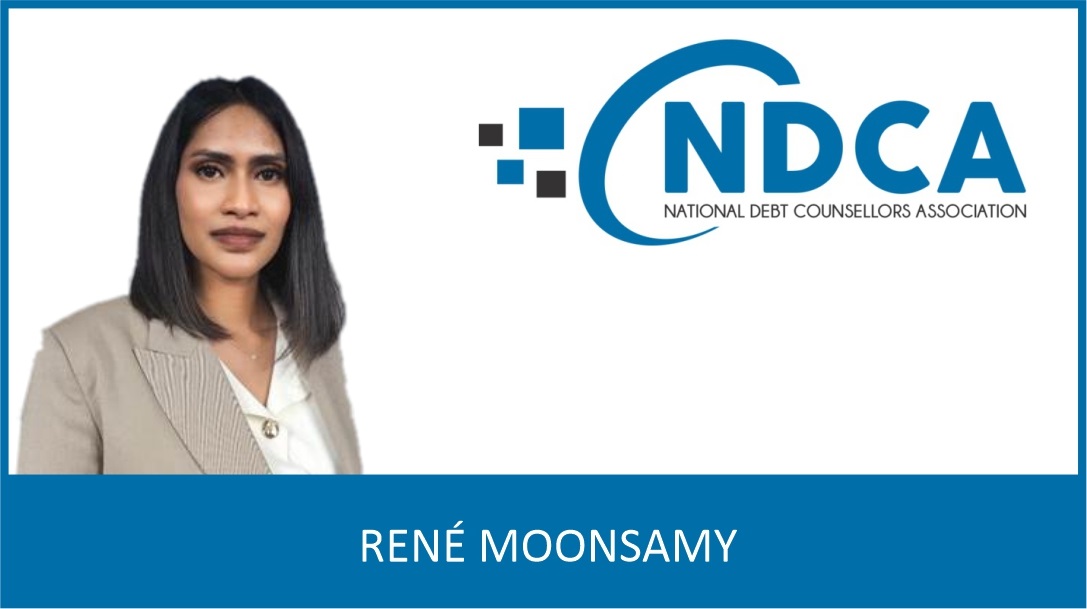
René Moonsamy, Director at the National Debt Counsellors
The National Debt Counsellors (NDC) is calling on South African households to use the start of spring to conduct a full review of their finances and credit agreements, while there is still time to adjust before the festive season. Three months remain before December, which is roughly how long a deliberate financial adjustment takes to show up in a bank balance.
The pressure on household budgets has increased over the course of the year. In May, the South African Reserve Bank raised the policy rate for the first time in three years, taking the prime lending rate to 10.5%, with fuel and food costs among the pressures driving inflation higher. The National Credit Regulator’s latest Credit Bureau Monitor, covering the quarter ended June 2025, records 10.54 million of South Africa’s 29.24 million credit-active consumers as carrying impaired credit records – more than a third of everyone in the country holding a credit agreement. Against that backdrop, the NDC says a financial spring clean is less about dramatic cuts and rather about visibility in seeing the full picture of what a household owes, what it costs and what it can genuinely afford.
“When people ask me where to start, I suggest just three things. Reconcile, adjust and plan,” says René Moonsamy, Director at the National Debt Counsellors. “The objective is to know exactly where your money is going, make deliberate adjustments, and then plan for what is coming next.”
Moonsamy sets out three clear steps South African households can take this spring:
- Reconcile every financial commitment. This means recurring expenses, insurance, savings, assets and every credit agreement, including the outstanding balances, interest rates, instalments and other credit costs. A proper debt audit looks at more than the monthly instalment – it considers the outstanding balance, the interest rate, the remaining term, the repayment, whether the account is up to date, and what that debt is costing overall.
- Adjust the budget. Identify where expenses can realistically be reduced and where money can be redirected towards debt or savings. Recurring costs are the easiest to overlook. Things like streaming services, app subscriptions, gym memberships, bank charges, insurance products and data costs accumulate quietly. So does repeated discretionary spending on takeaways, convenience purchases and online shopping.
- Plan ahead. Build a realistic budget for the next 12 months rather than only the month immediately ahead. This allows a household to anticipate annual expenses, seasonal spending and the periods when household costs are likely to increase.
As part of the first step, Moonsamy recommends obtaining a credit report from a credit bureau and comparing it against household records, which can help identify forgotten accounts, incorrect information or debts a consumer has lost track of.
“Most importantly, compare your total monthly debt commitments with what you can genuinely afford after essential household expenses,” she says. “A debt audit is useful because it moves the conversation from ‘I think I am coping’ to knowing exactly where you stand financially.”
On where to direct any money the exercise frees up, Moonsamy cautions against a single formula. Consumers should first ensure that important contractual commitments are maintained, and avoid allowing accounts to fall into arrears simply because they are directing all available money towards one particular debt. Beyond that, high-interest and expensive short-term debt is often sensible to target first because it costs more to carry over time, however the consequences of missing a payment matter as much as the cost, particularly where a home or vehicle may be at risk.
Moonsamy also points to how households buy certain essentials saying, “Repeatedly buying prepaid airtime or data each week may ultimately cost more than an appropriate month-to-month package. The same principle applies across many household expenses where small, frequent purchases can sometimes be more expensive than a properly planned monthly option.”
She adds that consumers should not delay seeking help out of embarrassment. “People sometimes view debt counselling as a sign that they have failed financially, when in reality debt problems can arise from rising living costs, changes in income, unexpected household expenses, or commitments that were affordable at one point and are no longer,” says Moonsamy. “Debt counselling is a formal process under the National Credit Act, designed to assist qualifying over-indebted consumers by restructuring their debt repayments into a more affordable arrangement. The earlier financial difficulty is addressed, the more opportunity there is to consider the available options before the situation deteriorates further.”
The National Debt Counsellors offers credit and debt guidance to South Africans at all stages of their financial journey. For more information, visit nationaldebtcounsellors.co.za.
ENDS