




























































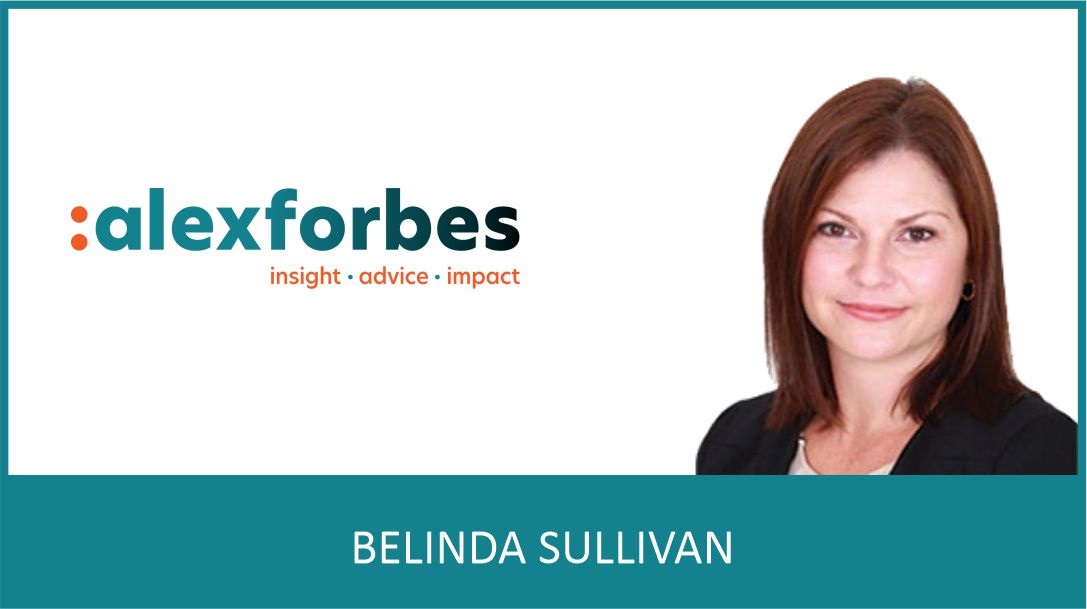
Belinda Sullivan, Head Corporate Consulting Strategy at Alexforbes
South Africa has retained its C grade in the 2026 Marsh CFA Institute Global Pension Index, although its overall score declined slightly from 51.0 to 50.4. It ranks 51st among the 55 retirement income systems assessed.
The index assesses retirement income systems according to adequacy, sustainability and integrity. Integrity remains South Africa’s strongest area, reflecting the governance, regulation, member protection and communication within the retirement sector. Adequacy and sustainability remain the main areas for improvement.
Belinda Sullivan, head of corporate consulting strategy at Alexforbes, said, ‘The priority is not simply to improve South Africa’s ranking, it is to help more people build savings and turn those savings into an income that lasts. Broader coverage, consistent contributions and better support for retirement decisions are essential to improving outcomes for more South Africans.’
Small decline and unchanged challenges
South Africa recorded modest reductions across all three measures.
- Adequacy declined from 38.0 to 37.3
- Sustainability declined from 48.2 to 47.8
- Integrity declined from 75.7 to 75.0 but retained a B+ grade
The report attributes the overall decline to minor reductions across the three sub-indices, which need to be seen in the context of updated data and changes to the Index. It continues to recognise South Africa’s level of pension assets relative to gross domestic product and the strength of its regulatory and governance framework.
The Netherlands leads the global results with a score of 85.8, followed by Denmark and Iceland. Singapore, Israel and Australia complete the group of six systems receiving an A grade. South Africa’s score of 50.4 remains below the 2026 average of 65.3.
Measuring income throughout retirement
The 2026 index places greater emphasis on whether retirement income remains adequate as people grow older. Its net pension replacement rate measure now considers income at retirement and at age 80. Previous editions considered income only at the point of retirement.
The integrity assessment also introduces a measure of pension-plan mobile-app availability and places greater weight on cybersecurity guidance and data-breach reporting. Certain defined-benefit funding measures receive less emphasis.
The overall index weightings remain unchanged.
- 40% for adequacy
- 35% for sustainability
- 25% for integrity
These changes should be considered when interpreting movements in annual scores. The report does not isolate the contribution of individual methodology changes to South Africa’s decline. The result should therefore not be regarded as evidence that a particular retirement reform has failed.
South Africa has a mature and well-established private retirement sector, but many people remain outside formal employment and employer-sponsored retirement arrangements. They therefore have limited access to structured retirement saving. The means-tested older persons grant provides an important public safety net. However, South Africa does not have a broad contributory public pension system to complement private retirement savings.
Many higher-performing systems combine public pensions with broad occupational or mandatory retirement saving. The comparison therefore considers the reach and design of the retirement income system as a whole, not only the maturity of private retirement funds.
Preservation is one part of the solution
The report continues to recognise South Africa’s two-pot retirement system as a reform designed to improve preservation and harmonise retirement benefits. The retirement component supports long-term saving, while the savings component allows limited access during employment. The findings also reinforce the need to extend retirement provision to more people.
The report identifies five priorities for South Africa.
- broader occupational pension coverage
- minimum mandatory retirement contributions
- stronger support for the poorest older people
- higher household savings
- increased workforce participation at older ages
African representation expands
Kenya joined the index for the first time in 2026, increasing African representation to four retirement income systems. Namibia scored 57.5, Botswana 57.0 and Kenya 53.1. All four African systems, including South Africa, received a C grade.
Alexforbes teams in South Africa, Namibia and Botswana, together with its partner Octagon in Kenya, support the participation of the four African retirement income systems in the index.
New name and continuing purpose
Previously known as the Mercer CFA Institute Global Pension Index, the report is now called the Marsh CFA Institute Global Pension Index. The new name reflects the transition to the unified Marsh brand, while the index continues to provide an independent benchmark of the strengths, gaps and opportunities for reform within retirement income systems.
The 18th edition is published by Marsh in collaboration with CFA Institute and the Monash Centre for Financial Studies. It assesses 55 retirement income systems covering approximately 66% of the world’s population.
The full 2026 Marsh CFA Institute Global Pension Index is available here.
ENDS