



































































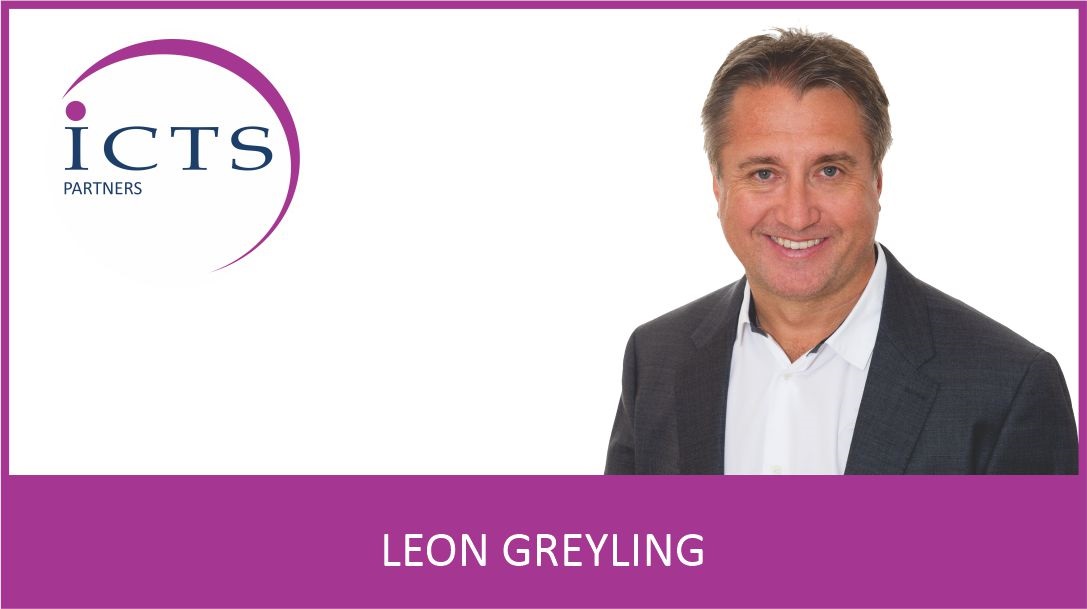
Leon Greyling, Partner at ICTS Partners
The August 2026 report Responsible Investment in South Africa: Realities, Gaps and the Road Ahead, commissioned by the Principles for Responsible Investment (PRI) and produced by Krutham, delivers a clear-eyed diagnosis of the state of responsible investment (RI) among the country’s asset owners. Nearly R5 trillion in pension assets sit at the centre of the story. The headline is encouraging: 91 percent of respondents describe their organisations as responsible investors. Most have formal RI policies and have written ESG language into manager mandates. Regulation 28 already requires boards to consider factors that may materially affect the sustainable long-term performance of assets, including ESG factors. CRISA 2 and PRI principles supply additional frameworks.
Yet the same survey reveals a stubborn implementation gap. Forty-three percent of respondents have no independent mechanism for evaluating whether managers deliver on ESG criteria. Only 35 percent require climate risk reporting. Fifty-eight percent report no ESG metrics to beneficiaries. Dedicated ESG or sustainability roles are rare. Mid-market funds, which dominate the sample by number, operate with limited internal capacity and heavy reliance on consultants whose expertise varies widely. Developmental orientation exists – 66 percent of funds report some form of it – but only 20 percent hold an explicit development mandate. Terminology itself creates friction; “ESG” carries baggage in some boardrooms that the underlying concepts of long-term risk management and systemic resilience do not.
The report’s recommendations are sensible and well-targeted. It urges the FSCA and National Treasury to set proportionate minimum ESG governance standards and accelerate the Green Finance Taxonomy. Industry associations such as Batseta, ASISA and IRFA are called on to develop a shared South African terminology framework and structured peer-learning programmes. Asset owners are advised to define ESG for their own portfolios rather than outsource the definition, strengthen independent verification in mandates, invest in board competency, and shift beneficiary reporting from compliance to genuine engagement. The PRI is encouraged to supply more localised operational guidance and longitudinal tracking.
These are necessary design interventions. Shared definitions, clearer floors and better tools will reduce the cost of competence for smaller and mid-sized funds. They will not, however, be sufficient on their own. What mid-market boards and Principal Officers still lack is a set of concrete, executable examples that translate high-level principles into day-to-day practice. Without them, the gap between stated intent and verifiable delivery will persist. Progress starts with a clear understanding of what ESG actually means in the South African context, then moves to specific operational habits.
First, every fund must learn what ESG is about in practical terms. ESG is not a political overlay or a soft constraint on returns. It is the systematic consideration of environmental, social and governance factors that can materially affect long-term portfolio performance and the economic environment in which beneficiaries will retire. In South Africa that means energy transition risks and opportunities, transformation and B-BBEE credentials, state-owned enterprise governance, water and logistics infrastructure shortfalls, inequality-driven political risk, and the just transition for coal-dependent communities. Boards that treat these as abstract or purely reputational issues will continue to under-invest in oversight. Boards that treat them as financially material will allocate time and resources accordingly. Training that grounds ESG in South African materiality – rather than imported frameworks alone – is the necessary starting point. The ICTS Academy has just launched an ESG course for trustees, POs and their advisors that focuses on more than the theory, but the practical application too.
Once that foundation is in place, funds can adopt a deliberate pro-South Africa asset allocation. Domestic capital markets and the real economy are not separate from beneficiary outcomes. A bias toward listed and unlisted South African assets, within prudent diversification limits, aligns fiduciary duty with the long-term health of the economy on which retirement security depends. This is not nationalism; it is recognition that systemic risks in the local economy cannot be fully hedged by offshore exposure.
Linked to that allocation is the adoption of an explicit development or impact mandate by every fund. The survey shows most already carry some developmental orientation, yet few have translated it into measurable targets. An explicit mandate does not require sacrificing risk-adjusted returns. It requires boards to identify investable opportunities – renewable energy, water infrastructure, logistics, social housing, SME financing – that simultaneously generate commercial returns and address national bottlenecks. Renewable energy has already proved the model works when deal structures, governance and catalytic capital are present. Extending that discipline to other asset classes is the next step.
Greater consideration of private markets and infrastructure follows logically. Listed markets alone cannot absorb the scale of capital needed for the energy transition, water security or productive infrastructure. Private markets offer longer-duration assets that match pension liabilities, provided due-diligence standards, transparent governance and credible intermediaries are in place. Mid-market funds need access vehicles that reduce the fixed cost of diligence and complex legal arrangements; larger funds and development finance institutions can play catalytic roles by anchoring early commitments and sharing frameworks.
Manager selection and oversight must move beyond generic ESG language. Funds should embed specific ESG-related questions into every request for proposal and ongoing review. Examples include: How is climate risk integrated into valuation models for South African assets? What evidence exists of engagement with portfolio companies on transformation and just transition? How is proxy voting aligned with the fund’s stated priorities rather than a manager’s default house policy? Self-reporting remains useful but insufficient; independent data sources and structured evaluation processes close the accountability loop that currently leaves 43 percent of funds without verification.
Once capital is allocated, monitoring and reporting on a small set of key impact metrics becomes essential. Climate metrics, transformation indicators, infrastructure deployment figures and stewardship outcomes should appear in board packs and, in plain language, in beneficiary communications. The current 58 percent of funds that report nothing to members forfeit an opportunity to build understanding and legitimacy. Metrics need not be exhaustive; they must be decision-useful and consistently tracked.
Finally, funds must monitor and actively influence proxy voting. Active ownership is already one of the more common RI activities reported, yet much of it is delegated without sufficient scrutiny. Boards should receive voting records, understand the rationale behind significant votes, and instruct managers where the fund’s priorities diverge from the manager’s default position. This is one of the lowest-cost ways to exercise ownership rights and reinforce accountability.
None of these steps requires perfect data, unlimited budgets or new regulation. They require boards to treat responsible investment as an operational discipline rather than a policy statement. The PRI report correctly identifies the structural gaps and proposes system-level solutions. Those solutions will have greater impact if accompanied by practical playbooks that mid-market funds can adopt immediately. I recently assisted two entities in defining their responsible investing playbook. What started out as a monologue, soon evolved into a fruitful and passionate debate. Why? Because it’s all human factors, that influence us all in one way or another daily. Learning what ESG means in the South African context is the first step. Pro-South Africa allocation, explicit development mandates, private-market engagement, rigorous manager questioning, impact metric reporting and active proxy oversight are the concrete practices that turn intent into outcomes. The capital and the commitment already exist. Execution is now the test.
Ed’s note: You can catch the full Responsible Investment in South Africa: Realities, Gaps and the Road Ahead, commissioned by the Principles for Responsible Investment (PRI) and produced by Krutham, on EBnet’s Publications Podium here.
ENDS