





















































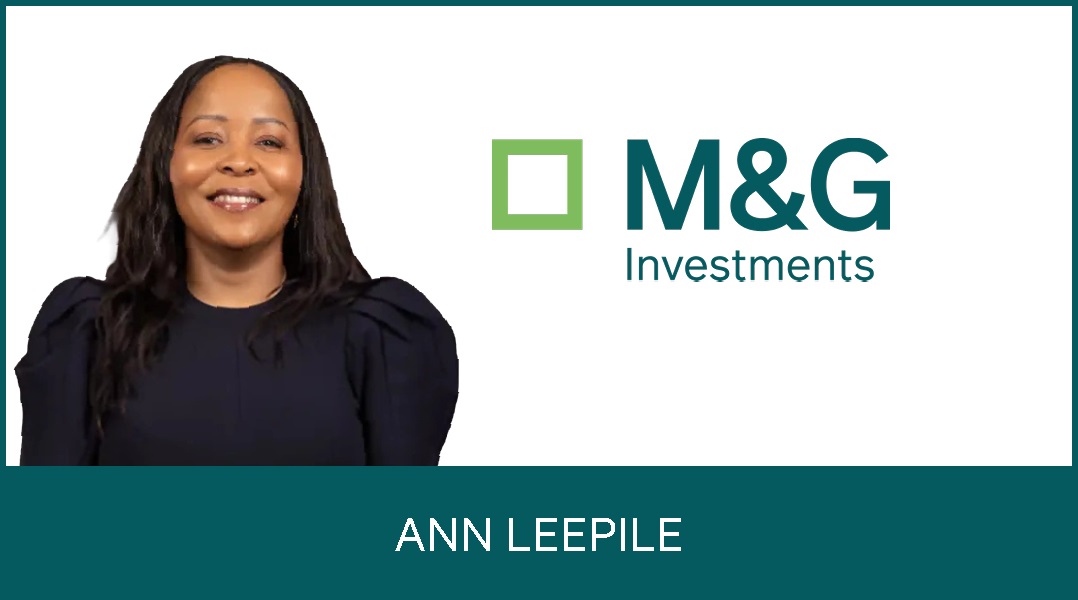
Ann Leepile, Chief Executive Officer at M&G Investments
As I come away from Global Investor Day, I am struck by how much I learned alongside our clients. Hosting the event in London again this year, and bringing our South African clients together with M&G’s global investment teams, gave us a full day of the kind of conversation you simply cannot have over a video call. I said in my opening remarks that investing, for me, is personal — it is a calling. That means I do not take lightly the privilege and responsibility of the work we do.
The backdrop made that conversation more necessary, not less. Geopolitics, structural economic shifts, and changing sources of return mean investors are navigating a more complicated landscape than at any point in recent memory. If one message ran through the whole day, it was this: getting through that complexity takes more than being expert in a single asset class. It takes connected thinking.
We brought together specialists from across our business with respected voices from outside it, and the result was exactly the kind of exchange we set out to create. Here are seven things that stayed with me.
1. The opportunity set is wider than it used to be
The clearest theme of the day was that investors now have more tools at their disposal than ever. Portfolios are no longer built by choosing between public or private markets, or between equities and bonds. Increasingly, the real work is understanding how those different opportunities fit together.
Our sessions reinforced that long-term investing now means looking across the whole opportunity set, not leaning on the traditional building blocks alone.
2. Private markets are moving from tactical to strategic
Private markets ran through the entire event, from our Private Markets Roundtable earlier in the week to dedicated client sessions on private equity, private credit and real assets.
Companies are staying private longer, and financing markets are evolving with them. Investors are looking past listed markets for return, diversification and long-term value that public markets can’t offer in the same way. None of that comes easily: it takes specialist expertise, disciplined manager selection, and a clear-eyed view of liquidity.
As a global active asset manager, we’ve built a Private Markets franchise with $105 billion1 in assets under management and a team of more than 700 professionals2, spanning private credit, impact and private equity, structured finance, infrastructure equity, emerging markets impact and real estate.
3. It’s time to look again at Emerging markets
Emerging markets have had a hard run, and plenty of investors have pulled back exposure as a result. But our Emerging Markets panel made a strong case that the asset class may be entering a genuinely different phase.
Improving fundamentals, more attractive valuations and new sources of growth are opening up opportunities that deserve real consideration, not a passing glance. There are still risks. But today’s emerging markets are a far more varied group than most investors give them credit for.
4. The best opportunities often show up where sentiment is weakest
Carl Vine’s session on Japan was a good reminder that some of the most compelling opportunities emerge exactly where structural change is happening quietly, underneath the headlines.
Corporate governance reform, better shareholder returns and shifting management behaviour are changing the investment case for Japan. It’s a good example of why it pays to look past the short-term narrative and toward the trend underneath it.
5. Income is still one of the best sources of resilience
With uncertainty still elevated, high-quality companies paying sustainable dividends remain one of the most reliable ways to build a resilient portfolio.
Rather than chasing growth, more investors are recognising what dependable income and disciplined capital allocation can do for long-term returns.
6. Asset allocation matters more than it ever has
No single asset class has all the answers. Our investment teams kept coming back to the same point throughout the day: thoughtful asset allocation, valuation-based views and active decision-making matter more now, not less.
The hard part today isn’t finding attractive investments. It’s understanding how several compelling ones work together in a single portfolio. Diversification still matters, but it has to be deliberate, not mechanical.
Our South African-based team brings three decades of asset allocation expertise, backed by a global network of 480 investment professionals. As an active manager, our job is to find the opportunities that deliver genuinely superior returns, and our teams around the world work together to make sure every view we hold is well-informed and tested.
7. In the end, connected intelligence is about people
World-class research and a genuine culture of collaboration are what lets us make sure every decision is built around our clients’ goals. We call this Intelligence Connected, and it’s what lets us keep finding new investment possibilities with our clients at the centre of the work.
I saw it throughout the event: in how our global investment teams worked together, in the conversations with clients, and in how different perspectives sharpened everyone’s thinking rather than just adding noise.
The closing keynote brought it all together. Marc Priestley spoke about his years with the McLaren Formula 1 team, and the point he made has stuck with me: success is almost never down to individual brilliance. It comes from preparation, trust, communication, and a team working together with precision under real pressure.
That lands for me because it’s exactly how I think about investing. In markets this complex, no single view has all the answers. Better outcomes come from bringing the right people, ideas and insights together, and applying them with care, discipline and purpose.
“Every detail examined, every margin explored.”
Global Investor Day reminded me why that approach works. By connecting global expertise with local understanding, we help our clients navigate change with more clarity and more confidence, without losing sight of the long-term outcomes that matter. This commitment to long-term outcomes is also why I am so pleased to share our latest M&G Southern Africa Sustainability Report. At M&G SA, we are committed to our vision of a sustainable future, and this report is a testament to our ongoing dedication and tangible actions in bringing that vision to life. We are proud of the progress we have made, and we are excited to continue our journey towards a more sustainable world, day after day.
1. M&G AUM data as at 30 June 2025.
2. Headcount as of June 2025.
ENDS