






























































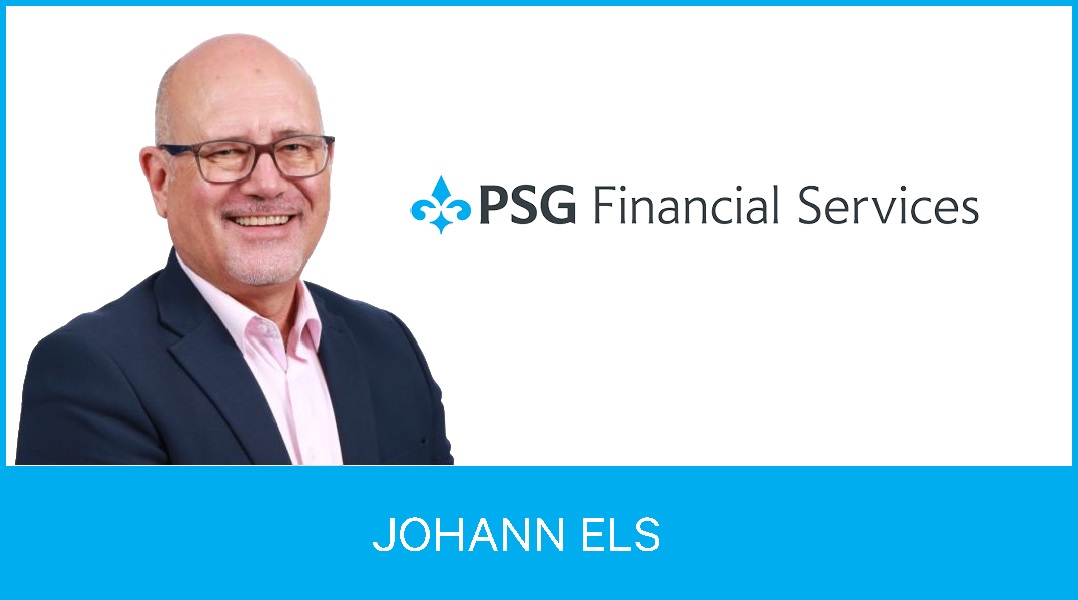
Johann Els, Chief Economist at PSG Financial Services
South Africans have become conditioned to believe that the rand only weakens over time. That view is understandable. For much of the past 15 years, it has largely been true. But investment views should evolve as the facts change. I believe many investors are still analysing the rand through yesterday’s framework rather than tomorrows.
To be clear, I am not arguing that the rand is entering a one-way appreciation cycle. South Africa will remain a small, open emerging market economy. The rand will continue to respond to global risk appetite, commodity prices, US monetary policy and geopolitical events. Periods of weakness are inevitable. My argument is simply that the rand’s long-term equilibrium may be stronger than markets currently assume.
Markets don’t reward perfect fundamentals. They reward improving fundamentals. That’s true for companies, it’s true for economies, and it’s equally true for currencies. The best historical comparison is probably the period between 2002 and 2008. During those years South Africa enjoyed stronger economic growth, improving fiscal discipline, declining government debt, repeated sovereign ratings upgrades and rising investor confidence. The rand strengthened significantly.
I’m certainly not suggesting we will repeat that period. China is different, commodity markets are different and the global economy has changed. But history reminds us that exchange rates respond when fundamentals improve. They don’t simply move in one direction forever.
Today we are beginning to see some of those same ingredients returning.
South Africa’s growth outlook is gradually improving as structural reforms gain momentum. Private sector participation in electricity has fundamentally changed the energy landscape. Logistics reforms are under way. Operation Vulindlela continues to remove important bottlenecks. Fiscal discipline has improved meaningfully, with government running sustained primary budget surpluses and debt appearing close to peaking as a share of GDP. Ratings agencies have become increasingly constructive, and, over time, I believe South Africa can gradually return to investment-grade status.
Equally important, South Africa has always had structural strengths that are sometimes overlooked during periods of pessimism. Our Constitution remains strong, the judiciary independent, while institutions such as the Reserve Bank and National Treasury continue to enjoy considerable credibility. Add one of the most sophisticated financial sectors in the emerging world and a resilient private sector, and South Africa starts from a much stronger base than is often acknowledged.
The global backdrop has also changed.
One important reason is that I believe the US dollar has entered a multi-year weaker cycle after more than a decade of strength. We’ve seen these long dollar cycles before. I’m certainly not arguing that the dollar will collapse. Rather, the combination of large fiscal and current account deficits, an exceptionally high debt burden and the enormous foreign capital that has flowed into US financial markets over the past decade is unlikely to provide the same support for the dollar going forward. A structurally weaker dollar has historically been supportive for commodity prices, emerging markets and commodity-producing countries like South Africa. That should also support South Africa’s terms of trade and external accounts, reducing one of the traditional sources of rand vulnerability.
Twenty years ago, developed economies generally offered stronger growth, lower debt and lower risk than emerging markets. Today many developed economies are struggling with weak productivity growth, ageing populations and debt levels that would once have been associated with emerging markets. At the same time, many emerging markets have strengthened their policy frameworks and public finances. Investors don’t compare countries in isolation. They compare opportunities. South Africa doesn’t need to become perfect. It simply needs to improve relative to the alternatives.
One important implication of a lower inflation objective also deserves attention. If inflation averages closer to 3% over time, South Africa’s inflation differential relative to its major trading partners should narrow. Inflation here will probably still remain somewhat higher than in countries targeting around 2%, which means the rand should still depreciate gradually over the long run. But the pace of depreciation could be materially slower than what South Africans have become accustomed to over the past decade.
Lower and more stable inflation should gradually reduce South Africa’s risk premium, lower long-term borrowing costs for both government and the private sector, ease government’s interest burden and support a more stable currency. Stronger growth, lower borrowing costs and improving public finances reinforce one another. Over time, that should also support further sovereign ratings upgrades.
That does not mean the rand will stop being volatile.
Quite the opposite. The rand will probably remain one of the world’s more volatile currencies. South Africa has one of the deepest and most liquid financial markets in the emerging world, with no exchange controls on foreign portfolio investment. Global investors frequently use the rand as a proxy for emerging market risk because it is easy to trade. During periods of global uncertainty, the rand will therefore continue to overshoot, often regardless of what is happening domestically.
But volatility should not be confused with long-term direction. Currencies fluctuate around their long-term equilibrium. My argument is not that the rand won’t weaken from time to time. It almost certainly will. My argument is that South Africa’s long-term equilibrium exchange rate is gradually improving as the country’s structural fundamentals improve.
The nature of capital flows into South Africa could also change. For many years investors were attracted mainly by the carry trade or commodity exposure. As confidence improves, reforms gather momentum and South Africa moves closer to investment-grade status, a greater share of capital could be driven by long-term investment in businesses and productive assets. Those are generally more stable capital flows and would provide additional support for the rand over time.
Investors often spend too much time worrying about the next Fed meeting, the next political headline or next month’s inflation number. Those events matter, but they rarely determine where a currency trades five or ten years from now.
What matters is whether the country’s growth path, fiscal position, institutions and policy credibility are improving or deteriorating. I believe South Africa’s are improving. That won’t eliminate periods of rand weakness. Nor should it. Small, open emerging market economies will always be exposed to global shocks.
But if South Africa continues to implement structural reforms, maintains fiscal discipline, gradually returns to investment grade, anchors inflation closer to 3% and benefits from a more supportive global environment, then the next decade could look rather different from the last.
The rand won’t stop being an emerging market currency. It will remain volatile, and it will continue to weaken from time to time. But perhaps the biggest change over the next decade won’t be the rand itself. It will be the way investors think about South Africa.
ENDS