



























































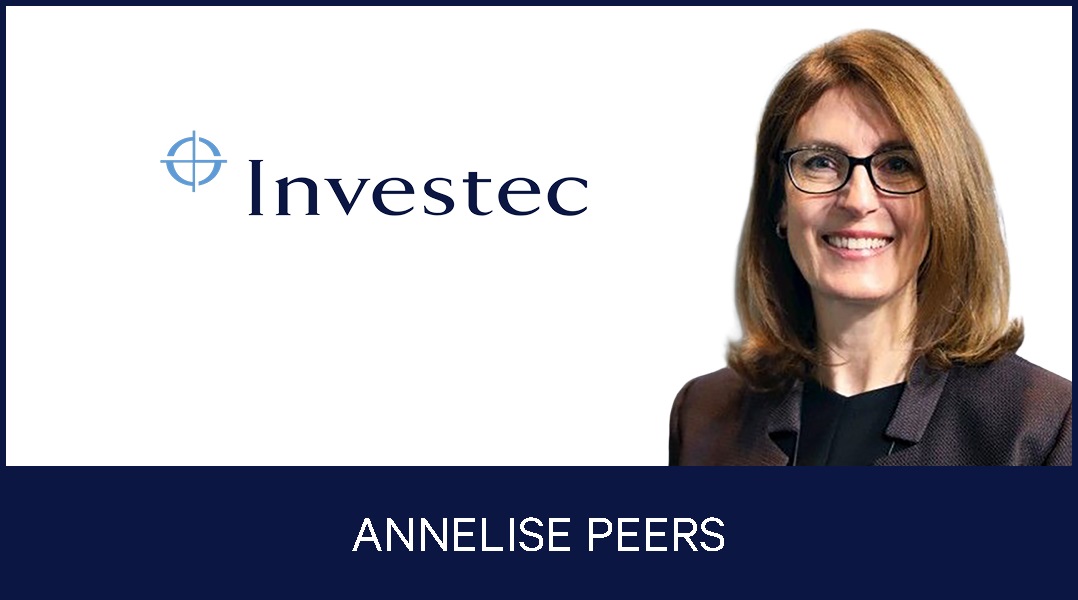
Annelise Peers, Chief Investment Strategist at Investec Switzerland
Halfway through 2026, inflation remains one of the biggest questions facing investors, but the conversation has changed.
At the start of the year, markets worried about tariffs and trade tensions. More recently, attention shifted to oil after the conflict in the Middle East reignited inflation concerns.
Although, after months of conflict, the US and Iran signed a memorandum of understanding that brought a fragile ceasefire, uncertainty persists as flare-ups threaten energy supplies and cast doubt over the path to a lasting agreement.
And the bigger story remains. Inflation is no longer being driven mainly by strong demand or overheating economies. Increasingly, it is being shaped by geopolitics.
“The shift from a trade-war scare to an oil-price scare is really just a manifestation of the same underlying issue: geopolitically-driven supply shocks,” says Annelise Peers, Chief Investment Strategist at Investec Switzerland.
A different kind of inflation
For much of the past three decades, globalisation acted as a powerful brake on inflation. Companies built efficient supply chains and businesses focused on reducing costs.
Today, resilience matters as much as efficiency.
Governments are prioritising energy security, strategic industries and reliable supply chains. Businesses are adapting to a world where tariffs, sanctions and geopolitical tensions can affect costs almost overnight.
That creates a different inflation backdrop.
Tariffs may raise the price of imported goods. Energy shocks raise costs across the entire economy. Higher oil prices affect transport, manufacturing, logistics and household budgets.
The result is uncertainty about how quickly inflation can return to central bank targets.
“The real risk is the sequencing,” says Peers.
Why expectations matter
Not every inflation shock becomes a lasting problem.
The bigger risk is that households and businesses start expecting higher inflation to persist. Those expectations can influence wage negotiations, spending decisions and corporate pricing strategies, creating a self-reinforcing cycle.
That is why Peers believes investors should focus less on monthly inflation data and more on inflation expectations.
“The balance between short and longer-term expectations matters. If one-year inflation expectations are above five-year expectations, it suggests people still see the shock as relatively near term rather than permanently embedded,” says Peers.
The latest US inflation expectations suggest that this is the case. “With one-year expectations at 4.6% and five-year expectations at 3.3%, expectations are still too high, but markets appear to believe inflation will moderate over time,” says Peers.
What it means for investors
Geopolitical inflation creates a more challenging environment for traditional portfolio construction.
Government bonds typically perform well when growth slows; they are less effective when inflation remains the primary concern.
Recent market moves highlighted this challenge. Traditional safe-haven assets such as G7 (a forum of the world’s leading economies) government bonds, gold, the Swiss franc and the yen did not provide the protection investors might normally expect because the source of the shock was inflation itself.
“The more effective hedge was oil because it was the source of the inflation pressure,” says Peers.
Bond markets are currently balancing two risks – inflation that remains too high and growth that may be slowing. The recent decline in oil prices has helped ease pressure on bond yields. However, markets continue to assume that central banks will remain cautious about cutting rates too quickly.
As Peers notes, “Inflation is still too high, and the market is assuming that the Fed will remain disciplined rather than cut rates too early.”
The bigger investment lesson
The recent shift from tariffs to oil price pressure offers an important reminder.
The source of inflation risk may change, but the underlying issue remains the same. In a more fragmented world, geopolitics is a more important driver of economic outcomes.
Investors can no longer look at inflation through the lens of interest rates and economic growth alone. Energy security, trade policy and geopolitical developments are increasingly influencing the outlook.
Oil prices may have settled for now and inflation may continue to move lower, but uncertainty remains.
“The main thing investors should avoid is overreacting to every inflation headline. High inflation, particularly anything well above 4%, is not a comfortable environment for either risk assets (such as equities or commodities) or fixed income. But the right response is not to abandon discipline. It is to stay diversified and avoid excessive duration risk (sensitivity to interest rates) until the inflation path is clearer,” says Peers.
ENDS