































































Michele Jennings, Chief Executive of glu
For most people, their salary is doing a lot of heavy lifting. It pays the rent or bond, keeps the lights on, puts food on the table and covers school fees, transport and monthly debit orders. It also funds the things we’re working towards, from building savings and investing to taking a holiday or planning for retirement.
So when we think about financial planning, it makes sense to not only think about what we’re doing with our income, but also about how we’re protecting it. That doesn’t mean expecting something to go wrong. It’s simply about understanding what support you have in place if illness or injury means you need time away from work.
“We spend a lot of time planning what we want our money to do, but don’t spend enough time thinking about what happens if we can’t earn it,” says Michele Jennings, Chief Executive of glu.
Illness or injury can interrupt an income long before it becomes a permanent disability. You could be unable to work for a few weeks or months while recovering, while your financial commitments continue as normal.
This is where understanding the different types of protection becomes important. Here’s a simple way to tell them apart:
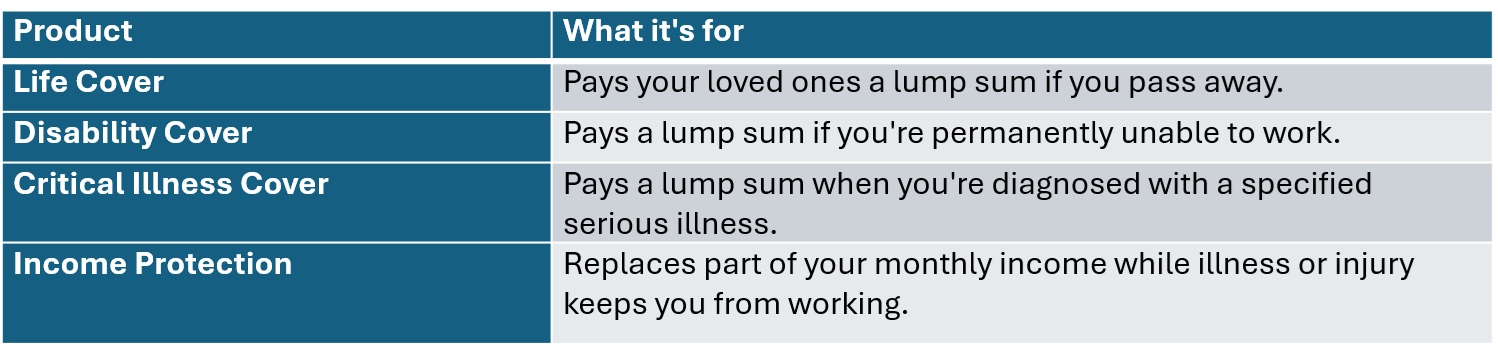
The differences are important because each type of cover supports a different need.
“Life and Disability Cover are there for the big, life-changing events. Income Protection is for the moments in between. You’ve had back surgery or a serious fracture, you’re recovering and you can’t do your job for a few weeks. Meanwhile, the debit orders still go off,” Jennings explains.
For some people, sick leave or employer benefits may already provide a level of support. Others may have savings they can draw on. The important thing is knowing what you have, how long it would support you and where there may be room to strengthen your financial plan.
For self-employed people, the gap can be even more immediate. There may be no sick leave to fall back on and no one else earning while they recover.
Then there’s the waiting period.
This is the time between being unable to work and when an income protection benefit starts paying. Shorter waiting periods can provide support sooner, although they may come with higher premiums. The right option depends on your income, savings and individual circumstances.
For example, some insurance companies like glu offer income protection with a 14-day waiting period. For qualifying self-employed members who are booked off work for longer than 14 days, approved claims are backdated to day one.
Ultimately, the question isn’t simply whether you have insurance. It’s whether your financial plan could keep going if your income suddenly stopped. Your income is behind almost every financial goal you have. So it deserves a place in the plan too.
Take a moment to look at what you already have in place: your sick leave, savings, employer benefits and insurance cover. Then ask yourself one simple question: if I couldn’t work for a while, would my financial plan still work for me?
If you’re not sure, that’s not a problem. It’s a conversation worth having.
Speak to a Financial Adviser to understand where you’re covered, where there may be gaps and what options could make sense for your circumstances.
Because protecting your income isn’t about expecting something to go wrong. It’s about making sure one unexpected interruption doesn’t derail everything you’ve been working towards.
ENDS