































































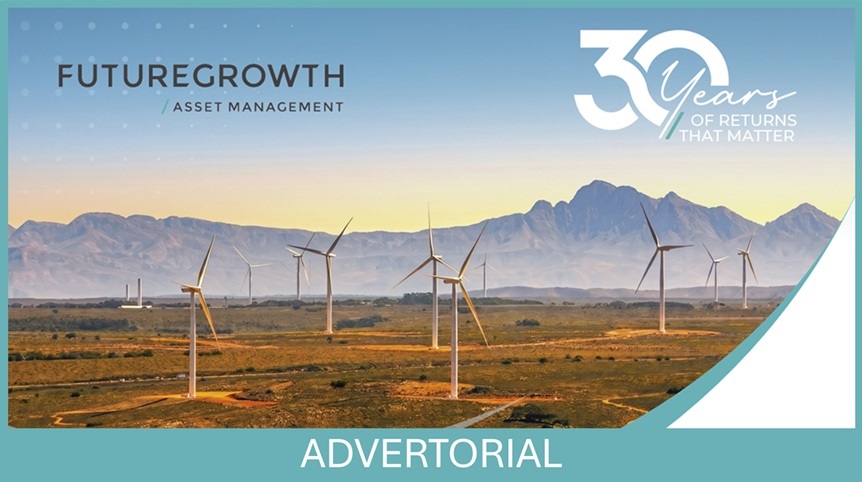
The story of the idea that became one of Africa’s longest-standing infrastructure debt funds.
Thirty years ago, the idea that pension fund capital could be deployed into infrastructure while still delivering competitive financial returns was anything but mainstream.
South Africa was on the cusp of profound political and economic change. As the country prepared for its first democratic election, the need for investment in roads, energy, housing and other essential infrastructure was becoming increasingly apparent. Yet institutional investors had little precedent for participating directly in that opportunity.
Infrastructure debt was not recognised as an asset class, pension funds had no benchmark against which to assess it and few comparable investment opportunities existed either locally or internationally.
It was in this environment that a 21-year-old actuarial science honours student at the University of Cape Town presented a thesis arguing that pension fund capital could generate commercial returns while supporting South Africa’s development through infrastructure investment.
Today, that proposition feels unremarkable. Infrastructure investing is widely accepted across institutional portfolios and responsible investing has become part of mainstream investment practice. At the time, however, the idea challenged conventional thinking and asked investors to look beyond the established playbook.
Two years later, the thesis was presented to Southern Life. The proposal was accepted and, in time, became the foundation of Futuregrowth and the Infrastructure & Development Bond Fund (IDBF).
The premise was straightforward: pension fund capital could be invested on fully commercial terms while financing infrastructure that would contribute to South Africa’s long-term economic development. What was less straightforward was convincing investors.
As Senior Portfolio Manager Jason Lightfoot reflects in the first episode of Futuregrowth’s 30 Years of Returns That Matter podcast series, there was no benchmark against which early investors could measure success and no track record that could be pointed to for reassurance.
“It got to a point where it was actually a case of trust the cash flows, trust the contractual underlying legal agreements, and ultimately the returns will follow,” he says.
Perhaps the strongest endorsement of the original thesis is that some of those early investors remain invested today. Three decades later, they are still backing the same fundamental proposition that persuaded them in the mid-1990s.
The journey, however, was far from linear. When Daphne Botha joined Futuregrowth in the early 2000s, the Infrastructure & Development Bond Fund managed approximately R1 billion in assets. Growth was steady but gradual. Infrastructure debt remained unfamiliar territory for many institutional investors and trustees were still becoming comfortable with how the asset class behaved across market cycles.
There was no overnight inflection point. Confidence was earned over time through consistent execution, disciplined credit analysis and a willingness to remain focused on long-term outcomes when market sentiment shifted.
Today, the fund manages approximately R27 billion in assets under management.
That growth reflects more than the evolution of an asset class. It reflects a track record built over three decades of applying the same core investment philosophy through very different market conditions.
One of the more interesting aspects of the conversation is the reminder that developmental investing was never presented as an alternative to commercial discipline.
As Botha notes, the Infrastructure & Development Bond Fund was first and foremost a bond fund. Investors were not being asked to compromise on returns in pursuit of impact. Rather, they were being offered an investment strategy capable of delivering competitive returns while financing assets that addressed genuine economic needs. That distinction mattered then and remains relevant today.
The discussion becomes particularly compelling when it moves beyond theory and into the real-world decisions that shaped the fund’s philosophy. Botha recalls a debate that has remained with her for decades: whether financing a prison could reasonably be considered developmental investing.
On paper, the transaction appeared attractive. It involved infrastructure, government was the contractual off-taker and the underlying economics were sound. Yet after considerable discussion the investment team concluded that, while the transaction might satisfy certain commercial requirements, it did not align with the broader purpose behind the mandate.
It is a small example, but an illuminating one. It demonstrates that successful developmental investing is not simply about identifying projects with social benefits attached to them. It requires judgement, a clearly articulated investment philosophy and the discipline to make difficult decisions when the answer is not immediately obvious.
That discipline was tested repeatedly over the years. The fund has navigated multiple market crises, including the global financial crisis, the volatility associated with Nenegate, the governance failures that accompanied state capture and the extraordinary disruption caused by COVID-19.
For Botha, the pandemic remains one of the most memorable periods of her career. As liquidity disappeared from bond markets and even relatively modest transactions became difficult to execute, she and Lightfoot found themselves waking up at five o’clock in the morning to assess liquidity positions and ensure portfolios could continue to meet their obligations.
Those moments are a useful reminder that investment management is ultimately about more than investment ideas. It is about how those ideas hold up when markets stop behaving as expected.
The conversation also revisits Futuregrowth’s decision in 2016 to suspend lending to certain state-owned enterprises due to governance concerns. At the time, the decision attracted significant public attention and sparked considerable debate within the investment industry.
Looking back, it serves as an example of how governance considerations become inseparable from investment risk. The decision emerged from a process that concluded governance concerns could no longer be adequately priced into investment decisions. Subsequent revelations surrounding state capture only reinforced concerns that had already been identified through the investment process.
For institutional investors, the lesson remains relevant. Sound governance is not a supplementary consideration. It sits at the centre of long-term investment outcomes.
The investment landscape of 2026 is vastly different from that of 1995. Infrastructure debt is now widely recognised as a legitimate institutional asset class, responsible investing has become embedded in both regulation and investment practice, and investors have access to far more sophisticated tools, data and reporting capabilities than their predecessors could have imagined.
Yet the core challenge facing trustees remains remarkably familiar: how to allocate long-term capital in a manner that delivers sustainable returns while supporting the resilience of the economy on which those returns ultimately depend.
Thirty years after its launch, the Infrastructure & Development Bond Fund stands as a reminder that some investment ideas take time to prove themselves. What began as a university thesis and a difficult conversation with a handful of pioneering investors has grown into a R27 billion fund and one of Africa’s longest-standing infrastructure debt strategies.
Its greatest achievement may not be that it helped establish a new asset class. Rather, it demonstrated that infrastructure investing could be approached with the same fiduciary rigour, credit discipline and accountability expected of any institutional investment strategy. In doing so, it earned the confidence of generations of trustees and investors and built a track record that continues to shape how long-term capital is deployed in South Africa today.
Watch the first episode of Futuregrowth’s 30 Years of Returns That Matter podcast series:
ENDS