




















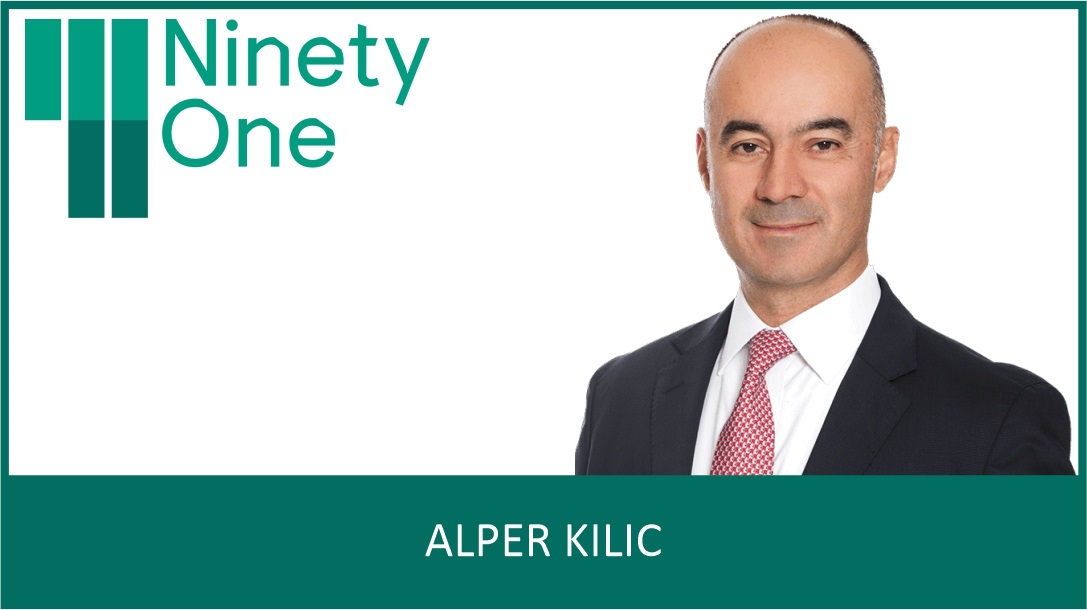
Alper Kilic, Head of Alternative Credit at Ninety One
This increasingly in-focus part of the global private credit market – where lenders can command attractive deal terms and strong levels of protection – continues to offer a very distinctive investment landscape. While new avenues of investment are emerging across the globe, the structural factors that help the asset class stand out remain firmly in place and highly relevant for investors today.
Barriers to entry continue to support this increasingly relevant asset class
Private credit was a regular feature of news headlines in 2025, with some high-profile failures in the US sounding alarm bells. The increasingly crowded nature of the US market makes it a ‘borrower’s market’, and this has driven down yields while causing some loan-structuring standards to slip. The upshot is that diversification became a key priority for many private credit investors in 2025, suggesting a more mature phase in the evolution of the asset class. Among those who have turned their attention to EM private credit, many may have been surprised by the strength of the investment case: in this uncrowded market, lenders can command a pricing/return premium over developed market (DM) counterparts while also stipulating robust collateral protections and strong covenants. Coupled with the fact that typical borrowers have defensive balance sheets and durable market positions, this is very much a ‘lender’s market’.
Alper Kilic, Head of Alternative Credit: “The EM private credit market is very distinctive. Unsecured lending is rare and borrowers have much lower leverage – typically 3-4x, compared to 6-7x in DMs. Furthermore, it’s much less crowded; while competition does exist given the size and diversification of core markets across the EM universe, investors can achieve EM-level spreads on structures that look more like the US private credit market of 15 years ago. Crucially, we see no signs of this changing, given the inherent complexity of the asset class and the fact that major market participants simply don’t have the necessary local expertise or origination networks – both of which take years to establish.”
An expanding pipeline of deals
Across key areas of focus for Ninety One’s Alternative Credit Platform – infrastructure assets, senior-secured lending to essential businesses, and high-yielding credit opportunities – 2025 was a busy year for deal activity and capital deployment across structures that cater to an ever-broader range of borrower requirements. The platform closed 64 deals, with a combined loan value of US$1.5 billion.[1]
Kilic: “While the record number of deals coming through our pipeline signalled a shift in gear, our deal activity also highlighted the powerful structural themes that continue to support the asset class: infrastructure development, financing the energy transition, digitalisation, and asset-owner interest in diversifying US-heavy private credit allocations.”
“In line with our growth strategy, we have expanded our track record beyond Africa in recent years to include Turkey, Singapore, Pakistan and Mexico. In 2025, our footprint broadened further across emerging markets, with transactions completed in Brazil, the Philippines, India, Vietnam, Colombia, Serbia, Chile and Hong Kong. The persistent supply–demand imbalance in EM private credit has continued to support attractive average spreads and five-seven-year average tenors,” said Kilic.
A growing and evolving asset class
With banks’ role in providing term lending reducing, primarily due to tighter regulation around capital requirements, the demand for alternative sources of credit continues to rise. On one hand, the requirement by banks to de-risk and recycle their balance sheets is creating demand for a further scaling of syndication channels; on the other, institutional investors are looking for scale and diversification in their private-market allocations – this is driving demand for asset managers to create diversified pools of assets.
In parallel, there has been a shift in perspective on the asset class – in particular, in financing infrastructure development. While this has historically been centred around impact strategies backed by development finance institutions (DFIs) rather than return-seeking investors, large asset owners are starting to exploit the commercial investment opportunities it offers. Part of this evolution relates to the development of more sophisticated rating approaches, enabling EM infrastructure debt funds, for example, to secure investment-grade ratings for certain vehicles to meet institutional investors’ rating requirements.
Where to find the best opportunities in 2026
Energy, electrification, telecommunications, digital assets, transport, the transition to net zero, climate-resilient infrastructure – these are all structural growth themes that are offering up an abundance of investment opportunities. Furthermore, the opportunity set appears highly diverse in terms of geography and sectors.
“A major theme that has emerged in recent years is the increasing adoption of renewable energy in emerging markets. In contrast to DMs, where momentum has stalled, investment and development is happening at a remarkable pace across EMs, helped by falling costs across the sector. For context, Brazil already generates 88% of its electricity from renewable sources, and India has targeted 50% non-fossil capacity by 2030. This marks a structural shift in the centre of gravity for the energy transition and is translating into a broad range of potential deals for private market investors – both in the corporate and infrastructure sectors. Given that renewable energy represents the most cost-effective option in over 90% of energy generation installations since 2024, the economic rationale underpinning this trend is powerful; decarbonisation and profitability are evolving to be mutually compatible concepts,” said Kilic.
The other big story of 2025 is AI, which is also giving rise to a new cohort of investment opportunities. With 2% of today’s electricity demand for data centres projected to reach 8% by 2040, aligning with companies that are sustainably sourcing their energy needs and consuming it efficiently is an exciting avenue for investors to explore. In 2025, Ninety One lent to two separate data centre operators that have committed to maintain or increase the share of their energy sourced from renewables to 100%. Beyond sourcing energy sustainably, these investors are also committed to using that energy efficiently, with specific investment plans to operate at the lowest power usage effectiveness (PUE) in their respective regions.
Kilic concluded: “Finally, Africa – where our platform originated – continues to offer a compelling investment opportunity set, supported by the region’s expanding infrastructure requirements. By directing capital towards transport, energy, water, human settlements and digital infrastructure, our investments help to address pressing needs, contributing to both social development and environmental sustainability.”
ENDS
[1] US$1.5 billion includes a variety of instruments, including private loans, privately placed as well as public bonds and other debt instruments.