























































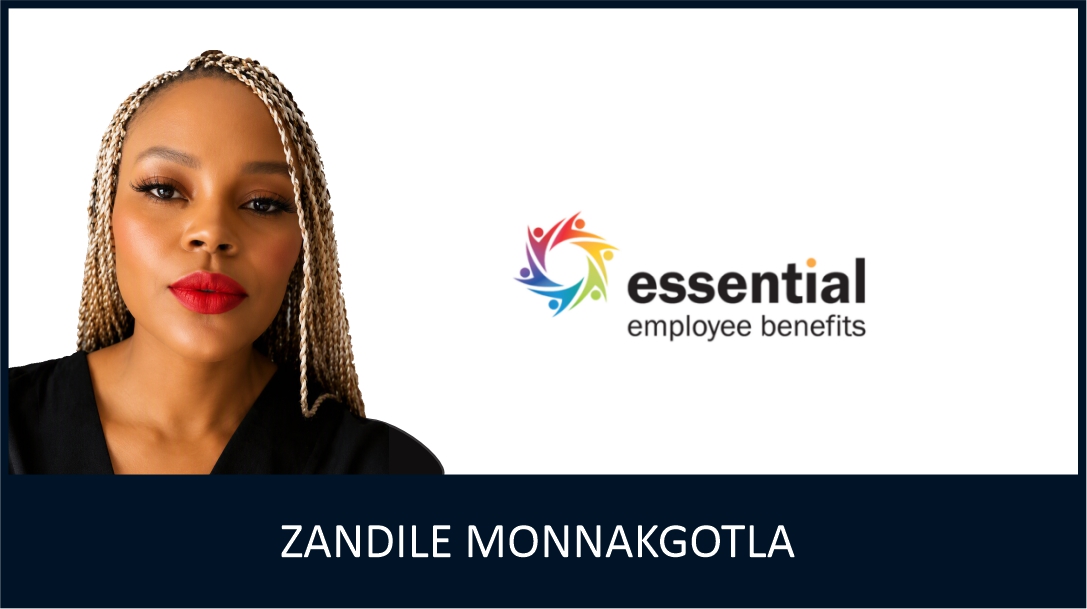
Zandile Monnakgotla, Senior Sales Executive at Essential Employee Benefits
Human Resources (HR) is constantly being asked to deliver more with less. Employers want to attract, retain and enhance employee wellbeing and experience, while keeping remuneration and benefits costs under control.
As such, the annual benefits review is not just about renewing existing policies and negotiating rates – it is also an opportunity to ask a more important question: is the organisation getting value for money?
With basic salaries and wages in South Africa increasing by 4.6% year-on-year to March 2026, cost is a big consideration for employers looking to offer more benefits. However, the answer is not necessarily to spend less, but to spend more purposefully. A benefit is of little value to employees who cannot use it.
Employers and employees tend to view benefits from very different vantage points
An employer may see a medical benefit, wellness programme or retirement contribution as a major investment, but employees are more likely to measure value in terms of affordability, accessibility and relevance when the need arises. This is why having a long list of benefits does not always add up to a compelling employee offer. With only 15.5% of South Africans covered by a medical aid scheme in 2024, many employees remain uncovered, so the focus turns to whether a benefit offers real support to those who need it.
The discrepancy between what an employer funds and what an employee can actually use is where a benefits strategy needs to become more precise.
Start with what employees actually use
The starting point for deriving value from benefits spend is in the utilisation. How many eligible employees used a particular benefit last year and which benefits are consistently underused? Why are employees not using a benefit? Or are there practical barriers that make the benefit difficult to access?
These questions can unearth opportunities within the current spend, such as a benefit that requires further communication, one which is no longer relevant or one that is being actively used by a certain segment of the workforce, but not others.
A specialist benefits partner can help bring more value to a company’s existing spend in other ways. By evaluating utilisation against workforce demographics, employee needs and costs, the partner can help HR understand where money is being well spent and where it might be redirected. One benefits package cannot serve every employee equally.
Workforces are not homogenous, so benefits do not need to be either
A younger employee may be looking for more affordable healthcare, whereas someone with a family may be prioritising risk coverage, while an employee close to retirement is likely to be more focused on retirement adequacy. Trying to meet the needs of all employees by offering more benefits may simply stretch the budget and create complexity. Instead, a targeted approach based on a deep understanding of the workforce is more likely to yield value.
Flexibility therefore does not necessarily mean a bigger budget but using the existing one in a more intelligent way.
Measure outcomes, not just participation
Even with utilisation, participation does not tell the whole story. Employers also need to understand outcomes, such as whether a benefit is delivering on its promise. If an employer is offering financial wellbeing, for example, an employee attending a financial education seminar is a useful indicator, but it says little about whether they are leaving more confident about managing their money or accessing the financial advice when they need it.
The same goes for health, wellness and risk benefits. The true measure is whether employees are using the benefit and whether barriers to accessing it are being addressed, and if it is addressing a real need in the workforce.
A specialist partner can help create this feedback loop by analysing claims/utilisation in conjunction with employee insight, identifying gaps in the benefit strategy and helping re-focus spend.
The goal is not fewer benefits. It is better benefits
Cost constraints can often lead to benefits being a defensive discussion: what can potentially be cut, negotiated and removed? A smarter question is to ask what should be kept or changed so that the money spent has more impact.
That may mean improving communication, removing an underused benefit, introducing more flexibility or directing greater support towards a specific workforce need. It may also mean recognising that different groups need different forms of support rather than expecting one standard package to work for everyone.
For HR, this changes the role of the benefits budget. It becomes less about maintaining a list of offerings and more about solving real employee problems.
In a constrained economy, this is where a specialist benefits partner can help make a difference: understanding the workforce, interrogating utilisation and continually aligning spend with needs.
The most effective benefits strategies are therefore not necessarily the most expensive, but the most thoughtful – every rand spent on benefits having a clear purpose and employees being able to see and feel the value.
ENDS