
















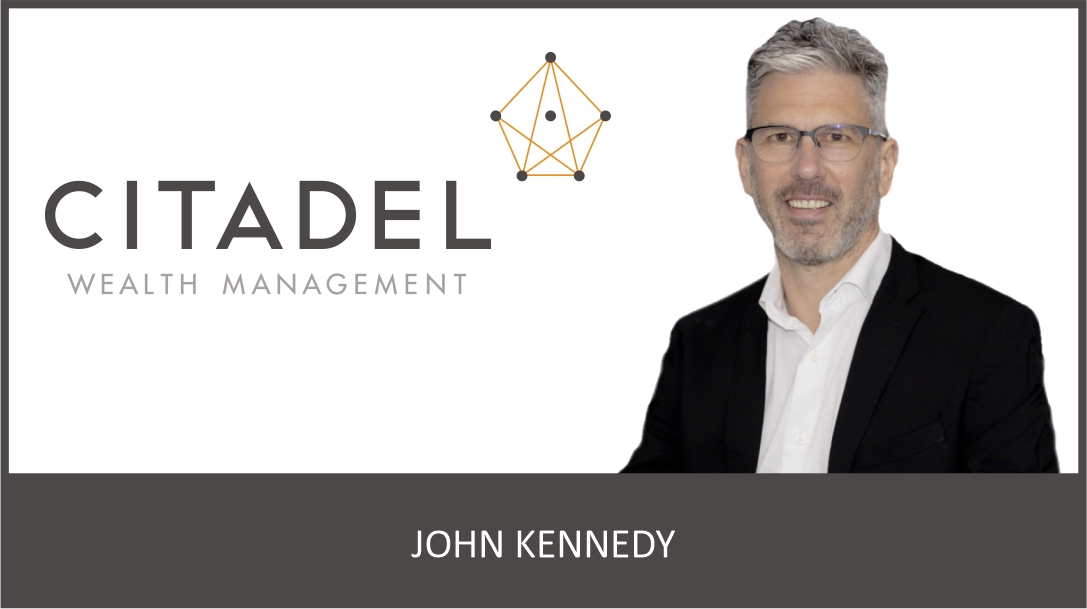
John Kennedy, Director and Head of Wealth Management at Citadel
As global markets prepare for 2026, South African (SA) high-net-worth (HNW) and ultra-high net worth (UHNW) families grapple with a world redefined by the powerful collision of human life and rapidly accelerating technology, increased global mobility, greater access to global markets, changing estate planning realities and a yearning for simplicity in the personal realm.
According to Citadel, while global forces dominate headlines, the most critical battle is being waged within the “personal economy” of each investor, where they must learn to design the life they want within a world they can’t control.
Citadel Director and Head of Wealth Management, John Kennedy, says: “We are living in a thematically artificial intelligence (AI) driven world, shaped by strong geopolitical forces that have turned the second half of this decade on its head. For HNW and UHNW families, the current environment is marked by deep-seated anxiety about the future. People are very focused on spotting potholes and this makes them anxious when discussing long-term plans. This fear is compounded by the ethical and regulatory risks of technology, including the continuous reduction in privacy, increased manipulation and risks that critical thinking is being outsourced to machines.”
Five key wealth management trends to look out for in 2026
1. Counterbalancing technological efficiency with human wisdom
“In this age of information acceleration, people are seeking clarity amidst chaos, yet they are losing control of the questions to ask,” Kennedy observes, citing instances where highly credible-looking, yet potentially inaccurate answers generated by AI are not being critically interrogated by the layperson.
“Strategic insight, experience and emotional intelligence are qualities machines cannot imitate. Technology is essential for efficiency and must enable, not replace, human wisdom.”
“We try to balance the very real need of running a client intimate business model with the necessity to run an operationally efficient business. This approach follows a continuous focus on letting technology handle more of the administration and paperwork to free up time for critical conversations and client-specific guidance,” he explains.
2. Avoiding the greed factor and building a buffer
After a period of strong returns in both SA and international markets, the primary tactical advice for 2026 is caution. Kennedy advises against being swept up in market excitement, especially given concentration risk and high valuations in sectors like technology.
“Avoid the greed factor and build a buffer,” Kennedy cautions. He stresses that investments need to be “valuation sensitive” in 2026, alluding to the overvaluation in various market sectors, and that a sufficient buffer of liquidity is the key protection if a potential market pullback materialises in the year ahead. For HNW and UHNW investors who have already made their wealth, the focus must shift to preservation before attempting to achieve ambitious growth through high stake positions.
3. Embracing the “lucid” wealth transfer
While a massive intergenerational wealth transfer from parents to their children and grandchildren is a global macro trend, the way families need to deal with it requires a behavioural shift from the past, he says. HNW and UHNW parents are living longer and this pushes any potential ‘inheritance down the road’. One potential consideration is matriarchs and patriarchs need to bring their children, now in their 30s, 40s, and 50s, around the table to discuss financial matters while the parents are “still lucid”.
“With wealth dynamics in families shifting, these conversations must happen long before you lose the ability to do so, this increased openness allows for mature adult conversations about estate planning intentions and asset allocations, to alleviate pain and controversy for the family later on,” says Kennedy.
4. Combining capital mobility with local expertise
While human mobility is an important theme for many HNW and UHNW families who may have children living in different countries, or have properties abroad, or who spend key parts of their “economic lives” abroad, it needs to be supported by “capital mobility”, he advises.
“It doesn’t make sense to be a global citizen, with all your assets and investments concentrated solely in SA. With the approved offshore allowances, it should make sense to look beyond local shores for diversification opportunities .”
He however, cautions that wherever people find themselves, they should always seek professional advice on the legal nuances of those markets. “As HNW and UHNW families become globally distributed for economic or lifestyle reasons, new complexities arise in cross-jurisdictional tax treatment, structuring and estate planning. Do your homework in the jurisdiction where your feet are.”
5. Seeking simplicity and finding clarity
A hard truth Kennedy shares with his clients who seek simplicity is that advisors may provide clarity and a certain level of guidance but, “Simplicity requires difficult choices about what to say no to, and only you can decide where to trim parts of your life to find the simplicity you seek. The advisor’s role is to provide strategic clarity on how to make it work from the wealth management perspective.”
Conclusion
He highlights that each of us has the opportunity to design our lives including crucial, non-financial elements. “Adventure, discovery and exploration actually bring us a lot of joy. We can’t plan everything in life out to the nth degree.” He encourages clients to consciously build flexibility and a “spirit of adventure” into their lives and thinking, ensuring financial discipline does not take the fun out of life but enables it.
Kennedy concludes that while it is important to be aware of the drama playing out in the geo-political arena, the ups and downs of global and local economies are less important indicators of financial well-being than the decisions investors make themselves. “At the end of the day, the secret to wealth management in 2026 and beyond is building a strong personal economy that can withstand the shocks from the outside world.”
ENDS