










































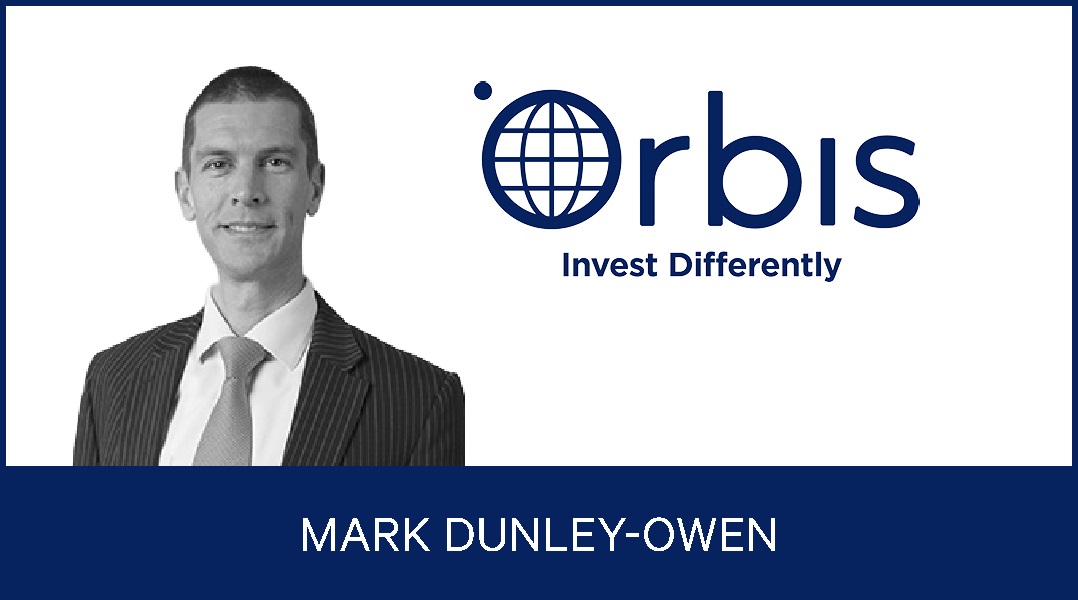
Mark Dunley-Owen, Portfolio Manager at Orbis, Allan Gray’s offshore partner
How should investors balance risk and return during periods of volatility and uncertainty when investing offshore?
“We do not think investors should be avoiding risk altogether but rather believe in a selective approach where you can be compensated for taking it. Think of it as a low-risk, not a no-risk strategy,” says Mark Dunley-Owen, portfolio manager at Orbis, Allan Gray’s offshore partner. “In an environment of elevated inflation, expensive conventional safe havens and a market adjusting to a volatile world, such an approach can be of immense value.”
A good place to start, says Dunley-Owen, is by being selective about offshore equity exposure.
“Equities, considered the riskiest asset class in public markets, are a natural risk lever,” he says. “But it is equally important what equities you own, since equities are not equally risky.”
As an example, Dunley-Owen points to the Orbis Global Cautious Fund, a risk-conscious, multi-asset fund. The Fund’s net equity exposure has been near or below 30% since 2022, and it aims to pick shares that are less sensitive to broad market swings. The Fund has outperformed its benchmark and peers in recent years, generating returns without taking on excessive equity risk.
“The equity risk we are taking is largely stock-specific and valuation-driven, not a broad market call.”
He adds that the equities in the Fund have also, since inception, traded at a valuation discount to world stock markets.
“In other words, we are paying less for every dollar of free cash flow our companies generate, suggesting lower expectations for our shares and potentially less downside if sentiment turns. And many of the underlying companies carry modest debt relative to earnings, providing resilience when surprises arrive, as they inevitably do.”
Hedged equity, says Dunley-Owen, is another valuable tool in the offshore investor’s toolkit. The Fund can sell liquid equity index futures, allowing it to maintain exposure to undervalued equities while hedging out market risk.
The US is a good example. Orbis views the market as expensive, yet it sees selective opportunities across sectors, including energy companies such as Kinder Morgan and EQT, movie theatre operators such as Cinemark and IMAX, and biotech companies such as Alnylam Pharmaceuticals.
“We own these shares because we believe their value is underappreciated, not because they are in the US. By hedging out some of the US market risk, we maintain what we like – idiosyncratic alpha (the opportunity for outperformance from individual shares) – while removing some of what we don’t – US market beta (sensitivity to market swings).”
Fixed income is also an important driver of returns, but Dunley-Owen says risk must be limited.
“We remain cautious on traditional developed market government bonds, notably those of the US, UK, Europe and Japan. The safe-haven status of these bonds reflects past perception rather than today’s fundamentals and, in our view, current prices don’t adequately reflect their rising risk profile.”
Inflation is another current risk for offshore investors, he cautions.
“We see inflationary pressures building on both the supply and demand sides of the global economy. Protectionist policies such as tariffs, re-industrialisation and the Iran war are contributing to higher input costs, while substantial AI capital spending is also adding to inflationary pressures. We expect these dynamics will keep inflation and bond yields elevated and put downward pressure on bond prices.”
Against this backdrop, Dunley-Owen sees short-duration and inflation-protected bonds performing relatively better.
“The Orbis Global Cautious Fund seeks to meet the challenge of balancing risk and reward through a portfolio built from the bottom up, security by security, with the aim of preserving and growing clients’ capital over the long term,” he concludes.
Ed’s note: Ep 7 of The Art of Manager Fusion debates the question: How much global diversification is enough? Watch it here.
ENDS