






















































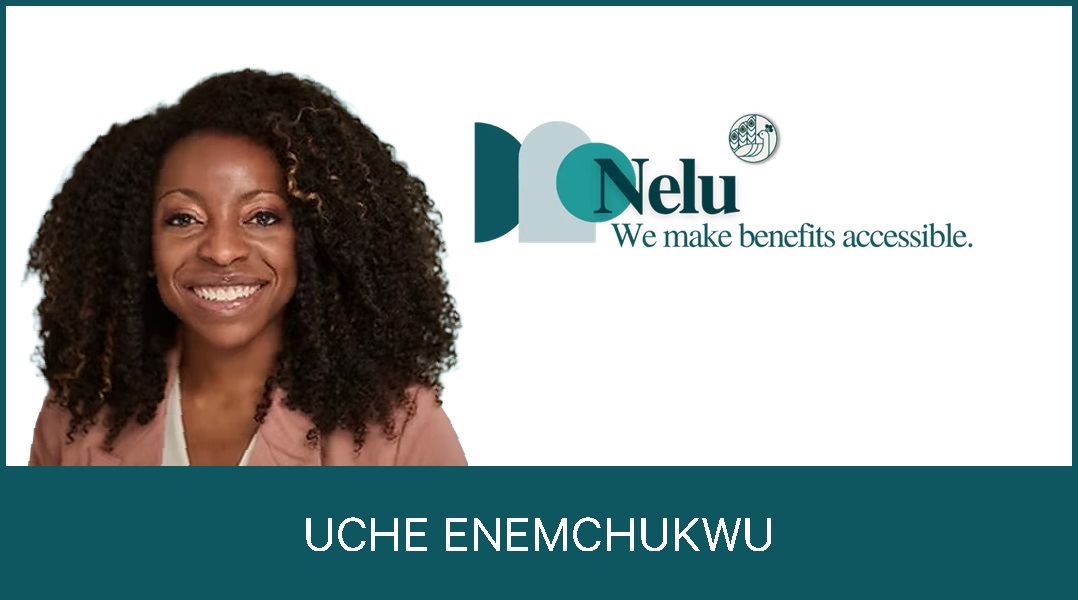
Uche Enemchukwu, CEO of Nelu Diversified Solutions
When one student fails, we ask what happened to the student. When most of the class fails, we examine the system. We must apply the same thinking to health and retirement benefits. When members struggle to engage with their benefits, we often attribute it to financial literacy and sometimes to a lack of personal responsibility. In doing so, we ask members to meet us where we are, instead of meeting them where they are.
The global move from defined benefit to defined contribution has shifted the burden of savings risk and decision-making onto the member. Rising healthcare costs are doing the same, through higher premiums and higher out-of-pocket costs. These structural shifts are landing amid rising distrust of institutions, attention spans reshaped by social media and AI, and household budgets strained by the cost of housing, fuel, and groceries.
These broader socio-environmental pressures are compounded by challenges created by our own benefits design silos, fragmented systems, and disconnected member experiences. It is in these conditions that we expect our members to understand and navigate increasingly complex benefits information.
We must design the member experience to support understanding.
We cannot assume our members have a certain level of knowledge and attention span. I have heard, “benefits is not rocket-science”. I used to agree, until the day an actual rocket scientist appealed their multi-plan pension benefits. I share this to say that I have seen benefits from many perspectives, as an attorney, consultant, and plan sponsor — but never from that of someone who thinks in trajectories. Nor through the eyes of a child translating benefits information for a parent. Somewhere between that rocket scientist and that child sits every member we serve.
The issue of meeting members where they are, goes beyond communications. We believe we have designed an experience that increases access and understanding, but our members tell us otherwise. In the UK, for example, nine in ten employers are confident they clearly explain their pension to employees. At least a third of those employees disagree.[1] Similarly, in the US, employees are often so confused by their own health coverage that they struggle to use it.[2] We see similar divergence in the Netherlands, where a lack of clarity in communication, amid a nationwide shift from defined benefit to defined contribution, has drawn questions.[3] Benefits may not be rocket-science to us, or to a rocket scientist, but the average member is lost.
We deliver benefits information at the times and in the formats that our members are least willing and able to absorb it.
Whether it is the first week of a new job, a brief annual enrollment window, or when it fits a packed corporate calendar, we toil over delivering communications that can only be described as written for compliance rather than comprehension. In short, we communicate on schedules, where members’ readiness to understand usually arrives later — outside the enrollment window and outside the communications schedule. Readiness often occurs at the critical moments of a new baby, a bankruptcy, a diagnosis, or a parent who suddenly needs care. The recent implementation of South Africa’s Two-Pot retirement system illustrates this principle. Data shows that members engaged in unprecedented numbers at the withdrawal decision.[4] South Africa’s system and circumstances are unique, but the broader lesson is universal — engagement often aligns with need and relevance. We cannot treat emergency and retirement finances as two separate problems.
Members do not experience life as separate programs.
The reality of offering benefits, is that they are designed, administered, and therefore accessed in silos. As such, we cannot assume our members are aware of how our benefit programs can work together to support their unique needs.
For example, financial challenges can create mental health challenges and mental health challenges can create all sorts of other issues. And, the barrier to access could be emotional rather than informational. That experience is happening as one journey. Our fragmented benefits are not set up to take a full view of a situation. For pooled and union retirement funds, in particular, scale and separation from the employer or base group can cause the member to lose sight of the fund and related financial wellbeing programs, and the trustees to lose sight of the member’s unique needs.
The opportunity is to meet members at their moments of readiness with information that helps them understand how their benefits work together.
If most of the class is failing, the answer is not to blame the students. The same is true in benefits. When members struggle to understand, trust, and use what we provide, the question is not whether they are trying. It is whether we have designed systems capable of meeting them where they are.
Meeting members where they are requires designing the benefits experience around how and when they learn, make decisions, and seek support. It is about designing member experiences that meet moments of readiness and connect benefits into a coherent journey.
That is the foundation of Benefitable — a member experience tool designed to help members understand how the benefits available to them fit together to meet their unique needs.
Ed’s note: EBnet.Stream discussed global pension trends in a recent episode of Industry Insights. Watch that conversation here.
ENDS
[1]Penfold, UK Pension Gap report, 2026. Reported in “Employees confused about pensions despite employer confidence: Penfold,” Corporate Adviser, 22 June 2026, https://corporate-adviser.com/employees-confused-about-pensions-despite-employer-confidence-penfold/. Penfold found 89% of employers were confident they had clearly explained their scheme, while 37% of employees said their pension was never clearly explained to them or they could not remember an explanation.
[2]“Workers are often too confused by their health coverage to use it,” BenefitsPro, 19 June 2026, https://www.benefitspro.com/2026/06/19/workers-are-often-too-confused-by-their-health-coverage-to-use-it/.
[3]Autoriteit Financiële Markten (AFM), annual progress evaluation of the Wet toekomst pensioenen transition, prepared for the Ministry of Social Affairs and Employment, February 2026, https://www.afm.nl/en/sector/actueel/2026/feb/tb-voortgangsevaluatie-wtp. The regulator found participant communication had improved but explanations of the differences between the old and new systems were often insufficient, and called on pension providers to treat communication as a core process.
[4]“Two-pot frenzy: Alexforbes processes withdrawals worth R1.5bn in a week,” News24, September 2024, https://www.news24.com/business/companies/two-pot-frenzy-alexforbes-processes-withdrawals-of-r400-million-in-a-week-20240909 (78,000 claims in the first week, equivalent to six months of claims under the prior system; 190,000 Old Mutual clients used its two-pot WhatsApp channel in the first two days); “Alexforbes Surpasses One Million Savings Pot Withdrawal Claims Since Two Pot System Launch,” FAnews, 31 March 2026, https://www.fanews.co.za/article/retirement/1357/general/1358/alexforbes-surpasses-one-million-savings-pot-withdrawal-claims-since-two-pot-system-launch/43681.