












































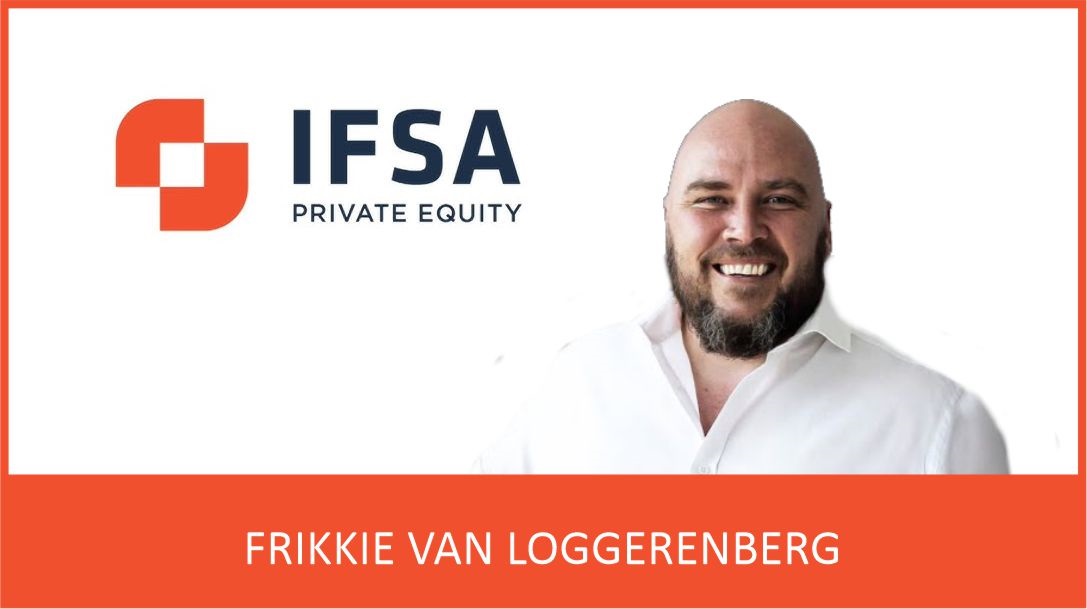
Frikkie van Loggerenberg, CEO of IFSA Asset Managers
Most South African investors spend their energy tracking market performance and chasing returns. Very few track the costs that are quietly working against them. Yet investment fees that compound in silence and can cost investors hundreds of thousands of rands over the course of a working lifetime.
The issue is not limited to one type of cost. South African investors are routinely exposed to a layered fee structure that includes the Total Expense Ratio (TER) on their underlying fund, adviser commissions, platform fees, hidden transaction costs generated every time a fund trades internally, and tax drag on investment returns. Individually, each cost may appear manageable. Together, they represent one of the most significant threats to long-term wealth accumulation in South Africa.
“Most investors are focused on what their money is doing. Very few are asking what their money is costing them,” said Frikkie van Loggerenberg, CEO of IFSA Asset Managers. “A difference of just 1.5% per year in annual fees can cost an investor more than R400,000 over a 20-year investment horizon. That is not a small number. That is a retirement.”
The compounding cost problem
Consider R500,000 invested over 20 years at 10% annual growth. At 1% in annual fees, the investor builds significantly more wealth than the same investment carrying 2.5% in annual fees. The difference between those two scenarios exceeds R400,000 by year 20. Research published by RetireSmart.co.za in 2025 found that a 2% fee differential results in R1.7 million less in accumulated wealth over a 20-year period. Yet most South African investors have never compared the cost structures of their investments, and many are unaware that multiple layers of fees are being deducted simultaneously.
This matters particularly in the current savings environment. The FNB Retirement Insights Survey 2026 shows that 73% of South Africans under 60 now have a retirement plan, up from 60% in 2025, and that the average allocation of disposable income toward retirement has grown from 7% in 2024 to 10% in 2026. South Africans are saving more. But saving more into a high-cost structure does not close the gap. It simply increases the amount being eroded.
“Progress is not protection,” added van Loggerenberg. “We applaud the fact that more South Africans are engaging with their financial futures. But having a plan and having the right plan are two very different things. If your investment structure is not transparent, not independently reviewed, and not tax-efficient, you may be working far harder than you need to for far less than you deserve.”
The tax cost most investors ignore
While fees tend to dominate the conversation around investment costs, tax remains one of the most overlooked drains on long-term returns. Capital gains tax, dividends tax, and income tax on investment returns are all costs that accumulate over time and can significantly reduce what an investor actually keeps.
Unlike market volatility, tax is a cost that can be actively managed. The right investment structure, reviewed regularly and aligned to an investor’s personal circumstances, can make a meaningful difference to the net return over a 20 or 30-year horizon.
Budget 2026 offered South African investors a concrete opportunity in this regard, increasing the annual retirement annuity contribution limit from R350,000 to R430,000 for tax-deductible savings. For investors in higher income brackets, this change alone could result in a significant reduction in annual tax liability.
“Tax is a cost that most investors overlook entirely,” said van Loggerenberg. “Capital gains tax, dividends tax, and income tax on investment returns can all be managed with the right structuring. The increase in the retirement annuity contribution limit in Budget 2026 is an opportunity that most South Africans are simply not taking full advantage of.”
A call to review
With South Africans saving more than they were a year ago, the focus now needs to shift from whether people are investing, to how well their investments are actually structured. The three questions every investor should be asking are straightforward:
- What am I paying in total costs?
- Who is advising me, and in whose interest?
- And is my investment structured to reduce the tax I pay on returns?
These are not complex questions. But for most investors, the answers are not readily available. Greater transparency around fees, advice structures, and tax efficiency remains one of the most important conversations the South African financial services industry needs to have.
Ed’s note: At EBnet’s webinar on 23 September at 9am, we will be unpacking fees – join us by registering here.
ENDS