















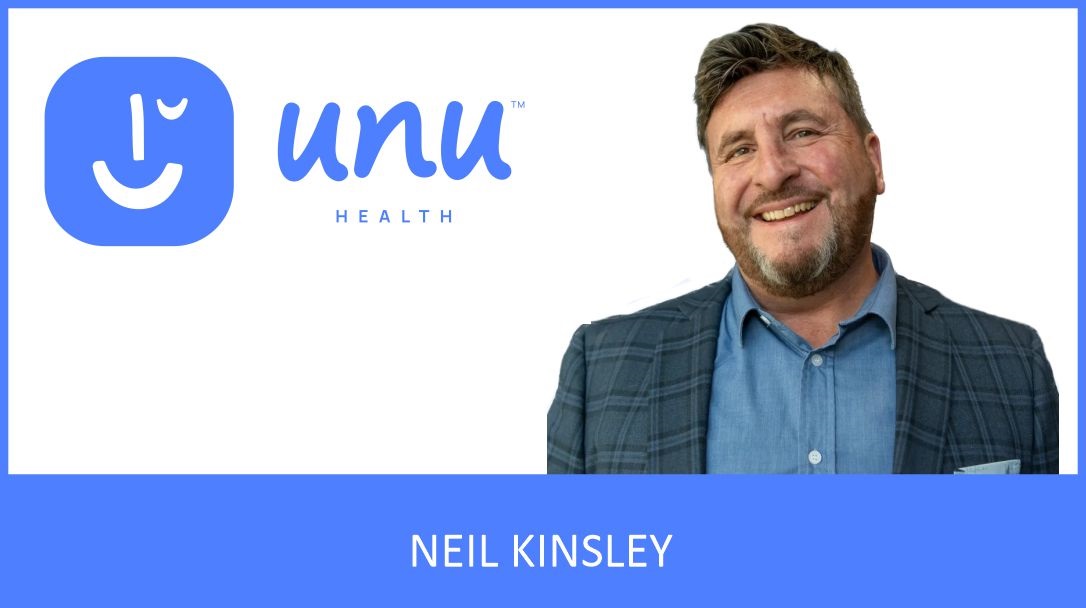
Neil Kinsley, Head: Global Distribution at Unu Health
As the year gains momentum and teams return to full gear, organisations across South Africa and globally are navigating a familiar balancing act: driving performance while supporting people in increasingly demanding work environments. Employee wellbeing is no longer a peripheral conversation, but for many employers, knowing how to support it in a practical, affordable way remains a challenge.
Workplace targets are live, schedules are packed, and the pace of business continues to accelerate. In this context, health challenges don’t remain isolated to individuals. When employees struggle to get timely care, the effects ripple through teams, workflows and, ultimately, business outcomes.
Across South African workplaces, the impact of employee health challenges is visible in multiple ways. Absenteeism — where employees are unable to attend work due to illness — costs the economy up to R19 billion a year and equates to roughly 15% of employees being absent on any given day[i]. A broader measure that includes presenteeism — when employees are at work but unwell and less productive — is estimated to cost as much as R250 billion annually, significantly reducing overall productivity[ii].
These are not abstract statistics. They reflect the everyday reality facing employers who are trying to maintain momentum while managing the knock-on effects of delayed or disrupted healthcare access.
Importantly, this challenge is not always about a lack of healthcare entirely. Many employees do have some form of cover or access to care, but traditional models often rely on physical doctor visits during working hours. When consulting a healthcare professional requires taking time off work, travelling long distances, or waiting days for an appointment, care is delayed. Small issues escalate, stress increases, and avoidable sick days follow.
“Employee healthcare should reduce friction, not add to it,” says Neil Kinsley, Global Head of Sales and Distribution at Unu Health. “When access to care fits around work and life, early intervention becomes possible — and that has a direct impact on productivity and wellbeing.”
For employers, the landscape is varied. Some organisations offer no formal healthcare benefits, others provide limited or traditional options, and many are actively searching for solutions that are affordable, scalable and easy to use. What unites them is the need for healthcare access that works within the realities of the modern workday.
International research supports this shift in thinking. Studies from the UK and other markets show that organisations which actively support employee health and wellbeing see measurable improvements in productivity compared to those that do not. Further data indicates that access to health support — including mental health resources — plays a growing role in employee engagement, retention and satisfaction[iii].
In South Africa, these effects are amplified by systemic pressures on public healthcare and long waiting times. For many workers, a minor health concern can become a significant issue simply because dependable care is not accessible when it is needed most.
This is where newer, more flexible healthcare approaches are gaining traction. Digital and hybrid health solutions — offering access to medical professionals, virtual consultations, medication support and wellness insights — help shift care from reactive to proactive. Crucially, they provide an accessible entry point for employers, including those who may not currently offer any healthcare benefits at all.
The benefits for organisations are tangible:
- Healthier teams, as employees receive support early rather than delaying care
- Reduced absenteeism, through faster intervention and recovery
- Improved engagement, as employees feel supported rather than stretched
- Stronger retention, as meaningful health support becomes a differentiator
“When employees can consult a qualified doctor from their phone, healthcare becomes part of everyday life rather than a disruption to it,” Kinsley adds. “That’s when we see real improvements in how teams function and perform.”
Digital and hybrid healthcare solutions — combining telemedicine, easy pharmacy access, wellness analytics and lower out-of-pocket costs — are rapidly emerging as practical answers. They help employers close the gap between coverage in theory and care in practice. They also give businesses real-time insight into wellbeing trends, enabling targeted interventions that address persistent pain points.
For organisations serious about performance in 2026 and beyond, employee health cannot be an afterthought. It must be a strategic pillar — one that supports people and business outcomes.
ENDS
[i] https://www.citizen.co.za/business/sick-days-costing-r19-billion-per-year/
[ii] https://www.timeslive.co.za/sunday-times-daily/news/2024-11-05-absenteeism-and-presenteeism-cost-sas-workplace-about-r250bn/
[iii] https://zipdo.co/employee-wellness-statistics/