
































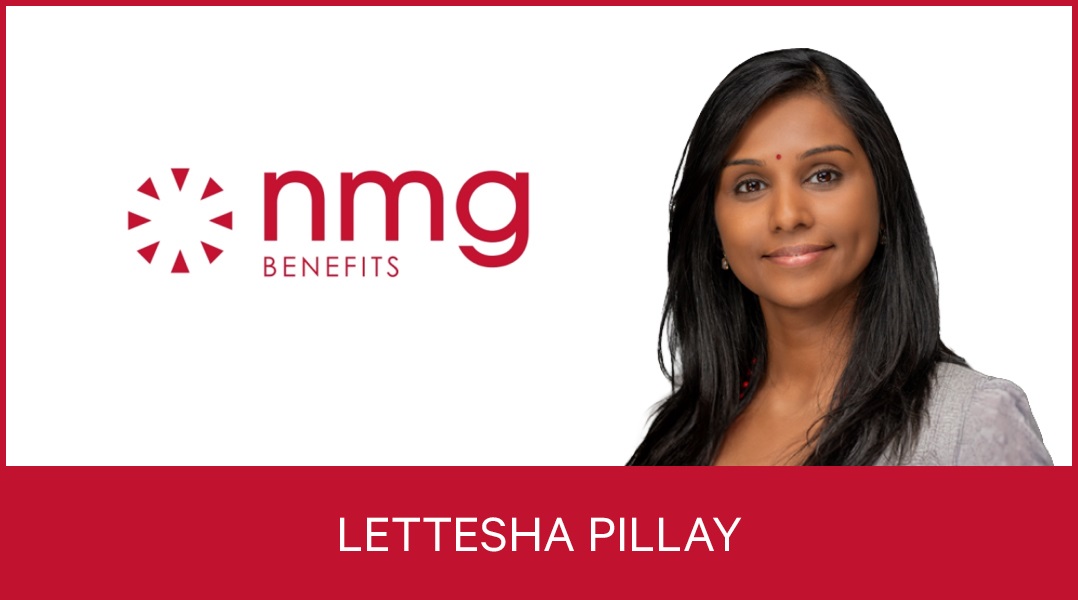
Lettesha Pillay, Head of Business Development at NMG Benefits
Most employers believe that having employee benefits in place means they are doing right by their people. Retirement funds exist. Risk cover is provided. Medical options are offered. On paper, everything looks fine.
But, in many cases, the paper isn’t telling the real story.
Lettesha Pillay, Head of Business Development at advisory firm NMG Benefits, says that fewer than 10% of employees are contributing meaningfully towards savings, and more than half have no retirement savings at all – a consequence of benefits that exist, but are not working.
Pillay highlights that implementing employee benefits is only the starting point. In practice, benefit structures can remain static for extended periods. Even if they are renewed annually, they are not always reviewed to confirm that they remain relevant, cost‑effective, and aligned to the desired outcomes.
The real differentiator lies in moving beyond administration to true partnership, where benefits are shaped thoughtfully to deliver meaningful outcomes, not just provided. An employee benefits partner will help employers to understand whether those benefits are effective, and this starts with visibility. Many employers do not have a high-level view of whether their workforce is on track for a reasonable retirement outcome (the 75% income replacement benchmark). At the same time, they often have no individual-level insight into where specific groups or employees are falling behind.
Without this insight, strategy becomes guesswork, says Pillay. “The consequences of not reviewing benefits regularly are significant, and financial wastage is one of the most obvious. Employers may be paying for cover that is poorly matched to their workforce profile, overpriced due to years of inflation, or duplicated across different benefits. In some cases, high turnover groups are paying for benefits they are unlikely to ever use.”
Missed opportunities also carry a cost. Employers often think that improving outcomes requires higher investment returns, when the biggest levers actually sit elsewhere. Contribution rates, retirement age settings, benefit costs, and structure all have a greater impact on long-term retirement outcomes than short-term market performance – making annual reviews and adjustments critical.
The employee experience also matters. A benefits partner will ensure that the products are explained clearly and contextualised properly, and provide guidance at key moments. Without this, employees are left to make complex decisions with limited understanding, often leading to poor choices and a false sense of financial security.
So, what should employers be looking for in an employee benefits partner?
Strategic oversight: Employers should receive regular, structured reviews that focus on effectiveness. This includes analysing whether benefit design still aligns with the workforce, costs remain appropriate, and outcomes are improving over time.
Meaningful insight: Employers need to understand where their workforce sits today, where it is heading, and which levers can realistically change that path. To do so, they need to understand their own position, their gaps, and their options. A capable partner will provide both employer- and employee-level views.
Segmentation: A one-size-fits-all approach rarely works. Younger employees, mid-career earners, executives, and those nearing retirement all have different needs. Benefits should reflect this reality, rather than forcing everyone into the same structure.
Proactive guidance: The right partner takes a proactive approach. It will support employees at key moments, help employers to navigate changes in their workforce, and work alongside organisations to plan and refine benefits over time, rather than reacting with costly redesigns.
Tools such as NMG’s SmartGuide retirement consulting and modelling platform play an important role here. Such platforms help employers to understand which decisions truly move the needle. They also support better communication, allowing employees to engage with their benefits in a way that is practical and personal.
“Employee benefits represent one of the largest investments organisations make in their people,” says Pillay. “Leaving this investment on autopilot is a risk. The right partner will move beyond simply ensuring that the right benefits are in place, and ensuring that those benefits are making a real difference.”
ENDS