
































































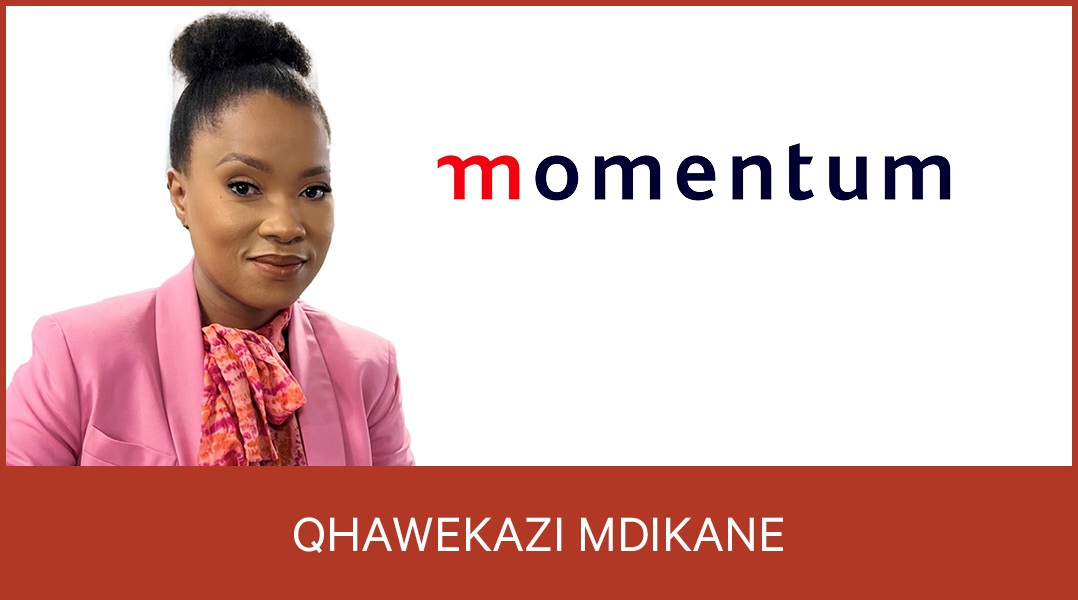
Qhawekazi Mdikane, Executive Head of Brand Marketing at Momentum
The two days that changed how I think about financial advice
When I recently helped my mother move into a retirement village, I was tasked with organising her financial affairs. I assumed it would take a lunch break at most with a few phone calls, emailed policy documents, and that would be it. That was not the case.
I was thrown headfirst into two whole days where I had to take off from work to sit with my mother to call insurers, request policy documents, confirm beneficiaries. Basically, we were reconstructing her financial decisions for the last 10 or even 15 years. At one point she looked at me and said, “I’m so glad you’re here. I wouldn’t know what I was doing.” What struck me in that moment was not how complicated the process felt for her, but that it should have been second nature for me.
I spend my days talking about advice, planning and protection. Yet sitting there with my mother forced me to confront an uncomfortable truth. Even if you work in this industry, you are not immune to human error or neglect. We are all guilty to some degree.
The human reality of retirement
Retirement is often presented as a beautiful sunset moment. The adverts show couples walking along beaches, sailing boats, travelling the world. It truly is advertised as the golden years. But retirement, like most life stages, is far more human. Sometimes it looks like hearing aids and long phone calls with insurers. Sometimes it looks like adult children helping parents navigate paperwork. Sometimes it looks like us trying our best to rationalise the decisions we made decades ago.
In this regard, my mother had done many things right. She had kept her insurance policies across her career, a divorce and well into retirement. But even then, some of these policies were more than a decade old and no longer relevant – so she has to communicate with the insurer. Calling insurers herself had also become difficult. Her hearing in one ear has deteriorated significantly, which makes navigating call centres frustrating. She prefers printed documents, while most communication today happens digitally. So, we sat together, going through verification questions, requesting documents and making notes. I blocked out two days in my calendar. It took all of them.
The experience reminded me of something important about the financial services industry that I know and care deeply about.
We do incredibly important work. We protect families, businesses and futures. But we also have to keep asking ourselves whether the systems we build truly meet people where they are. Not everyone is comfortable navigating digital portals. Not everyone wants to interact with automated systems. Older clients, in particular, often want something simpler. A printed document. A clear explanation. A human conversation.
But this experience also reminded me of another truth. Financial planning is a partnership.
This only works if both sides show up.
This whole process with my mother showed me how fast life moves and how easy it is to assume your financial decisions from years ago can lose their credibility. Life moves fast, and our financial lives have no choice but to move at the same pace on our journey to success. Around the same time, my own life had entered a new phase. My daughter had just started Grade 1. My family had bought a new house. I am approaching my own milestone birthdays.
Those moments should have prompted a financial review long ago. So, I did something many people delay doing. I sat down with a financial adviser. What I thought would take an hour unfurled into a deep discussion about my life, responsibilities and the future I dream of for myself and my family. I was asked questions I had never fully, and realistically, considered. What would happen to my daughter if something happened to me? How long would my family be financially secure? What provisions exist for her education and independence? What does my estate plan look like today compared to when I first created it?
That experience reminded me why advice matters.
Advice for success – Get your life folder in order
For me, advice has never been about selling products. It is where we help people shine a light on their financial lives, illuminating places they never thought existed.
One practical outcome from my two days with my mother was something I now recommend to everyone: create what I call a “life folder”. Think of it as the financial version of a family emergency kit.
A life folder is simply one organised place where your most important information lives. Policy documents, beneficiary details, your will, contact information for advisers and insurers, identification documents, medical information. It can exist digitally or physically, or both. What matters is that someone you trust can understand your financial life if they ever need to step in.
I’ve got to say, helping my mother organise her finances was far more administrative than I had ever imagined. It was a reminder that financial planning ties directly to your success, and your security. It can’t just be about numbers and policies. We have to see it as people, families and the milestones (or disasters) that shape our lives.
The financial industry has a responsibility to make advice more accessible and relevant. But at the same time, people also have a responsibility to stay engaged with their financial lives AND their advisers. Like any meaningful relationship, it works best when both sides are fully invested.
ENDS