























































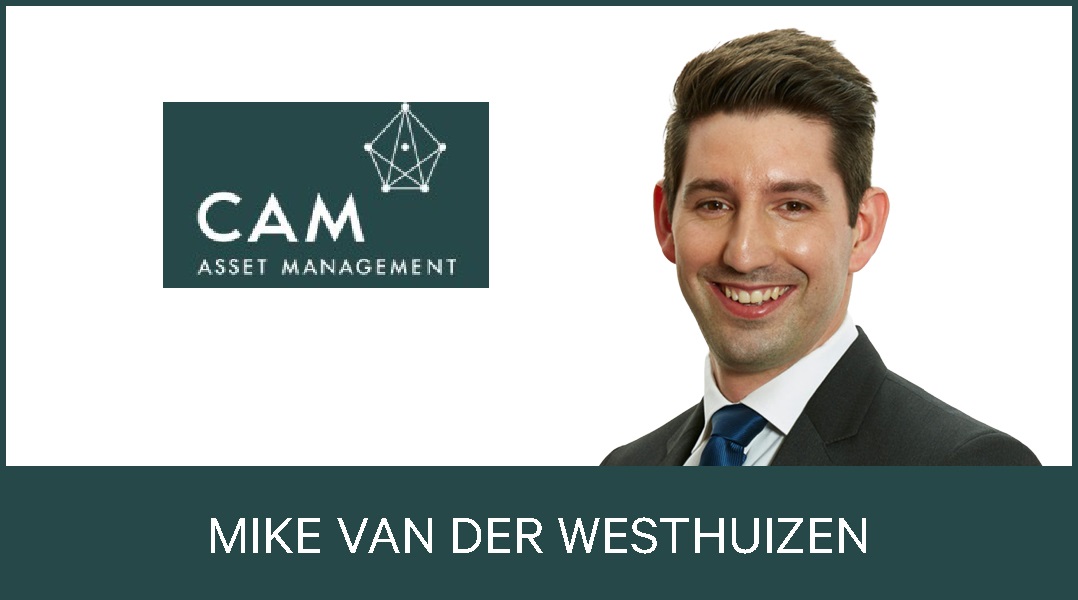
Mike van der Westhuizen, Portfolio Manager at CAM Asset Management
The South African Reserve Bank (SARB) faces another finely balanced interest rate decision in September, with CAM Asset Management expecting the Monetary Policy Committee (MPC) to leave rates unchanged, although the case for a 25-basis-point rate hike remains strong.
“In another very tight decision, our base case is that the SARB holds rates steady, but it is effectively a coin toss and will depend on whether the MPC is willing to look through some of the shorter-term inflation dynamics,” says CAM Asset Management Portfolio Manager, Mike van der Westhuizen.
“Based on short-term dynamics alone and where the Consumer Price Index (CPI) currently sits relative to the 3% target, one could easily argue for a 25-basis-point rate hike,” he says.
Van der Westhuizen expects the SARB to raise rates again, but says the timing remains difficult to call, with the move potentially coming either in September or November this year.
“The Federal Reserve (Fed) now embarking on a hiking cycle undoubtedly changes the dynamic. Regardless of whether the SARB holds or hikes, we expect the tone from SARB Governor Lesetja Kganyago to remain hawkish.”
Inflation risks have shifted higher
Since the previous MPC meeting, Van der Westhuizen says the balance of risks has become more asymmetric, with oil prices remaining elevated.
“It will be important to see whether the SARB’s inflation assumptions continue to incorporate a normalisation in oil towards the $90 level assumed in the July Quarterly Projection Model or whether they are marked closer to current levels above $100,” he explains.
He expects the SARB’s inflation assumptions to be revised higher, moving them further away from the 3% target.
“The SARB is unlikely to react to oil in isolation. The key issue is whether higher fuel costs broaden into transport costs, food inflation and wage demands. Those second-round effects are far more important than the initial fuel shock itself.”
Van der Westhuizen also points to higher refining margins and refined product prices, particularly diesel.
“There are further petrol and diesel price increases on the way for consumers, which will weigh on already weak domestic demand from a growth perspective,” he says.
Weak growth remains secondary to inflation
Although South Africa’s (SA’s) economy contracted in the second quarter, Van der Westhuizen expects inflation to remain the MPC’s primary concern.
“The MPC will undoubtedly acknowledge weak growth, but growth remains a secondary consideration when inflation risks are elevated,” he says.
“The committee has consistently shown that it will tolerate sub-trend growth if that is required to protect price stability and maintain inflation expectations around the 3% target,” he explains.
SA’s August CPI print will therefore be closely watched. CAM Asset Management expects inflation to reaccelerate towards 5% year on year in the coming months, following July’s 4.3% print.
“A headline surprise above expectations would be noteworthy, but perhaps more important would be evidence that supports inflation or core inflation is becoming more persistent,” Van der Westhuizen explains.
“More important still is the SARB’s forecast of inflation into the next year. Whether that shifts materially higher will have greater influence on the policy response than a single print.”
Fed hike raises the stakes
The Fed’s 25-basis-point rate hike adds another layer of complexity to the SARB’s deliberations. “The hike demonstrated the Fed’s seriousness in battling inflation and attempting to shift it closer to the 2% target,” Van der Westhuizen says.
He views the move largely as a “credibility hike”, given that recent inflation pressure has been driven by a supply shock while underlying inflation has remained relatively well behaved.
“The ghosts of 2021 and 2022 are likely front of mind for the Federal Open Market Committee (FOMC). A policy setting that is too dovish in the face of CPI pressure could mean that they lose credibility with the market.”
The Fed has indicated another 25-basis-point rate hike in 2026, with rates then expected to remain unchanged through 2027.
For SA, Van der Westhuizen says the future path of United States (US) interest rates is arguably more important than the latest hike itself.
“The long-term median dot moved 25 basis points higher to 3.25%. This is an important variable to watch, as it reflects the FOMC’s assessment of the long-term equilibrium interest rate and points to a higher-for-longer policy path. As it stands, the Fed remaining in a hiking or holding pattern acts as more of a headwind to emerging-market assets,” he says.
Rand resilience remains an important buffer
Van der Westhuizen says the rand has remained resilient despite the events of this year.
“The SARB does not target the exchange rate. However, the rand matters because of its influence on the inflation outlook. Persistent rand weakness increases imported inflation and raises the risk that inflation expectations become less anchored,” he says.
He believes SA’s domestic fundamentals are in a better position than two years ago, which remains supportive of the currency.
“The SARB will have to assess how the more hawkish Fed affects SA’s real yield differential and how that feeds into the currency,” he says.
A hold would not necessarily be a dovish signal
Even if the MPC leaves rates unchanged, Van der Westhuizen believes the recent global backdrop has pushed any meaningful discussion around rate cuts further into the future.
“For as long as sticky global inflation and SA inflation remain central, central banks in general will be reluctant to cut rates,” he says.
Beyond the decision itself, CAM Asset Management will be watching the SARB’s updated inflation forecasts for 2027 and 2028, changes to its oil-price, exchange-rate and global growth assumptions, the MPC voting split and Governor Kganyago’s comments on inflation expectations.
The SARB’s own assessment at the previous MPC meeting was that its current policy stance remains restrictive, but not excessively so. How it communicates this assessment at next week’s meeting will be important in shaping expectations for the path of interest rates from here.
“If the SARB revises inflation forecasts higher but leaves rates unchanged, that would likely be interpreted as a hawkish hold. Conversely, unchanged forecasts and a more balanced assessment of risks would suggest the current rate setting remains appropriate in the MPC’s view,” Van der Westhuizen concludes.
ENDS