
































































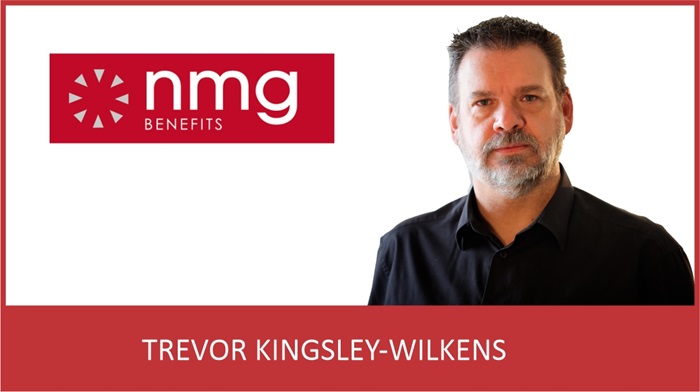
Trevor Kingsley-Wilkins, Head: Retirement Fund Consulting at NMG Benefits
Market volatility is a fact of life that fiduciaries cannot control. However, there is one variable entirely within the control of trustees and employers, the cost of participation. While a 1% fee might seem negligible on an annual statement, over a 40-year career, it is the difference between a comfortable retirement and a financial crisis.
The Mechanics of “Negative Compounding”
In retirement savings, time is your greatest ally, but fees are your most persistent enemy. We often speak of the magic of compound interest, but fees work in the exact opposite direction. Every Rand paid in fees is a Rand that is no longer earning returns.
Actuarial data shows that a seemingly small 1% difference in annual fees can reduce a member’s final retirement pot by 20% to 25%. This directly impacts the Net Replacement Ratio (NRR) which is the percentage of your final salary that your savings can replace as a monthly pension. If your goal is an NRR of 75%, a high-cost structure could silently erode that to 55%, forcing a significant lifestyle downgrade exactly when you are most vulnerable.
The Myth of the “Free Lunch”
In a competitive market, service providers often market “zero-fee” administration or heavily discounted consulting. As the saying goes, there is no such thing as a free lunch. In an integrated pricing model, costs are rarely eliminated; they are merely shifted.
A “free” service is often a psychological nudge to obscure higher margins elsewhere, such as in the Total Expense Ratio (TER), the annual percentage of assets used to cover investment management and operational costs. If a service appears free, fiduciaries must interrogate where the provider is recovering their margin. Failing to “unbundle” these costs. separating administration from investment management, leaves members at risk of cross-subsidising hidden inefficiencies.
Comparing Apples with Apples: The RSC Standard
The greatest barrier to fair pricing is “information asymmetry” which is where providers know more than the clients they serve. For years, comparing different funds was nearly impossible because of fragmented disclosure.
To fix this, the industry should use the ASISA Retirement Savings Cost (RSC) Disclosure Standard. Unlike a standard TER, which only looks at the investment level, the RSC is a holistic tool. It forces providers to break down costs into four clear pillars:
- Investment Management: The cost of the “engine” (including performance fees).
- Administration: The cost of record-keeping and member systems.
- Advisory: The fees paid to consultants or brokers.
- Other: Regulatory levies and audit fees.
For trustees, the RSC is the only way to ensure an “apples-with-apples” comparison. If a provider cannot or will not provide an RSC-compliant breakdown, it should be viewed as a major governance red flag.
The “Two-Pot” Pressure
The regulatory environment in South Africa has again become more complex, notably with the implementation of the “Two-Pot” system. This system aims to protect long-term savings while providing short-term liquidity, and the administrative re-engineering required prior to implementation was significant.
Administrators face higher costs for system upgrades and member education. Fiduciaries must ensure these costs are managed with discipline. The implementation of new laws should not be a “blank cheque” for service providers to permanently increase their fee structures.
The Fiduciary Charge
Trustees and employers are the last line of defence for member wealth. Effective fee stewardship requires moving beyond passive oversight. It demands:
- Unwavering Transparency: Insisting on the RSC standard.
- Critical Interrogation: Looking past marketing labels to find hidden costs.
- Continuous Benchmarking: Ensuring the benefits of scale are passed to members, not absorbed by providers.
In the South African retirement industry, value for money is not just a negotiation tactic; it is a moral imperative. By challenging every basis point, fiduciaries ensure that more of a member’s hard-earned money stays where it belongs, growing for their future.
ENDS