




































































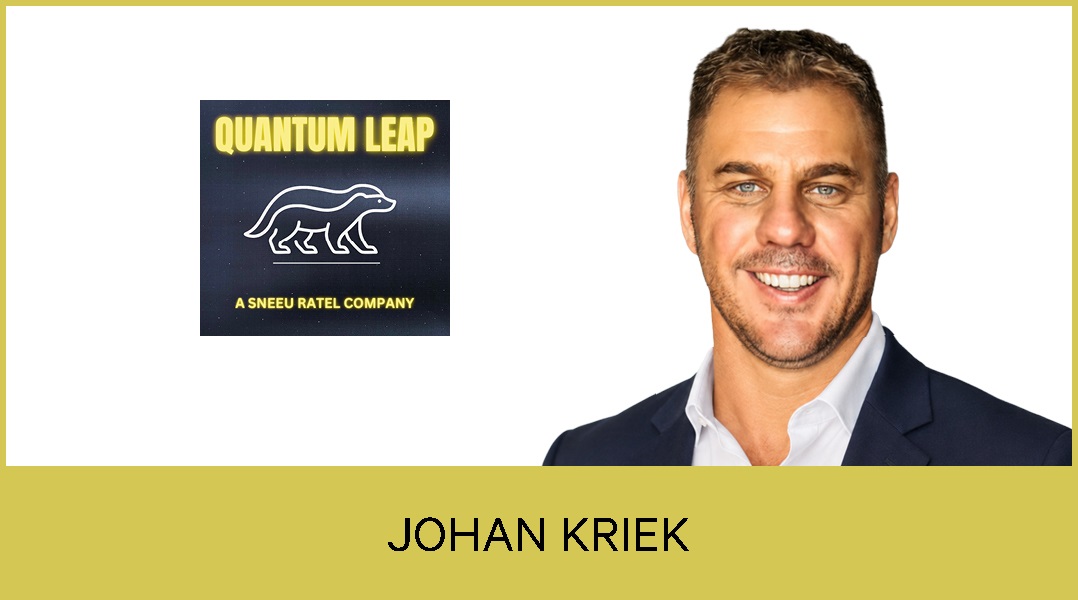
Johan Kriek, Founder of Quantum Leap
South Africa’s retirement-income debate often assumes that members will receive advice at the point of retirement.
For some members, that will be true. Good advice can be extremely valuable, especially where the member has complex circumstances, other assets, dependants, tax considerations or specific income needs.
But advice cannot be the only protection mechanism in a retirement system.
Many members will not receive high-quality retirement advice. Some cannot afford it. Some will not seek it. Some may receive advice once, at retirement, but not ongoing monitoring as markets, inflation, health, spending needs and annuity pricing change. Others may be placed into products that are suitable at outset but not properly governed over time.
That leaves a dangerous gap.
At retirement, members are expected to make decisions about investment strategy, drawdown rate, longevity risk, inflation, tax, access to capital, dependants and whether to annuitise. These are not simple consumer choices. They are complex risk-management decisions.
For members who cannot afford ongoing advice, “choice” can quickly become abandonment.
The advice gap
The industry often responds to retirement complexity by saying members need advice.
That is true, but incomplete.
Advice can help members understand trade-offs. It can help them select products. It can help them avoid obvious mistakes. But advice does not remove the need for governance.
A member who chooses a living annuity still needs to know whether the income remains affordable. A member who starts with a sensible drawdown rate can still be damaged by poor market returns, inflation, charges or sequencing risk. A member whose income looks sustainable at age 65 may be in a very different position at age 75.
A once-off advice event cannot carry all of that.
Nor can we assume that all members will be able to access ongoing advice at a reasonable cost. Lower- and middle-income retirees are often the least likely to have access to high-quality ongoing support, yet they may be the most exposed if things go wrong. They have less margin for error, fewer alternative assets and less ability to recover from poor decisions.
If the retirement system responds to complexity by saying “get advice”, it risks protecting mainly those who were already best placed to protect themselves.
Defaults recognise how real people behave
Defaults matter because they recognise reality.
Many people do not engage deeply with pensions. They delay decisions, avoid complexity, follow the path of least resistance, or rely on whatever option is placed in front of them.
That is not a moral failure. It is a design reality.
A retirement system that depends on every member becoming an informed retirement-income manager will fail many of the people who need support most.
This is why governed defaults matter.
A default does not have to mean compulsion. It does not have to remove flexibility. It does not have to force every member into the same product. A good default is a structured starting point: a retirement-income pathway designed, monitored and reviewed in the member’s interest, with the ability to opt out or personalise where appropriate.
The point is not to eliminate choice. The point is to stop pretending that unsupported choice is enough.
A governed default is not just a product
A governed retirement default should do more than place members into a product.
It should provide evidence that the retirement-income strategy remains appropriate over time.
That means monitoring whether income is still affordable, whether the investment strategy supports the income being paid, whether inflation is eroding purchasing power, whether sequence risk has damaged the outlook, whether charges are undermining value, whether the member is at risk of running out of money, and whether annuitisation or partial annuitisation should be reconsidered.
It also means looking beyond the individual member in isolation. Trustees, funds and providers should be able to understand whether different groups of members are experiencing different outcomes. Are members with smaller pots drawing too much? Are older members exposed to too much investment risk? Are members in certain strategies more likely to face income cuts later? Are some cohorts receiving poor value from charges relative to the outcomes being delivered?
A governed default is not a product. It is a process for turning retirement savings into monitored retirement income.
That process needs data, risk measures, review points and clear intervention triggers. It should be possible to identify when a member’s income is becoming unaffordable before the problem becomes irreversible. It should be possible to see when the income strategy has drifted away from the original plan. It should be possible to communicate clearly when action is needed.
That is very different from simply giving a member a drawdown range, a fund fact sheet and an annual statement.
Living annuities are not inherently the problem
Living annuities are often criticised because some retirees draw too much, invest poorly or run out of money.
That criticism is understandable. But it can miss the point.
The living annuity itself is not necessarily the problem. Flexibility has real value in retirement. Members have different needs, family circumstances, health profiles, tax positions and views on access to capital. A living annuity can accommodate differences that a more rigid product cannot.
The problem is ungoverned flexibility.
A living annuity without ongoing affordability monitoring leaves too much risk sittingon the individual. It asks the retiree to manage investment risk, longevity risk, sequencing risk, inflation risk and spending risk, often with limited tools and limited confidence. Even where advice is provided at outset, the member’s position can change materially over time.
Used badly, a living annuity is just a flexible product.
Used properly, it can form part of a governed retirement-income framework.
That framework should help determine a sustainable starting income. It should monitor whether that income remains affordable. It should assess whether the investment strategy is still appropriate. It should identify when poor returns or high withdrawals have weakened the position. It should create prompts for action, including lower income, different investment risk, further advice or partial annuitisation.
In other words, the aim should not be to remove flexibility. It should be to govern it.
What trustees, funds and providers should evidence
If members cannot be expected to manage all these risks themselves, funds and providers need to take more responsibility for the design and monitoring of retirement-income pathways.
That does not mean guaranteeing outcomes.
It means evidencing outcomes.
Trustees and providers should be able to demonstrate that the default income level is reasonable, that the underlying assumptions are clear, that risks are monitored, that members are flagged before harm becomes severe, and that the framework is reviewed over time.
For a governed retirement-income default, the evidence should include the basics: expected income, downside income, probability of running out of money, sensitivity to poor early returns, inflation erosion, charges, residual capital and the circumstances in which intervention may be needed.
It should also be clear what is and is not being promised. If income is not guaranteed, members should not be allowed to believe that it is. If income may need to fall, that should be explicit. If the framework targets income to a certain age rather than for life, that should be clear. If annuitisation is expected later, the conditions for reconsidering it should be monitored.
This is where governance matters most. The member does not need to understand every actuarial assumption or stochastic model. But someone must understand the risks, monitor them and be accountable for the framework.
Regulation should support governed defaults
South Africa’s retirement reform direction creates an opportunity to rethink the boundary between advice, products and governance.
The test should not only be whether members are given information or access to advice. Information is not the same as protection. Access to advice is not the same as ongoing support. A disclosure document is not a retirement-income framework.
The better question is whether the system can provide a governed pathway for members who do not engage, cannot afford advice or need a safe starting point.
A default living-annuity framework, with opt-out and ongoing monitoring, could be a practical intermediate step between pure member choice and compulsory annuitisation. It could preserve flexibility while reducing the risk that members are left alone with decisions they are unlikely to manage well.
Such a framework would not prevent advice. It would make advice more useful. Advisers could focus on members who need personalised planning, while the default framework provides a governed baseline for those who would otherwise receive little or no ongoing support.
That is important. Governed defaults and advice should not be seen as competitors. They solve different parts of the problem.
Advice helps individuals make better personal decisions.
Governance makes sure the system does not depend entirely on each individual making and revisiting those decisions alone.
Choice without governance is not enough
Retirement-income policy often becomes trapped between two unsatisfactory extremes.
At one extreme is full individual choice, where members are expected to manage complex retirement risks themselves.
At the other is full product prescription, where flexibility is reduced because the system does not trust members to make good decisions.
Governed defaults offer a better route.
They recognise that many members need a structured starting point. They recognise that flexibility has value. They recognise that advice is useful but not universally available. Most importantly, they recognise that retirement income is not a once-off decision made at retirement. It is an ongoing process that needs monitoring and adjustment.
The members most in need of retirement-income support are often the least able to pay for it.
If the system responds by saying “get advice”, it risks protecting only those who were already easiest to protect.
Governed defaults are not about removing choice. They are about making sure that members who do not or cannot make complex retirement decisions are not left unsupported.
Retirement income should not depend on a member’s ability to buy ongoing advice.
It should depend on a system designed to provide sustainable income, monitor risk and intervene before avoidable harm becomes irreversible.
Ed’s note: This is the third in a series of articles that Johan is writing for EBnet building up to this year’s Actuarial Society of South Africa’s Convention. You can find his previous two articles here:
The pension system South Africa nearly has
Living annuities are not the problem – ungoverned drawdown is
ENDS