

































































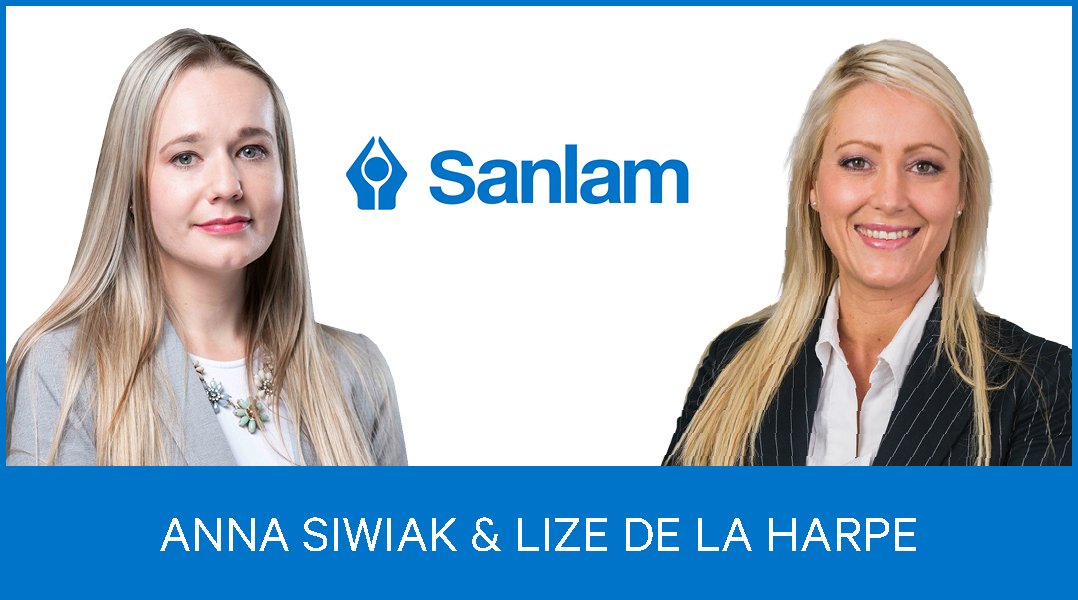
Anna Siwiak, Head: Product Development at Sanlam Umbrella Solutions; and Lize de la Harpe, Senior Legal Adviser at Sanlam
#FinTok, the corner of TikTok where people swap money tips and budgeting hacks, has over 4.7 billion views, according to Franklin Madison. That says a lot about how people get financial advice these days, especially considering that financial information is now more accessible than ever before, whether it’s retirement calculators, social media content, TikTok videos or AI-powered tools. Yet, off the back of its 2026 Sanlam Benchmark findings, Sanlam Corporate says it is vital not to mistake access to information for access to advice.
Technology has completely changed how retirement fund members access information. However, the Benchmark suggests that better access hasn’t necessarily translated into better retirement outcomes. The research found that 50% of pensioners can no longer maintain their pre-retirement standard of living within four to five years of stopping work, while 47% retire with debt. Additionally, 66% of pensioners said they would have benefited from more support before retirement, including earlier access to financial advice and retirement counselling.
There is also a disconnect between when people think they should seek advice and when they actually do. Benchmark Survey respondents say the ideal time to start engaging on their retirement savings is from age 35 (35% of respondents) or as soon as they are off track (24% of respondents). Yet 43% of retirees never meet with a professional financial adviser, and those who do, only engage on average one year and eight months prior to retirement. This timeline is structurally too late to alter financial outcomes.
And the way people go searching for answers is shifting too. Benchmark 2026 findings show that just over half (52%) of members use a financial adviser, broker or counsellor as a source of information on financial products and services, while 39% are turning to online searches, Google, YouTube and AI tools. Retirement funds, employers and advisers face a new challenge as more of these money conversations move online, and that’s making sure trusted guidance is available alongside growing volumes of digital content.
Anna Siwiak, Head: Product Development at Sanlam Umbrella Solutions says that represents both an opportunity and a responsibility for trustees, employers, advisers and retirement funds. “More members searching for answers on digital channels means the industry’s role is shifting from simply providing information to helping people understand what that information means for their own circumstances and long-term financial wellbeing and turning that into a robust strategy for each person.
“Information can explain how a retirement benefit works, how the Two-Pot system functions, or what options are available to a member. Financial advice is different. It helps individuals understand what those choices mean for their personal circumstances and future outcomes.
“Financial decisions are rarely one-size-fits-all. What’s right for a member in their twenties, early in their career, may be very different from the best decision for someone approaching retirement. Age, family responsibilities, debt levels, retirement goals and existing savings all influence what a good financial outcome looks like,” Siwiak says.
“So, you could hand two people the exact same information, and they’ll still need two different courses of action depending on where they are in life.”
For Sanlam Corporate, the conversation is not about whether digital tools are good or bad. Rather, it is about how the retirement industry can ensure trusted advice remains accessible in a world where information is increasingly abundant.
According to Lize de la Harpe, Senior Legal Adviser at Sanlam, this requires a shift from simply communicating information to actively supporting people when they’re making decisions. “Giving a member a benefit statement or a withdrawal form does not automatically improve their outcome. What makes the difference is helping them understand what their choices mean and the impact of various decisions.”
Because retirement outcomes are built by the decisions members make throughout their working lifetime, decisions around preservation, withdrawals, contributions and retirement planning. There is also a risk in relying on AI as a substitute for personalised financial advice. Information may be outdated, legislation may be misinterpreted, and inaccurate information can be presented with confidence. AI systems can also suffer from algorithmic bias, incomplete training data and an over-reliance on historical patterns that may no longer be relevant. Yet they are often made under financial pressure or with limited understanding of the long-term consequences. Which is why trustees, employers and advisers all have an important role to play in helping members move from information to proper understanding.
Employers can create pathways to trusted information, education and professional support throughout an employee’s career. Trustees can focus on improving member engagement and supporting better decision-making at key moments in the member journey. Advisers continue to play a critical role in helping members navigate decisions that cannot be addressed through generic information alone.
The industry’s focus is moving beyond whether information has been communicated towards whether members understand their options and have the support they need to make informed decisions.
Digital tools, calculators and AI-powered platforms could expand access to financial education, improve engagement, and help members navigate increasingly complex financial environments. However, these tools are most effective when they complement trusted guidance rather than replace it.
“The future is not about choosing between technology and advice,” says De la Harpe. “It is about using technology to make quality guidance more accessible while recognising that good financial outcomes still depend on informed decisions made in the context of a member’s individual circumstances.”
ENDS