

































































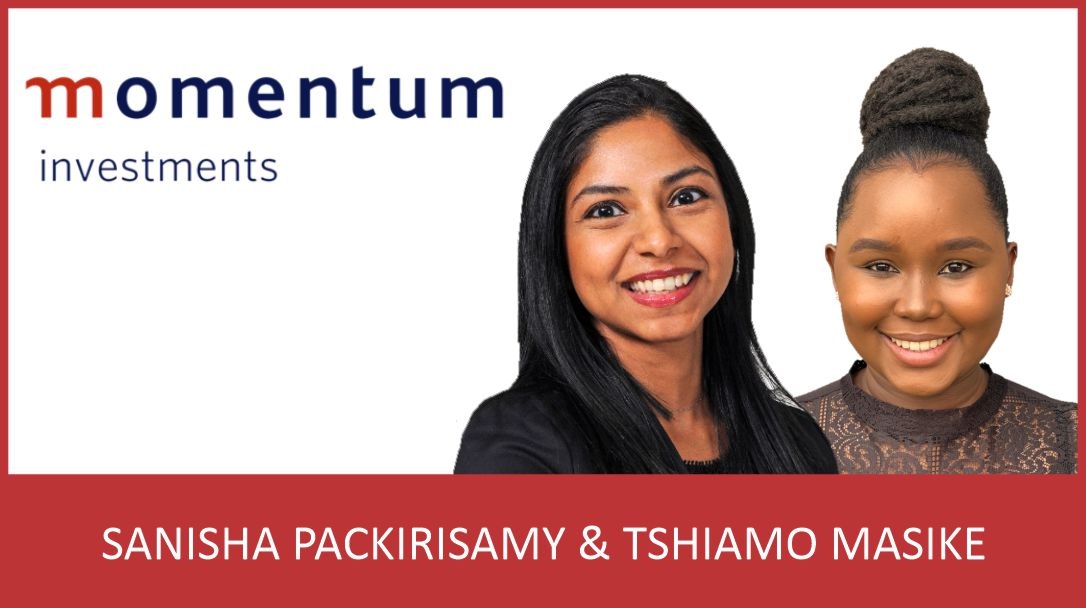
Sanisha Packirisamy, Chief Economist; & Tshiamo Masike, Economist; at Momentum Investments
On 22 May 2026, Moody’s Ratings revised South Africa’s (SA’s) sovereign rating outlook from stable to positive, while affirming the credit rating at Ba2. The outlook upgrade reflects improving fiscal performance and structural reforms that are stabilising debt and supporting an economic recovery despite a global slowdown. However, Moody’s maintained the Ba2 rating to reflect that SA’s economic fundamentals remain relatively weak and the improvements are still in their early stages.
On the fiscal side, Moody’s highlighted that SA’s 2025/26 primary budget surplus exceeded expectations and is projected to rise further to around 2% of gross domestic product (GDP) by 2028. Higher primary surpluses, gradually declining debt-service costs and contained spending pressures (particularly public sector wages and the Social Relief of Distress grant) are expected to support a gradual decline in the debt-to-GDP ratio to around 85% by 2028, from an estimated 87% in 2025 (this includes most guarantees to state entities).
The agency also noted that stronger tax revenue collection, including support from elevated commodity prices, could accelerate the improvement in debt dynamics. In addition, improved financial health at state entities lowers the risk of future government bailouts.
Moody’s expects stronger investment, supported by ongoing structural reforms, to lift real GDP growth to around 2% by 2028 from an average of 0.8% between 2023 and 2025, which is in line with the SA Reserve Bank’s and National Treasury’s estimates.
However, the agency highlighted that SA’s growth potential remains constrained by structural weaknesses, specifically a weak labour market and fragile network infrastructure.
The Middle East conflict was noted as a near-term risk, particularly for net energy importers, through its impact on inflation and household purchasing power, resulting in a downward revision to growth forecasts for 2026 and 2027. Nevertheless, Moody’s expects macroeconomic stability and fiscal consolidation to remain intact, limiting the credit impact even under more adverse scenarios.
The Government of National Unity is expected to see through its term in Moody’s baseline assumptions. However, Moody’s acknowledges that the upcoming electoral cycle, including the local government elections scheduled for 4 November 2026, presents political and policy risks. While Moody’s notes that reform momentum might slow down during the election period, a complete rollback of these structural changes is seen as highly unlikely.
Moody’s indicated that it would upgrade the credit rating if SA’s “fiscal performance continues to improve” as this would signal stronger policy effectiveness and sustained reform implementation. Conversely, weaker fiscal consolidation or slowing reform momentum could result in the outlook reverting to stable.
Fitch increasingly looks like the cautious outlier among the major rating agencies on SA. While Moody’s has now shifted its outlook to positive and S&P Global Ratings already upgraded SA in late 2025 to BB (two notches below investment grade), Fitch has maintained a more conservative stance at BB- (three notches below investment grade) with a stable outlook, in its last major sovereign review released in September 2025.
The divergence largely comes down to Fitch’s greater scepticism around SA’s debt trajectory and medium- term growth potential. Fitch has repeatedly warned that debt stabilisation assumptions may be too optimistic and that structural constraints, such as weak logistics, low investment and subdued growth, continue to weigh heavily on the sovereign’s profile. Even where Fitch has acknowledged improving fiscal discipline and reform momentum, it has tended to frame these developments as encouraging but still insufficient to materially alter the broader credit picture.
By contrast, Moody’s and S&P appear increasingly willing to give policymakers credit for incremental reform delivery, stronger primary surpluses and reduced contingent liability risks linked to Eskom and other state entities.
ENDS
Author
@Sanisha Packirisamy, Momentum Investments
-
@Sanisha Packirisamy, Momentum Investments
-
@Sanisha Packirisamy, Momentum Investments
-
@Sanisha Packirisamy, Momentum Investments
-
@Sanisha Packirisamy, Momentum Investments
-
@Sanisha Packirisamy, Momentum Investments
-
@Sanisha Packirisamy, Momentum Investments
-
@Sanisha Packirisamy, Momentum Investments
-
@Sanisha Packirisamy, Momentum Investments
-
@Sanisha Packirisamy, Momentum Investments
-
@Sanisha Packirisamy, Momentum Investments
-
@Sanisha Packirisamy, Momentum Investments
-
@Sanisha Packirisamy, Momentum Investments
-
@Sanisha Packirisamy, Momentum Investments
-
@Sanisha Packirisamy, Momentum Investments
-
@Sanisha Packirisamy, Momentum Investments
-
@Sanisha Packirisamy, Momentum Investments
-
@Sanisha Packirisamy, Momentum Investments
-
@Sanisha Packirisamy, Momentum Investments
-
@Sanisha Packirisamy, Momentum Investments
-
@Sanisha Packirisamy, Momentum Investments
-
@Sanisha Packirisamy, Momentum Investments
-
@Sanisha Packirisamy, Momentum Investments
-
@Sanisha Packirisamy, Momentum Investments
-
@Sanisha Packirisamy, Momentum Investments
-
@Sanisha Packirisamy, Momentum Investments
-
@Sanisha Packirisamy, Momentum Investments
-
@Sanisha Packirisamy, Momentum Investments
-
@Sanisha Packirisamy, Momentum Investments
-
@Sanisha Packirisamy, Momentum Investments
-
@Sanisha Packirisamy, Momentum Investments
-
@Sanisha Packirisamy, Momentum Investments
-
@Sanisha Packirisamy, Momentum Investments
-
@Sanisha Packirisamy, Momentum Investments
-
@Sanisha Packirisamy, Momentum Investments
-
@Sanisha Packirisamy, Momentum Investments
-
@Sanisha Packirisamy, Momentum Investments
-
@Sanisha Packirisamy, Momentum Investments
-
@Sanisha Packirisamy, Momentum Investments
-
@Sanisha Packirisamy, Momentum Investments
-
@Sanisha Packirisamy, Momentum Investments
-
@Sanisha Packirisamy, Momentum Investments
-
@Sanisha Packirisamy, Momentum Investments
-
@Sanisha Packirisamy, Momentum Investments
-
@Sanisha Packirisamy, Momentum Investments
-
@Sanisha Packirisamy, Momentum Investments
-
@Sanisha Packirisamy, Momentum Investments
-
@Sanisha Packirisamy, Momentum Investments
-
@Sanisha Packirisamy, Momentum Investments
-
@Sanisha Packirisamy, Momentum Investments
-
@Sanisha Packirisamy, Momentum Investments
-
@Sanisha Packirisamy, Momentum Investments
-
@Sanisha Packirisamy, Momentum Investments
-
@Sanisha Packirisamy, Momentum Investments
-
@Sanisha Packirisamy, Momentum Investments
-
@Sanisha Packirisamy, Momentum Investments
-
@Sanisha Packirisamy, Momentum Investments
-
@Sanisha Packirisamy, Momentum Investments
-
@Sanisha Packirisamy, Momentum Investments
-
@Sanisha Packirisamy, Momentum Investments
-
@Sanisha Packirisamy, Momentum Investments
-
@Sanisha Packirisamy, Momentum Investments
-
@Sanisha Packirisamy, Momentum Investments
-
@Sanisha Packirisamy, Momentum Investments
-
@Sanisha Packirisamy, Momentum Investments
-
@Sanisha Packirisamy, Momentum Investments
-
@Sanisha Packirisamy, Momentum Investments
-
@Sanisha Packirisamy, Momentum Investments
-
@Sanisha Packirisamy, Momentum Investments
-
@Sanisha Packirisamy, Momentum Investments
-
@Sanisha Packirisamy, Momentum Investments
-
@Sanisha Packirisamy, Momentum Investments
-
@Sanisha Packirisamy, Momentum Investments
-
@Sanisha Packirisamy, Momentum Investments
-
@Sanisha Packirisamy, Momentum Investments
-
@Sanisha Packirisamy, Momentum Investments
-
@Sanisha Packirisamy, Momentum Investments
-
@Sanisha Packirisamy, Momentum Investments
-
@Sanisha Packirisamy, Momentum Investments
-
@Sanisha Packirisamy, Momentum Investments
-
@Sanisha Packirisamy, Momentum Investments
-
@Sanisha Packirisamy, Momentum Investments
-
@Sanisha Packirisamy, Momentum Investments
-
@Sanisha Packirisamy, Momentum Investments
-
@Sanisha Packirisamy, Momentum Investments
@Tshiamo Masike, Momentum Investments
-
@Tshiamo Masike, Momentum Investments
-
@Tshiamo Masike, Momentum Investments
-
@Tshiamo Masike, Momentum Investments
-
@Tshiamo Masike, Momentum Investments
-
@Tshiamo Masike, Momentum Investments
-
@Tshiamo Masike, Momentum Investments
-
@Tshiamo Masike, Momentum Investments
-
@Tshiamo Masike, Momentum Investments
-
@Tshiamo Masike, Momentum Investments
-
@Tshiamo Masike, Momentum Investments
-
@Tshiamo Masike, Momentum Investments
-
@Tshiamo Masike, Momentum Investments
-
@Tshiamo Masike, Momentum Investments
-
@Tshiamo Masike, Momentum Investments
-
@Tshiamo Masike, Momentum Investments
-
@Tshiamo Masike, Momentum Investments
-
@Tshiamo Masike, Momentum Investments