











































Nathalie Burrows, Editor at EBnet
Structured employee benefits remain one of the most effective tools HR professionals have to support employees’ wellbeing, resilience and long-term financial security. In many organisations, HR is also the first place employees turn when they are trying to make sense of these benefits and how to use them.
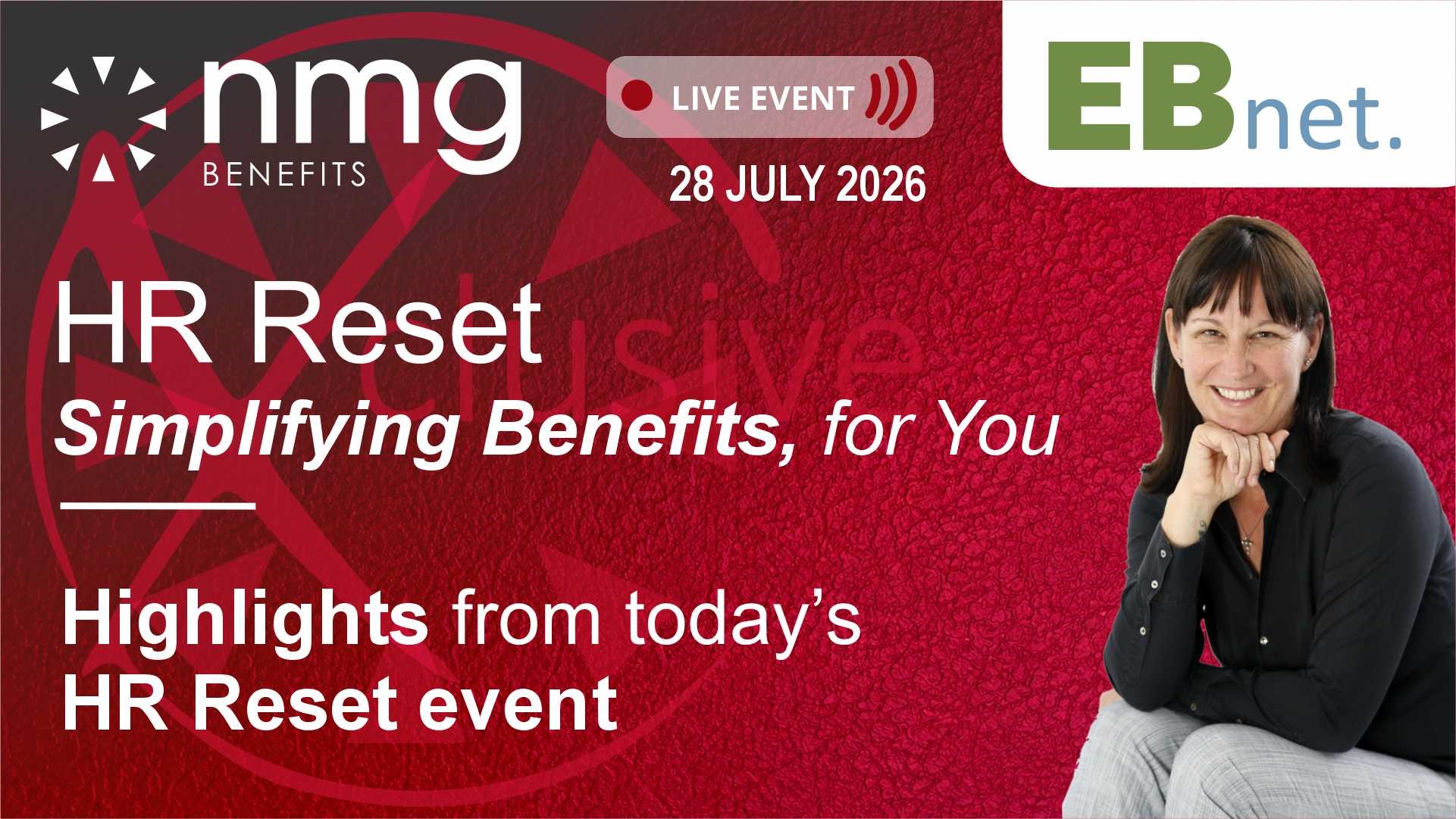
This was a central theme at NMG Benefits’ HR Reset event, where the team shared practical insights on medical cover and retirement provision, aimed at helping HR teams better support their workforce.
HR at the centre of a squeezed workforce
Geoff Baars, CEO of NMG Benefits, opened by acknowledging the financial pressure facing most South African employees. Real wages have largely stagnated, the cost of living continues to rise, and ongoing financial stress is taking a psychological toll.
At the same time, employers are also feeling the strain when it comes to funding benefits. This puts HR in a pivotal position, acting as both advocate and translator between the business and its employees.
In today’s common total cost-to-company (TCTC) structures, every rand allocated to benefits is ultimately funded by the employee. That makes HR’s role in designing, administering and communicating these benefits even more important. Simply offering benefits is not enough—what matters is whether they translate into meaningful outcomes.
This shifts HR’s role beyond compliance and payroll into something more hands-on: helping employees understand what they have, what it means, and how their decisions affect their financial wellbeing.
Healthcare benefits: Helping employees navigate complexity
On the healthcare side, Karin Mitchelmore, Executive Head of Healthcare Consulting, highlighted a growing challenge. Medical schemes are ageing, fewer younger members are joining, and healthcare costs continue to rise—resulting in contribution increases well above inflation in recent years.
For HR teams, this often means having to justify the value of medical aid to employees who are increasingly questioning whether they can afford it, or whether they should opt out altogether.
The difficulty is that the healthcare landscape has become more complex. Employees are faced with a wide range of options—comprehensive cover, hospital plans, network options, medical insurance, accident cover and gap cover—each with different rules and price points.
Gap cover, in particular, remains poorly understood. NMG suggests offering it on an opt-out basis, giving employees the opportunity to learn what it covers, see the potential shortfalls in medical aid, and then make an informed decision.
Recent Discovery Health data shows encouraging trends: mortality has decreased by 5.6%, driven by earlier diagnosis, better treatment, improved access to care and a stronger focus on prevention.
At the same time, the nature of illness is evolving. Chronic conditions are becoming more complex, mental health issues are rising, especially among younger employees, cancer is increasingly managed as a long-term condition, and cardiovascular health remains a key cost driver.
Adam Lowe’s health‑risk segmentation work showed that around 10% of scheme members account for over 40% of healthcare spend. He used this research to reinforce the key focus areas of targeted interventions per segment:

Against this backdrop, HR’s role becomes clear: design benefits that enable access to preventative care, and actively encourage participation in wellness initiatives such as screenings, vaccinations and employee assistance programmes. This is not just about healthcare—it is about managing a productive and sustainable workforce.
Retirement benefits: Making it real for employees
Retirement funding is another area where HR and payroll teams are frequently called on for guidance—and where the stakes are high.
Siphamandla Buthelezi, COO and Executive Head of Platforms, pointed out that many employees are simply not on track for a comfortable retirement, often due to low levels of financial literacy.
Interestingly, the solution is not always about contributing more. In many cases, it is about using existing spend more effectively and cutting unnecessary costs.
A good example is funeral cover. Many employees hold multiple policies and end up overpaying, when they could receive similar or better cover through their group scheme at a lower cost. In some cases, employees are also paying for insurance embedded in loans without fully realising it.
The introduction of the two-pot system in September 2024 has sparked greater interest in retirement benefits, creating an opportunity for education. HR can use this moment to explain concepts like preservation, fees, and the cost differences between retail retirement annuities (often around 3.5%–4%) and group fund arrangements (closer to 0.7%–0.75%).
Moments such as onboarding, one-on-one discussions and organisational change processes all provide valuable opportunities to engage employees on these topics.
Financial empowerment: A growing priority
The financial reality for many employees is stark. A large portion of salaries is often spent within days, and a concerning share of savings withdrawals is being used for gambling. Salary advances and earned wage access are also becoming more common.
HR professionals are often the first to see the consequences - garnishee orders, absenteeism, presenteeism and mental health challenges linked directly to financial stress.
This underscores the need to support employees in making better financial decisions. Practical steps include helping employees review their insurance, challenge unnecessary or unlawful debt, and redirect spending into more efficient benefit structures.
By doing so, HR can help restore a sense of control for employees—something that is closely linked to both wellbeing and retention. Importantly, there are service providers that can partner with employers in delivering this support.
From administrators to custodians
In a landscape where employees ultimately fund their own benefits and carry increasing levels of risk, HR and payroll teams are no longer just back-office functions. They are on the front line: translating complex benefit structures into real-life outcomes, supporting employee wellbeing, and playing a critical role in building a more resilient workforce.
ENDS