
















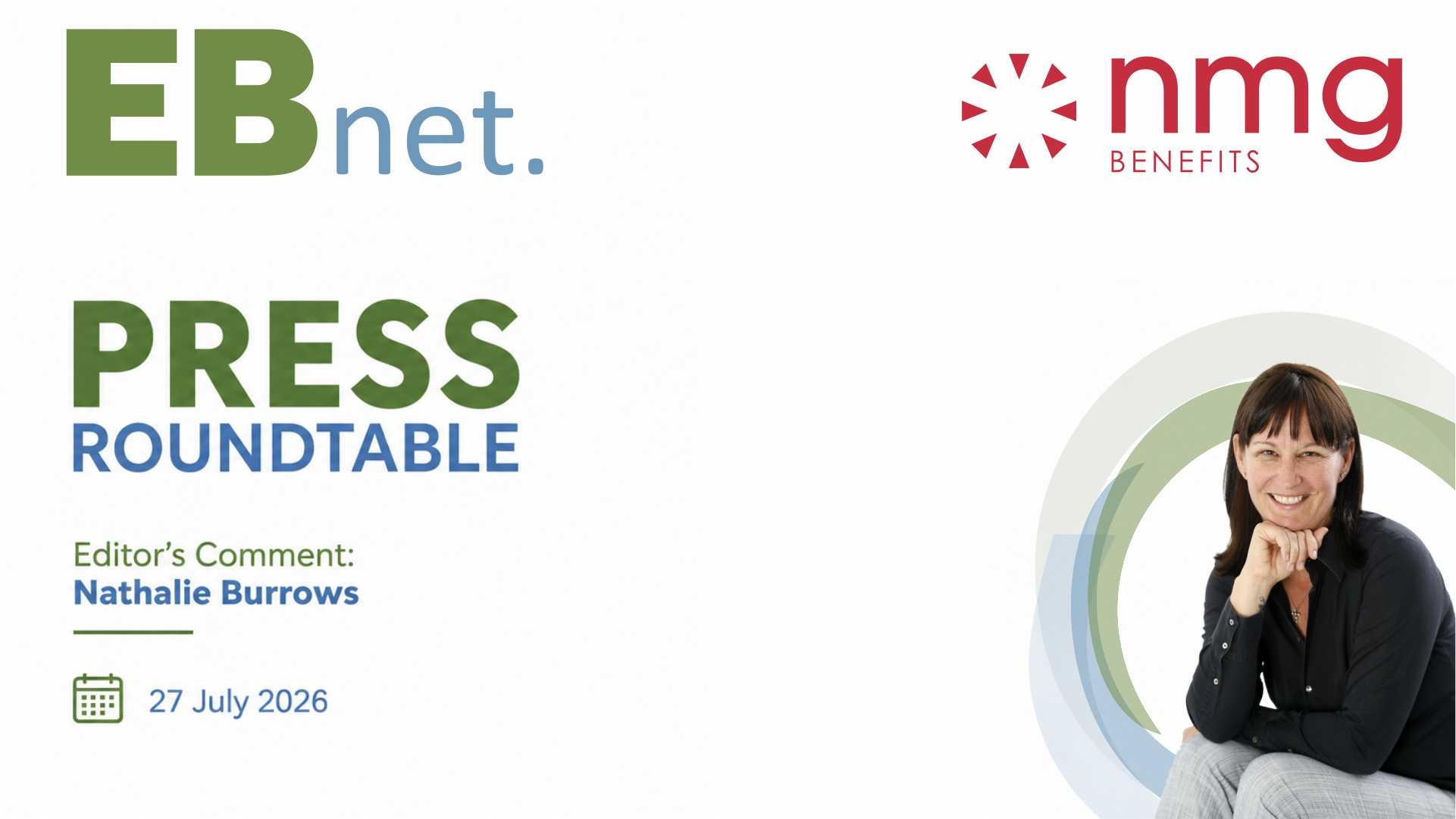
A media roundtable with the Executive Team from NMG Benefits
The South African employee benefits landscape is at an inflection point, shaped by financial pressure, shifting member expectations, and the growing realisation that traditional models are no longer fit for purpose. At a media roundtable hosted by NMG Benefits, executives painted a picture of an industry rich in advice models and products, but struggling to translate these into meaningful retirement outcomes.
Geoff Baars, CEO and Chairman of NMG, opened the discussion by framing the scale of the employee benefits industry in South Africa: R800 billion a year in contributions, split approximately R500 billion to group and retail retirement funds, R240 billion to medical schemes and R60 billion in premiums to group risk benefits, like death, disability and critical illness cover. Of South Africa’s 17 million employed individuals, around 11 million work in the formal sector, with 9 million participating in retirement funds. Yet despite this apparent reach, outcomes remain deeply concerning.
Baars’ central thesis was clear: the future of employee benefits lies in the hands of employees themselves. In a total cost-to-company environment, benefits are effectively funded by employees themselves. This raises a fundamental question: if employees are paying, should they not have greater choice and agency in how those benefits are structured and utilised?
This shift towards a more member driven approach is playing out against a healthcare landscape under pressure. Karin Mitchelmore, Executive Head of Healthcare Consulting, explained that medical schemes cover around 4.4 million principal members and 4.5 million dependants – roughly 9 million lives in total – alongside an additional 1 to 1.5 million health insurance policies. Crucially, this membership base is not growing. As a proportion of the population, medical scheme coverage is shrinking, and ageing.
The demographic shift is telling. The average age of medical scheme members has increased from 32 in 2008 to 38 today, suggesting younger South Africans are opting out or seeking alternative forms of healthcare support and cover. Combined with persistently rising healthcare costs, this places private medical schemes in a tricky position right now.
Mitchelmore also pointed to the complexity of choice as a barrier. Many members find the number of plan options available overwhelming, undermining their ability and confidence to make informed decisions. At the same time, mental health concerns are rising globally, adding another layer of demand on already strained systems. A key focus for the NMG healthcare advisory team is equipping people to make the right decisions for themselves and their family’s medical cover and care, plus they’ve negotiated preferential gap cover rates for individuals and complimentary Employee Assistance Programs for their corporate clients.
Retirement outcomes paint a troubling picture. Trevor Kingsley-Wilkins, Head of Retirement Fund Consulting, noted that current projections place South African retirement fund members on track for an average replacement ratio of just 38%. This falls well short of what is needed for financial security in retirement.
Improving this, he argued, depends on a handful of well-established levers: starting to save earlier, increasing contribution rates, preserving savings rather than accessing them prematurely, achieving inflation-beating investment returns, and maintaining low costs. The impact of fees alone is stark – a 1% increase in costs/fees can reduce retirement outcomes by between 20% and 40%, depending on assumptions.
Yet knowing these principles is not the same as acting on them. This is where knowing how to manage money becomes a critical life skill. NMG’s SmartAlec financial literacy tool aims to bridge this gap by using technology to explain financial concepts and consequences in an accessible way, enabling individuals to make better decisions. Importantly, the tool is offered for free, signalling a broader commitment to industry-wide improvement.
Siphamandla Buthelezi, COO and Executive Head of Platforms at NMG, emphasised the importance of financial literacy by looking through a two-pot lens. The data is striking: 80% of NMG clients have made at least one savings pot withdrawal claim, with many making multiple withdrawals. As the future of speaking directly to members emerges, S’pha laid down the challenge of giving members visibility – of their benefits, how they work and what parts of these they can control to meaningfully meet their particular needs. The two-pot retirement system ramped up member engagement in South Africa to one of the highest in the world thereby fundamentally changing the nature of retirement engagement. It has shifted the conversation from a distant, abstract concept to something immediate and tangible. In this emerging ecosystem, retirement is no longer defined by an age one reaches, but by the achievement of financial stability and sustainability.
Finally, Lettesha Pillay Head of Sales and Business Development, shared “pay cheque drain” as a common lived experience amongst many South Africans, leaving more month at the end of their salaries. There’s no doubt that people right now are financially strained, the call is to meaningfully change behaviour through engagement and growing financial literacy – it’s through explaining how a decision made today will affect their futures.
The first step according to Baars: listen to what members and employees actually want. Understanding what employees value – and designing benefits accordingly – will be the key to unlocking better participation and outcomes.
ENDS