
























































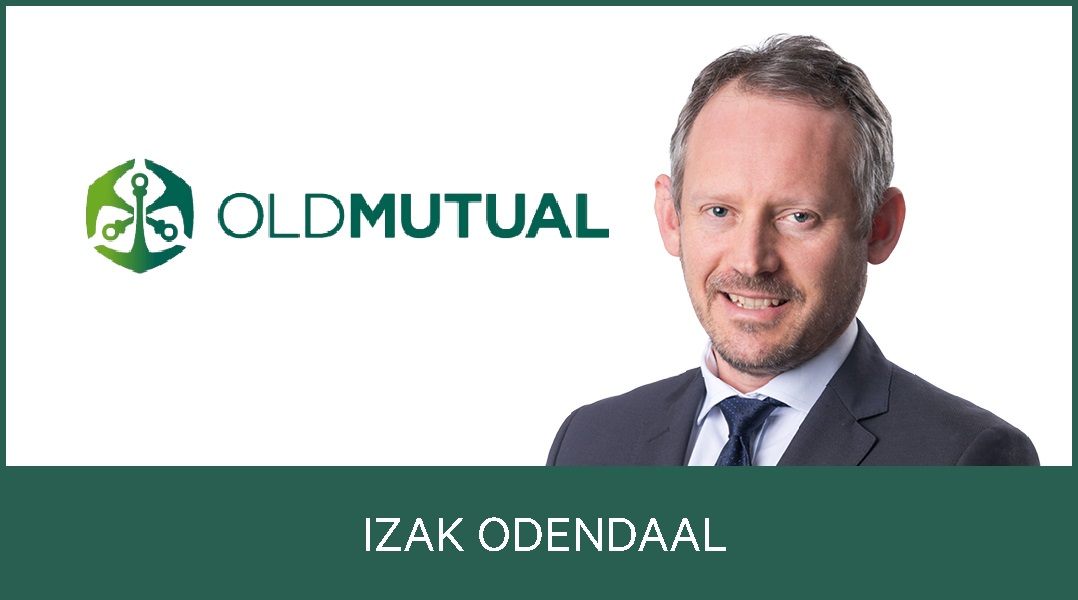
Izak Odendaal, Investment Strategist at Old Mutual Wealth
Synopsis:
- The Medium-Term Budget Policy Statement stuck to gradual fiscal consolidation despite tough economic conditions.
- Therefore, the main budget balance will move towards 3% over the next two years.
- With inflation probably also heading towards 3%, it means that South Africa has achieved macroeconomic stabilisation.
- What is needed now is faster economic growth. Reforms have been announced, but implementation needs to be stepped up.
- All of this requires political stability. The upcoming local government election marks the first of three major political events in the coming years. There are risks, but the centre is likely to hold.
- Combined with reasonable valuations, this still supports the real return outlook for South African investments in the context of diversified portfolios.
Spare a thought for Scott Bessent, the US Treasury Secretary (or finance minister), who started his term with an ambitious 3-3-3 plan: a 3% of GDP budget deficit, 3% real economic growth, and a three million barrel per day increase in oil production to drive down fuel costs. Things have not gone his way. Growth has been solid, but closer to 2% than 3% on an annual basis. US oil production remains near record levels, but retail fuel prices have jumped 50% since the start of the year due to the war with Iran. And when the $2 trillion budget deficit is expressed as a percentage of US national income (GDP), as is the standard practice, it amounts to almost 6%. That is close to double Bessent’s target. A deficit on the budget balance implies that a government spends more than what it collects in tax revenue and borrows the difference.
The US is far from the only culprit when it comes to high levels of government borrowing, with France in the spotlight. High levels of government debt have contributed to government borrowing costs (bond yields) rising across the developed world. South Africa was not spared, with its government bond yields also rising this year, though they remain below the levels of one or two years ago, unlike the US or France. This is the backdrop to last week’s Medium-Term Budget Policy Statement (MTBPS).
Three threes?
South African investors might ask if a slightly different version of the “three threes” is possible over the medium term, namely a 3% budget deficit, 3% inflation, and 3% real GDP growth. As we’ll see, achieving two out of these three goals is starting to become a possibility.
A 3% budget deficit has long served as a useful rule of thumb for fiscal sustainability. For instance, the 1992 Maastricht Treaty that underpins the creation of the European Union and the single currency, limits members to a 3% of GDP deficit and 60% debt-to-GDP ratio. This rule has been ignored more than it has been observed, with France currently running a 5.4% deficit on top of debt ratio of almost 120% of GDP.
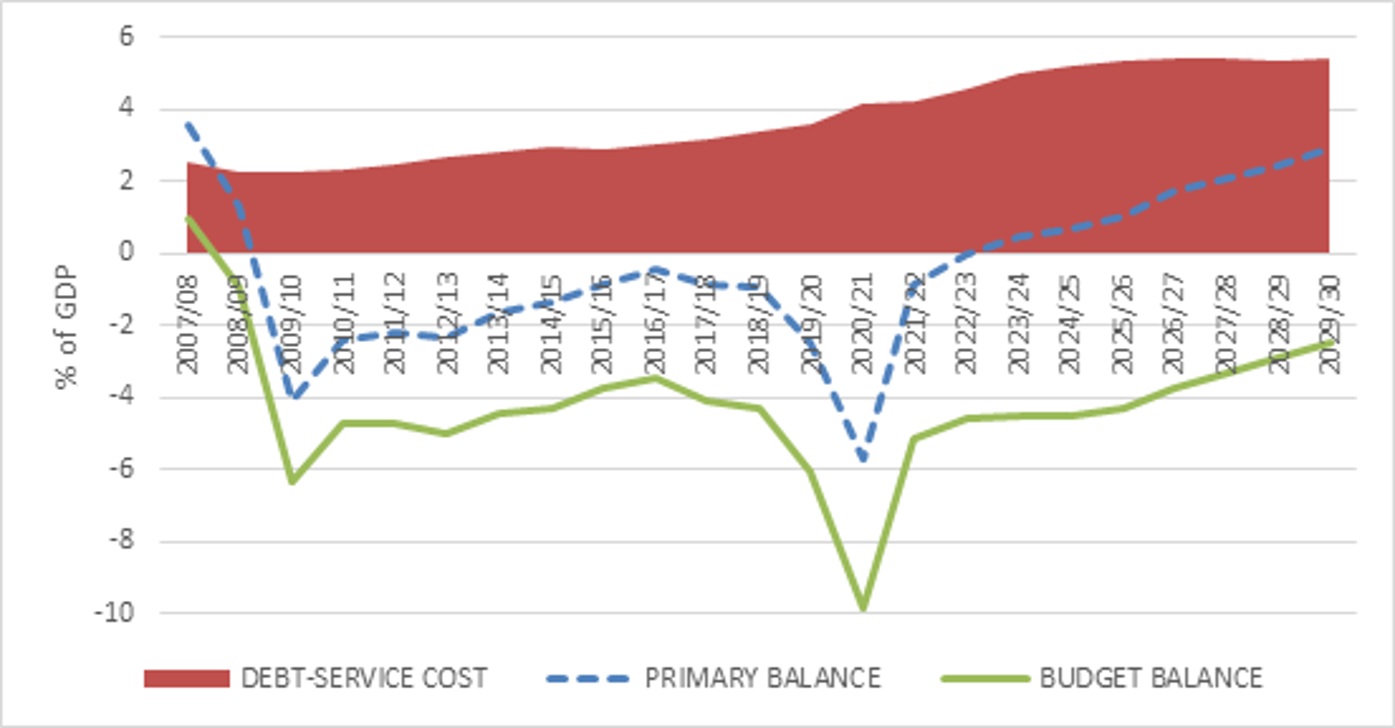
Chart 1: South African main budget balance
Source: National Treasury
According to the MTBPS, South Africa’s main budget balance will have a three on the left-hand side of the decimal point, a “three handle” in markets jargon, for the first time in a decade in this fiscal year. It is projected to fall below 3% by 2029.
This is achieved by running a growing primary surplus (dotted line on chart 1), meaning non-interest spending levels are held below tax revenues. The difference between the primary balance and the main budget balance is the debt-service cost or interest payments. As the shaded area on chart 1 shows, this has ballooned after years of borrowing at high interest rates. However, it is now expected to plateau as a share of GDP, though still at a high level around 5%. A failure to stabilise government debt levels would lead to this interest burden rising inexorably, squeezing out other important items in the budget. Fiscal consolidation is politically difficult, but is a case of short-term pain for longer-term gain.
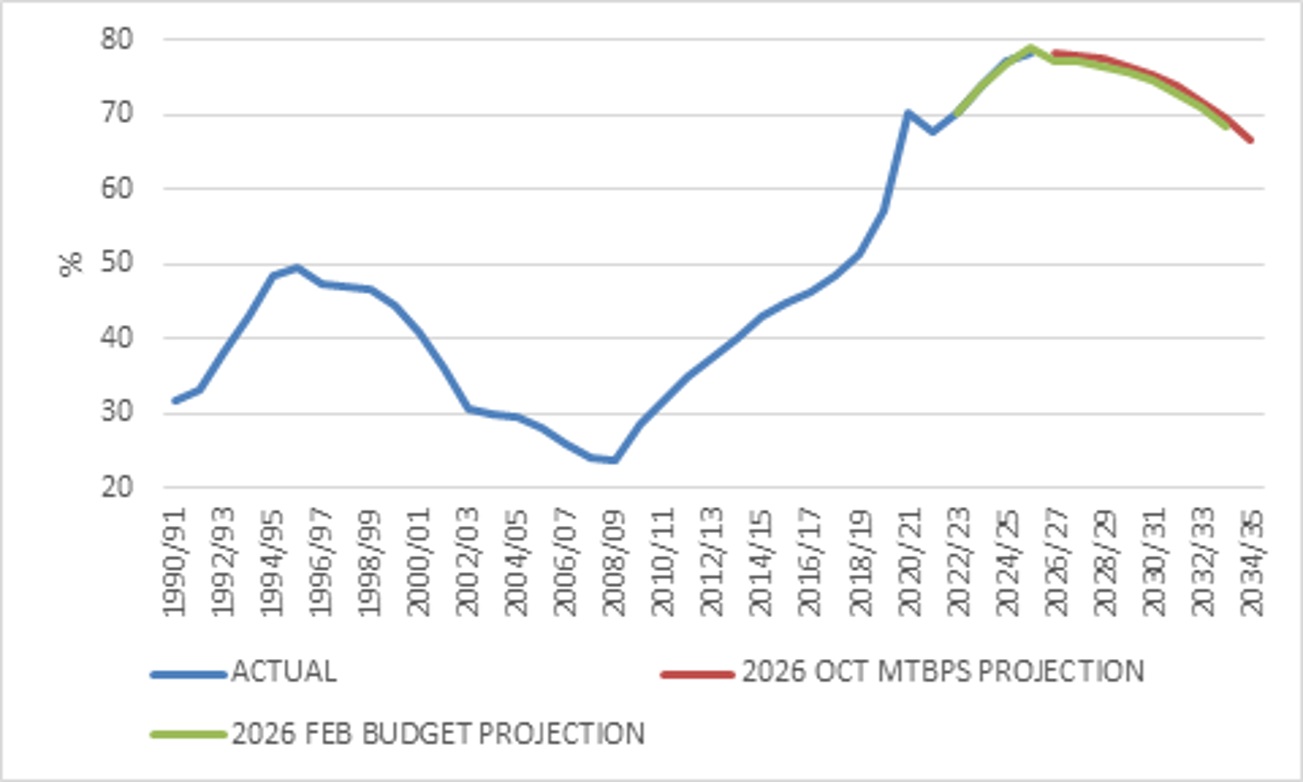
Chart 2: Gross government debt to GDP ratio
Source: National Treasury
Chart 2 shows how the debt-to-GDP ratio has evolved, and where it is projected to be heading. The first thing to note is that South Africa managed to bend the curve before, in the late 1990s through a combination of fiscal discipline and a roaring economy. The MTBPS shows a gradual bending of the curve in the right direction once more, though the details are a bit worse than projection from the February Budget. This is mainly because the economy (the denominator in the ratio) will take a hit from the fuel price shock, and also because National Treasury chose to direct much of the R54 billion revenue windfall towards infrastructure and the contingency reserve (government’s rainy-day fund) rather than faster debt reduction.
The main thing is that the debt ratio peaked in the previous fiscal year. Future shocks might still push it off course, but Treasury will table legislation to entrench a fiscal anchor. This rule, which is principles-based rather than numeric, will bind future administrations to commit to fiscal objectives and long-term sustainability.
The big three
Much of the content of the MTBPS was anticipated, and largely neutral for credit ratings in the short term. However, the direction of travel is still for the big three ratings agencies – Fitch, Moody’s and S&P Global – to steadily upgrade South Africa. This could follow the February Budget, though all three have scheduled reviews in late November or early December. Two of the three have a positive outlook, implying that the next move is an upgrade. The improved long-term debt trajectory will count in South Africa’s favour, as will progress on implementing reforms. On the other hand, South Africa’s debt level is still high compared to other countries in the BB+ bracket.
Table 1: South Africa’s credit ratings on foreign currency debt

Off target
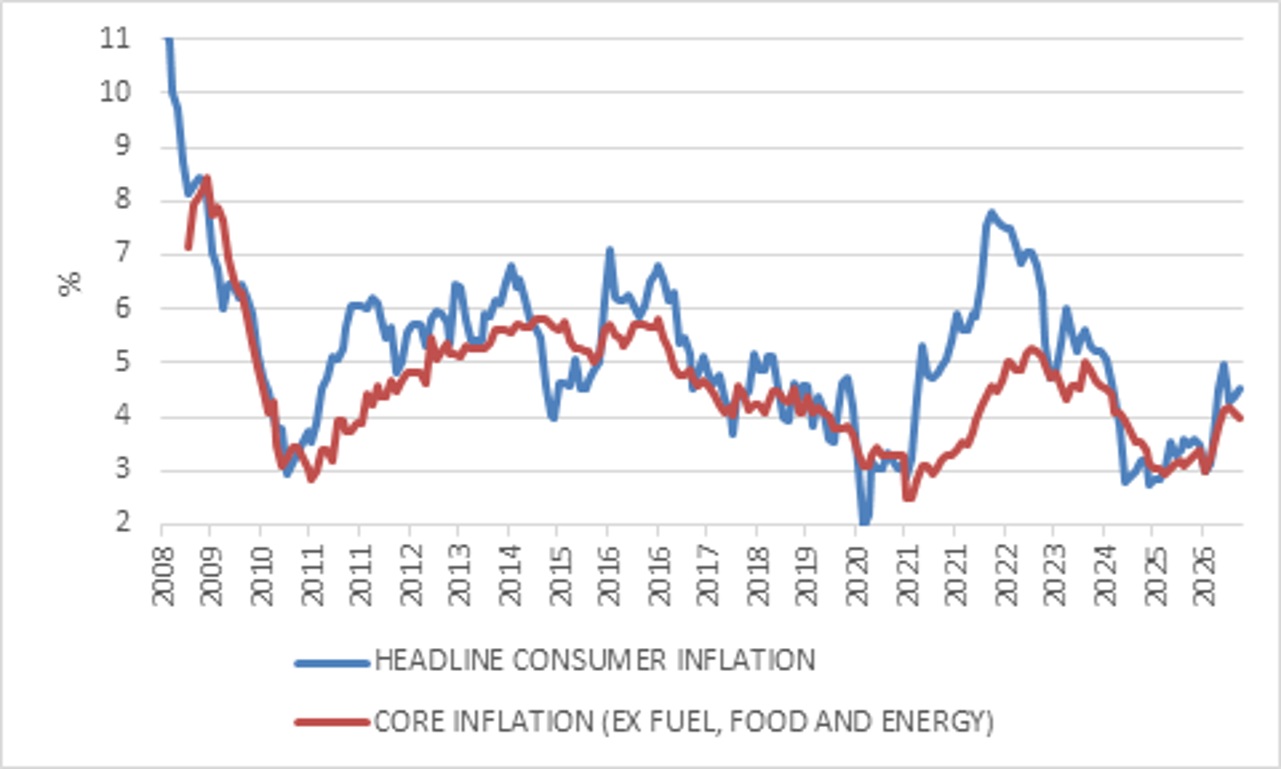
Most South Africans probably pay little attention to the MBTPS, but the announced temporary fuel price relief resulted in all-round applause. Government will forego R10 billion in fuel levy income to cushion the blow of the surge in global petrol and especially diesel prices over the next two months. However, with Brent crude hitting a six-month high of $116 per barrel on Friday due to fears of a restart of US bombing on Iran, the blow remains sizable. Reported inflation increased to 4.5% in September according to the latest data, a touch better than expected. It is, however, still well above the Reserve Bank’s 3% target. Inflation is likely to remain between 4.5% and 5% over the next few months.
Chart 3: South Africa’s inflation
Source: Stats SA
However, by April next year, high fuel prices will be in the base for year-on-year comparisons and inflation should decline towards a three handle quickly. This means further rate increases are probably unnecessary and unlikely. Treasury forecasts inflation to average 4.4% in 2026, 3.7% in 2027 and 3.2% in 2028.
If inflation eventually anchors on 3%, the Reserve Bank’s policy rate can fall and settle around 5.5% to 6% from the current level of 7.25%. The expected convergence of inflation towards 3% should therefore be positive for interest-rate sensitive investments and consumer spending. The adoption of the 3% target last year already caused a bond rally. By reducing borrowing costs, lower inflation therefore helps the government manage its interest burden. Some argue that higher inflation is needed to erode the value of government’s debt, but they forget that bond yields will rise and the whole exercise will be counterproductive. A fifth of government bonds are explicitly inflation-linked.
The missing three
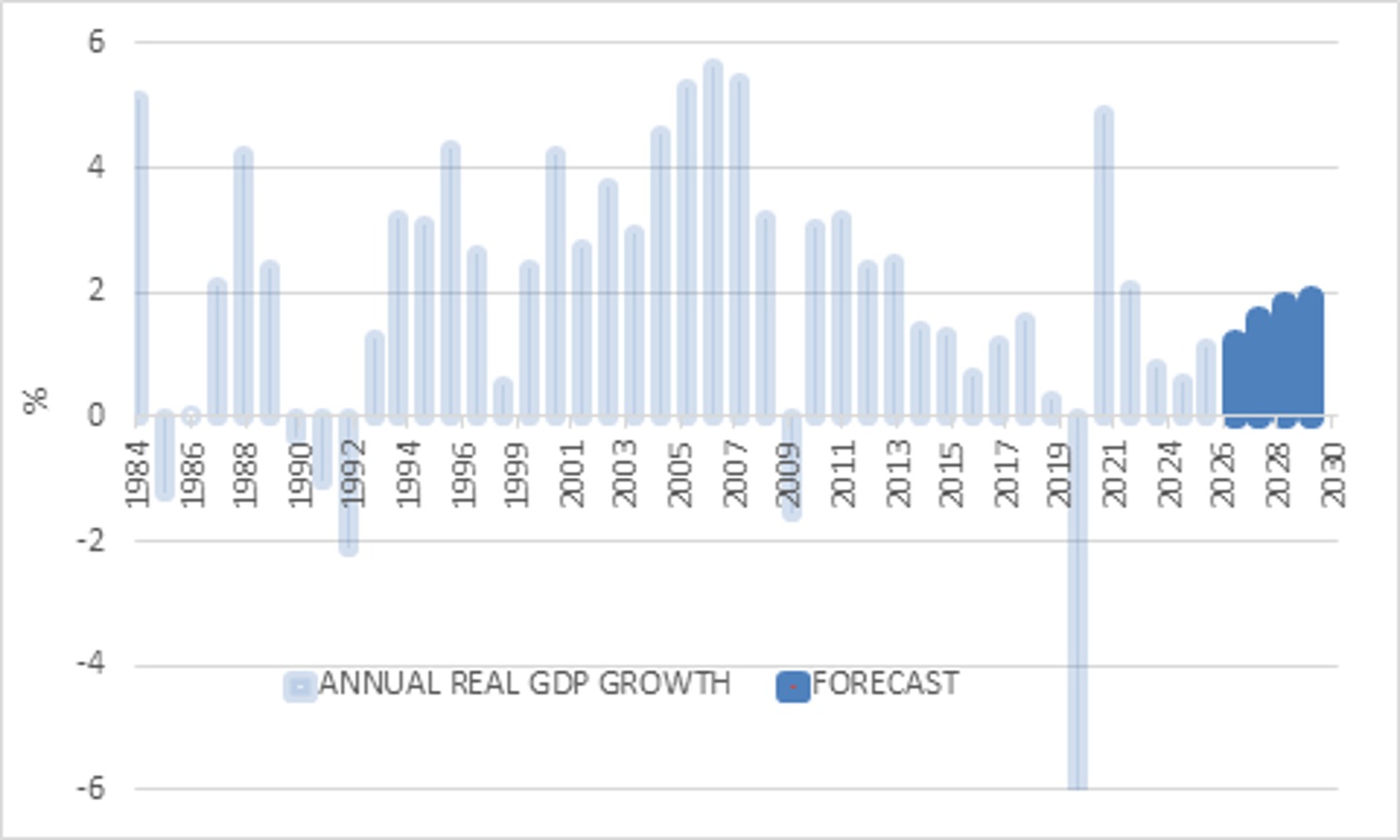
Growth remains the missing ingredient. To ensure long-term fiscal sustainability, it is not enough to squeeze taxpayers and tighten belts. Faster real economic growth will organically generate the tax revenues to fund the government’s many spending needs without resorting to borrowing. Unfortunately, the last time South Africa posted 3% real GDP growth in a calendar year was in 2011, when the China-led commodity boom was still running, and before the breakdown of the country’s critical infrastructure. Growth in 2012 and 2013 was still decent, at around 2.5%, but from 2014 onwards every year disappointed, apart from the immediate post-pandemic rebound.
Chart 4: South Africa’s real economic growth
Source: Stats SA (historic), National Treasury (forecast)
One of the most effective ways the government can raise growth rates is by unlocking private investment to fund a much-needed infrastructure upgrade. This remains a big focus area in the MTBPS, and will have the dual benefit of boosting growth in the short term while the infrastructure is built, while facilitating economic activity over the longer term. However, even with an assumed improvement in fixed investment growth over the medium term, Treasury’s own forecast shows that economic growth will only rise towards 2% by the end of the decade. This year’s forecast was cut from 1.6% to 1.2% due to the global energy shock.
To get to 3% growth eventually will require deeper reforms and faster implementation than currently on the table, though an optimistic take is that successful reforms will gain legitimacy and therefore build momentum. Nonetheless, the best we can realistically hope for today is not 3% growth but three straight years of accelerating growth, which was last experienced in 2016, 2017 and 2018.
Three events
As political analyst Simon Freemantle recently noted, South Africa faces three key events that will determine whether it moves to the high road or reverts to a low road outlook. These are the 4 November local government election, the ANC’s presidential election towards the end of 2027, and the next general election in 2029. It is not about parties and personalities, but about whether there is policy stability. The question that will be posed is whether the centre holds, strengthening the rule of law, and deepening economic reform, or whether there is a shift towards populism. Populist politicians typically offer short-term solutions that end up creating long-term problems. In contrast, centrist politicians tend to understand that sometimes short-term sacrifice is necessary for long-term benefit. Investors will want to know that something like the current centrist national coalition configuration (the Government of National Unity) will persist over the medium term and preferably be replicated in key metros that are in desperate need of governance stability.
In conclusion, a 3% deficit, 3% inflation and three years of accelerating growth are in sight and will have positive market implications. While one can quibble over the details in the MTBPS, the bigger question is whether there is enough maturity in South Africa’s political system to stabilise debt levels over time. The answer is still yes, supported by the strength and credibility of National Treasury as a key technocratic institution. On inflation, the near-term picture has deteriorated due to a severe global supply interruption. However, the central bank is deeply committed to bringing it back to the 3% target and anchor long-term inflation expectations around this level. Politics can still destabilise things if poor growth outcomes lead to frustrated voters and perhaps a turn to populist parties. However, some success in raising economic growth and creating jobs should allow the centre to hold. The current crop of political leaders therefore has a strong incentive to boost growth to remain in power. On balance then, a combination of macroeconomic stability, policy continuity and reasonable valuations still supports the real return outlook for South African investments in the context of diversified portfolios. South Africa is not immune to global shocks, but the more it gets its own house in order, the better it is able to absorb them.
ENDS