































































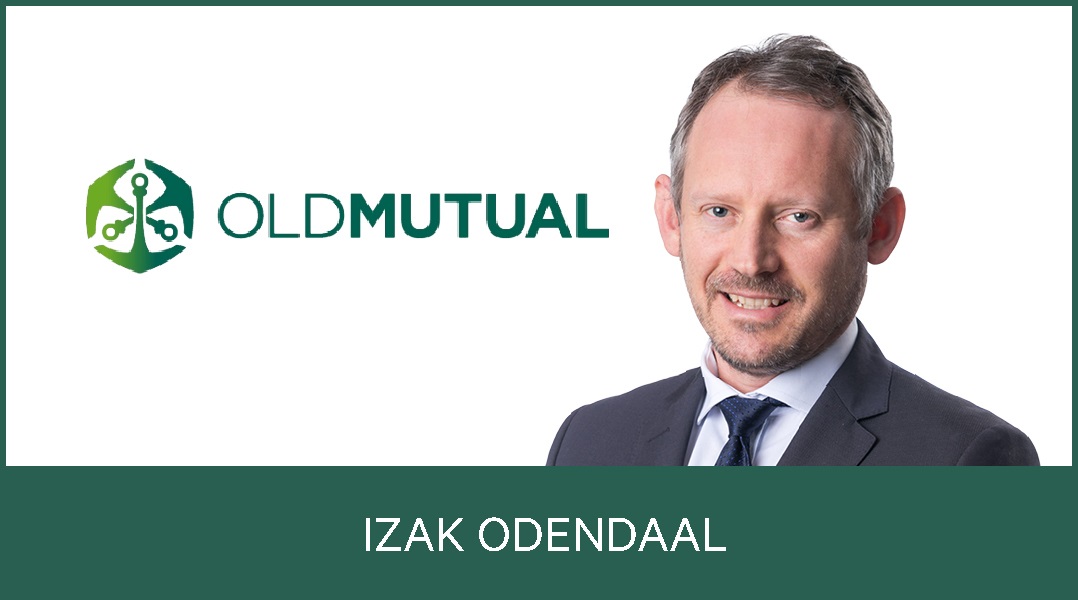
Izak Odendaal, investment strategist at Symmetry, an investment solutions arm of Old Mutual.
Despite surprising the market by keeping rates unchanged last month, the South African Reserve Bank will do what it takes to achieve its inflation target, says Izak Odendaal, investment strategist at Symmetry, an investment solutions arm of Old Mutual.
The market was taken aback when the SARB’s Monetary Policy Committee (MPC) held its policy rate (formerly known as the repo rate) at 7.0%. This means that the prime borrowing rate remains 10.5%. Odendaal says that a further rate increase was expected in view of higher inflation, geopolitical uncertainty, and the oil price rising towards $100/barrel ahead of the MPC meeting.
He says the US-Iran war and stop-start peace talks have made the environment difficult to navigate for investors and policymakers alike. Apart from elevated crude oil prices, a squeeze on global refinery capacity means that refined product prices like diesel are even higher. He says that global refined products typically cost $20 to $30 per barrel more than crude oil, but recently that spread has touched $60 per barrel.
“Central banks are caught between the risk of overreacting to what might be a temporary rise in inflation due to the war, and the risk of letting inflation become entrenched,” he says. “Many developed market central banks made the latter mistake in 2021 and 2022 by not responding quickly enough to the post-pandemic global inflation surge.” The SARB and several other emerging market central banks acted much sooner and had greater success in preventing runaway inflation.
So far, the major central banks have moved cautiously in response to renewed inflationary pressures. In July, the European Central Bank, Bank of England, Bank of Canada, Bank of Japan and the US Federal Reserve (among others) kept rates unchanged.
Unlike these central banks, Odendaal says the SARB had a favourable starting point before the war broke out. The policy rate was already elevated in real terms at the start of the year, while inflation was on target around 3%. He argues that the 0.25% hike in the rate back in May was a bit premature, so the current policy rate is about where it should be.
Odendaal says that the Reserve Banks remains committed to achieving 3% over time, since Governor Lesetja Kganyago led the charge for a lower inflation target to begin with, and will see its successful implementation as his legacy. It is important to note that successful inflation targeting doesn’t mean the target will be achieved every month or quarter. Rather, it means that if inflation is knocked off course, it will eventually return to target since companies would not feel they can keep raising prices, and workers keep pushing for higher wages. Central banks can do nothing about a supply shock like higher oil prices, but they can act to keep inflation expectations anchored and pull inflation back towards target.
According to the widely followed Bureau of Economic Research survey of inflation expectations, the one-year expectation for inflation increased from 3.6% to 4.4% and the five-year expectation from 3.6% to 4.1%. The war has therefore had a significant impact on sentiment about future inflation, something the Reserve Bank will keep an eye on.
The market is still pricing in rate hikes, but it will depend on how the inflation and growth outlook evolves over the next few weeks. The September MPC can go either way, Odendaal says, but as we head into 2027, the conversation is likely to turn to rate cuts. “Whether there is another hike or not, this cycle will be muted compared to past interest rate cycles.”
Many people remain sceptical that 3% inflation is achievable. However, Odendaal argues that when the 3% to 6% inflation target was first introduced in 2000, there was also widespread disbelief since experience over the previous three decades was of persistent double-digit inflation. He believes that Kganyago was right to push for a lower target. While it may be a case of some short-term pain for long term gain, the benefits will not only be lower interest rates, but also a more competitive economy and more stable exchange rate.
This doesn’t mean the MPC won’t get it wrong from time to time. Introducing an external member to the Committee could inject a fresh perspective, since all six members are SARB staff. Four of the Bank of England’s nine member MPC are outsiders. And the Federal Open Markets Committee, the US version of the MPC, is made up of members of the Board of Governors in Washington DC and the Presidents of the 12 regional banks around the country – more people work in the Reserve Bank of New York, for example, than in the Chair’s office in the nation’s capital. This structure also means that concerns that new Fed Chair Kevin Warsh will be able push a Trumpian agenda are overblown. The European Central Bank perhaps takes it too far, with monetary decisions made by a Governing Council consisting of six members of the Frankfurt-based Executive Board and the 20 governors of national central banks of the countries that use the euro.
As for the domestic economy, the SARB slightly upgraded its growth forecast for 2026 to 1.4%. South Africa’s economy was in a better position to absorb this year’s global energy price shock, and the data on consumer spending has been relatively resilient so far. July’s new vehicle sales numbers were robust, for instance. Sales of passenger cars were 12.5% higher than last year’s level, according to industry body Naamsa.
“People only buy cars if they are confident about the economy, and if banks are willing to advance them credit, as a majority of cars are bought on credit.”
Credit extension to households is still increasing, but the SARB’s latest quarterly bulletin – still an authoritative analysis of the economy – says incomes have broadly increased in line with debt, such that the ratio of household debt to nominal disposable income rose only marginally to 62.2% in the first quarter of 2026 from 61.8% in the preceding quarter.
Many of us perceive that our debt burden is increasing, but the macro number shows otherwise. The SARB says that households’ cost of servicing debt relative to disposable income was 8.4% in the first quarter, broadly in line with its average level of the past decade.
South Africa’s trade balance remained in surplus in the first half of the year. Unlike some other countries, therefore, it did not experience a balance of payments shock from higher oil prices. Its trade surplus improved to R18 billion in June, from R4 billion in May (revised from a R2 billion deficit). This was mainly supported by a recovery in export value more than elevated oil import levels. The trade surplus for the full six months was R109 billion, up from R81 billion in the same period in 2025 according to SARS data.
However, despite historically high precious metals prices, the latest mining production data from Stats SA shows that the long-term stagnation of South Africa mining output continues as the industry battles regulatory uncertainty, logistical bottlenecks and expensive electricity. The surge in mining sales income is entirely due to price changes, as volumes have been broadly flat over the past decade. Nonetheless, it has contributed to a trade surplus and a better fiscal outcome over the past year, including in the first quarter of the current fiscal year (April to June). This in turn helped to fund a temporary reduction in the fuel levy, offering a cushion against the fuel price shock in the second quarter. The improvement in government’s finances has been recognised by the major ratings agencies.
There are several signs that the economy is moving in the right direction over the medium term, he says, though unemployment remains the economy’s Achilles heel, and the poor performance of many municipalities is also turning into an economic headwind.
He points to the recent announcement of a private sector concession to manage the port of Cape Town – considered to be one of the worst performing ports in South Africa – as an indication that structural reforms to increase private investment and improve the business climate are ongoing. A similar concession at the port of Durban is already bearing fruit.
From an investors’ point of view, this means economic fundamentals are improving, while a structural shift to lower inflation and interest rates over time should result in a rerating of domestic asset classes. Since local equities, bonds and property trade at reasonable valuations, the prospects for decent real returns over time remains.
ENDS