
































































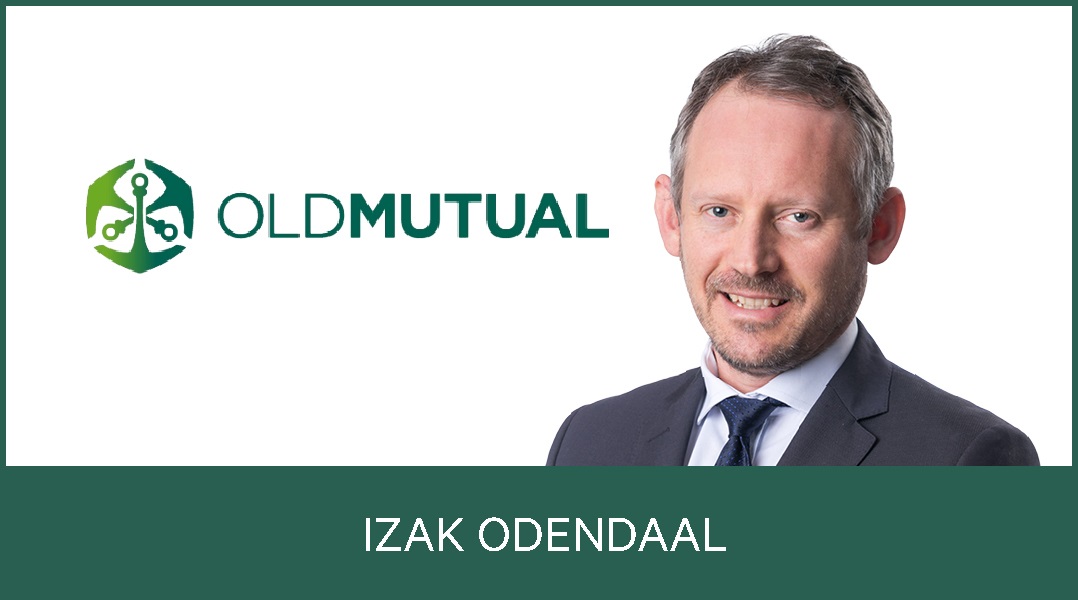
Izak Odendaal, Investment Strategist at Old Mutual Wealth
It’s been a busy few weeks for Spain. It was the best spot to see last week’s total solar eclipse. In early July, the annual running of the bulls took place in Pamplona, drawing the usual crowds. A few days later, Spanish captain Rodrigo “Rodri” Hernandez Cascante lifted the FIFA World Cup trophy in New York. In between, there have been heatwaves and devastating wildfires around the capital, Madrid. Ceuta, a Spanish enclave in North Africa, was also briefly engulfed by a surge of migrants from neighbouring Morocco.
While Spain has a large and sophisticated economy, it is not big enough to move global markets and usually flies below the radar. However, since it is in the spotlight at the moment, we may as well highlight four learnings for South African investors. The first is that countries can recover from devastating economic crises. Secondly, the perils of climate change and the opportunities presented by the green translon. Thirdly, large-scale immigration similarly comes with pros and cons. Finally, equity markets don’t necessarily need a compelling story to rally when listed companies are undervalued but continue quietly growing their profits.
The pain in Spain
It is easy to forget that Spain was in deep trouble not that long ago. Alongside other Mediterranean economies Portugal, Italy and Greece, Spain suffered rolling economic and financial crises between 2008 and 2013. Together, they were uncharitably called the PIGS.
Chart 1: 10-year government bond yields, %
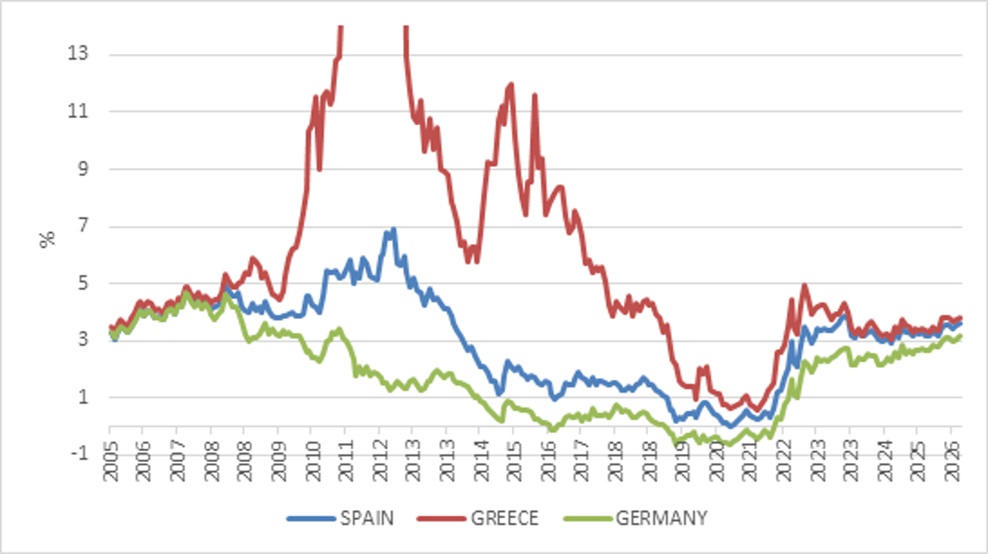
Source: LSEG Datastream. Note that Greece’s yield peaked at 34% in 2012.
The roots lay in a pre-2008 boom, fuelled by cheap credit and falling interest rates. After joining the euro in 1999, Spain’s borrowing costs declined and converged with Germany’s. An epic real estate bubble formed, associated with a massive rise in private debt (chart 2). When the bubble burst in 2008, as it did across the globe, the fall-out was severe. Construction and related jobs disappeared and unemployment soared to 25%. The youth unemployment rate hit 50%.
Spanish banks were left with high levels of bad loans on their books, threatening their survival. For the government, surging tax income during the boom kept a lid on its deficit, but this dried up during the bust, forcing it to increase borrowing. However, the revelation of an unexpectedly large hole in Greek public finances in 2010 pushed up borrowing costs for all the PIGS. Spain’s credit rating was cut by S&P Global from AAA in in 2010 to BBB- in 2012. This made it more difficult for the Spanish government to fund itself, while the situation was even worse for banks whose holdings of government bonds were falling in value. Across the PIGS group, analysts warned of a “doom loop” between shaky government finances and weak bank balance sheets. A disintegration of the single currency project was feared. Economic hardship resulted in an unhappy populace and political upheaval, including the emergence of new political parties.
Chart 2: Spain debt-to-GDP ratios
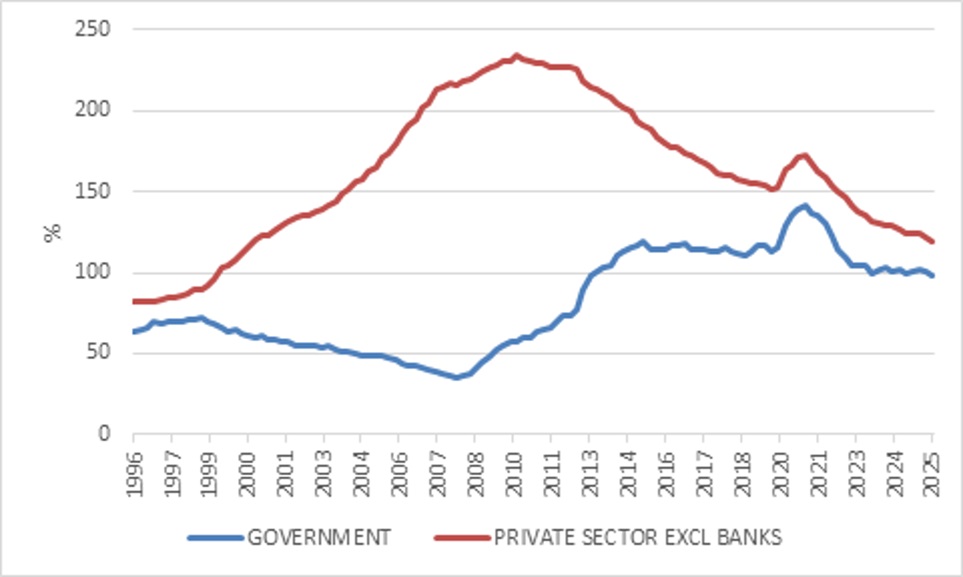
Source: Bank for International Settlements
The turnaround from economic and financial catastrophe was slow at first but gained momentum over time. Spain requested €100 billion from the European Stability Mechanism in 2012 to recapitalise its banks, ultimately using €41 billion. Once the banking sector has been cleaned up and consolidated, it could support the economy instead of being a drag. Labour laws were relaxed to encourage hiring, while firms increasingly turned to exports to make up for the weak domestic market. Private debt levels gradually declined. Tourism picked up, eventually turning into a boom industry. Spain overtook the US to become the world’s second most visited country by international arrivals in 2017, behind France.
While Covid hit the tourism sector hard, Spain’s post-pandemic recovery has been faster than other major Eurozone economies, and unemployment declined to 9.8% by the second quarter of this year. Notably, Spain’s healthy 2% to 3% annual growth over the past few years has come while Germany has stagnated, a complete reversal of the early 2010s when Germany was not only seen as Europe’s fiscally responsible haven, but also its growth engine. Today, Germany’s famed industrial sector faces the daunting challenge of competing with Chinese producers while no longer having access to cheap Russian gas.
Chart 3: Real economic growth in Europe
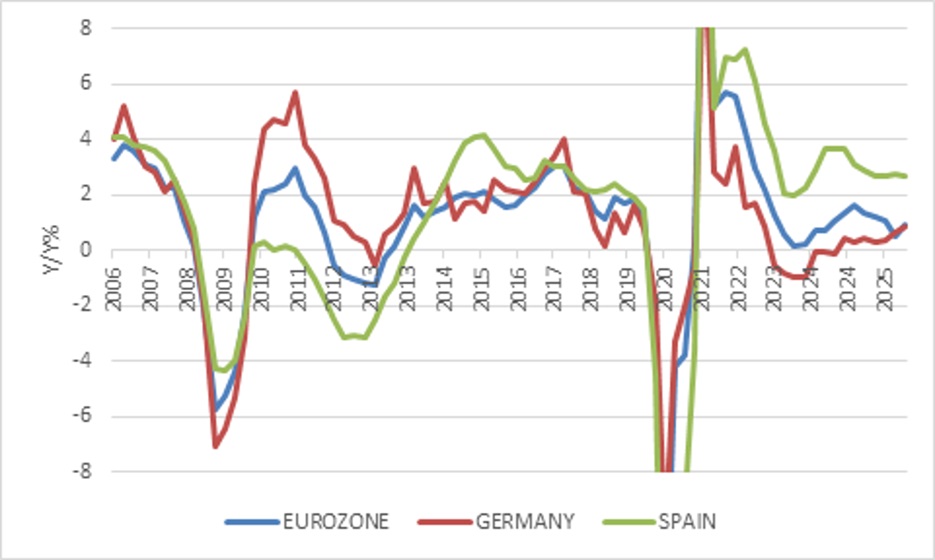
Source: LSEG Datastream. Axis truncated around the pandemic
With robust economic growth, government finances have stabilised. The public debt-to-GDP ratio, which almost tripled between 2008 and 2020 has declined somewhat, and Spain now has an A+ credit rating. Government bond yields have again mostly converged with Germany’s. Greece, it should be noted, has made an even more remarkable recovery from an economic depression that saw its bonds downgraded deep into junk territory (CCC), and its equities to emerging market status. The combination of difficult reforms and the passage of time saw its economy return to growth and its bonds upgraded to investment grade status (in 2023), while index provider MSCI will return its equities to developed market benchmarks next year.
While both Spain and Greece benefited from European Union funding, the lesson for South Africans is that it is possible for a country to recover from an economic crisis with the right policies. It should be noted that the worst crises often follow extraordinary booms, clearly something we haven’t experienced domestically in a long time.
Climate crisis and opportunity
Spain’s recovery was supported by its energy choices. Waves of investment in renewable energy over the past two decades means more than half of its electricity comes from wind and solar. Compared to many other gas-reliant European economies, Spain was better placed to withstand spikes in fossil fuel prices following the wars in Ukraine and Iran. While not every European country has Spain’s abundant sunshine, it still points to a potential solution to one of Europe’s three major geostrategic weak points: being a net energy importer.
Today, Spain is not only an exporter of electricity to its neighbours, but also of expertise and equipment, including to South Africa, where Spanish firms are involved in building solar and wind farms.
Like Spain, South Africa has tremendous potential for renewable energy. Expanding electricity production and transmission infrastructure is one of the country’s biggest economic opportunities, not only to decarbonise, but also to grow the economy.
Decarbonisation remains urgent, though. The recent wildfires and heatwaves in Spain show how it is exposed to extreme weather caused by climate change. Indeed, Europe is warming faster than other continents, according to Copernicus, an EU scientific body. A severe drought has economic consequences, including for transportation and electricity generation with several nuclear power plants having to shut down. The Rhine is currently at the lowest level at the Kaub measuring station in Germany since record-keeping started 150 years ago. It is too shallow for most ships, meaning that Kaub joins Hormuz as a major chokepoint for shipping, severely disrupting the north-south flow of goods in Europe. East-west traffic is similarly under strain from record low water levels in the Danube.
Migration nations
In poorer parts of the world, climate change will put pressure on migration as droughts and floods force people to look for work and food elsewhere. At worst, some parts of the world could become so hot and humid that they are practically uninhabitable.
The flipside of this migration push in Africa, Asia and Latin America is the pull from rich, ageing countries with shrinking labour pools. Spain’s median age is 46.3, while its fertility rate is 1.2 children per woman, well below replacement level. This is slightly worse that the numbers for the EU, namely 44.9 and 1.3 respectively. Eurostat projects that the EU population will peak in 2029 at 453 million. Its poor demographic outlook is Europe’s second major geostrategic weakness.
Countries in Europe (but also elsewhere) therefore face a tough choice. They can shrink in size, with rising fiscal burdens as the number of retirees increase relative to the number of workers, or they can accept large numbers of migrants, potentially changing the character of the country. The latter becomes especially difficult in small, ethnically or religiously homogenous countries. Opposition to migration therefore remains vehement in many quarters across Europe (and globally), providing fodder for populist politicians who are always in search of scapegoats.
Spain has generally been more welcoming of migrants, especially under the administration of Prime Minister Pedro Sanchez, and 19% of its population was born outside the country, compared to the 14% average for the EU and 15.8% for the US. Since many migrants are from Catholic and Spanish-speaking Latin America, integration has seemingly been easier than in other European countries. Nonetheless, it remains a political hot potato.
The recent “invasion” of Ceuta also exposed political fractures across Europe’s political class, with several leaders, led by Italian Prime Minister Giorgia Meloni and Danish Prime Minister Mette Frederiksen criticising Spain’s approach. They went as far as suggesting that Spain could be kicked out of the Schengen free-movement area. This highlights Europe’s third geostrategic Achilles heel (if it is possible to have three heels): despite its large collective population and wealth, it is fragmented. It needs much better military coordination to counter the Russian threat, and much deeper integration of its numerous relatively small national capital markets to come close to matching the scale and liquidity of US markets.
In the meantime, the cocktail of immigration, shrinking and ageing populations, and political backlash is not going away. South Africa’s recent anti-immigration marches, which included some unfortunate violent incidents, therefore needs to be seen in a global context. With a median age of 28, it does not face the same demographic decline. But that it will remain a magnet for migrants from poorer neighbours is not going to change.
A silent rally
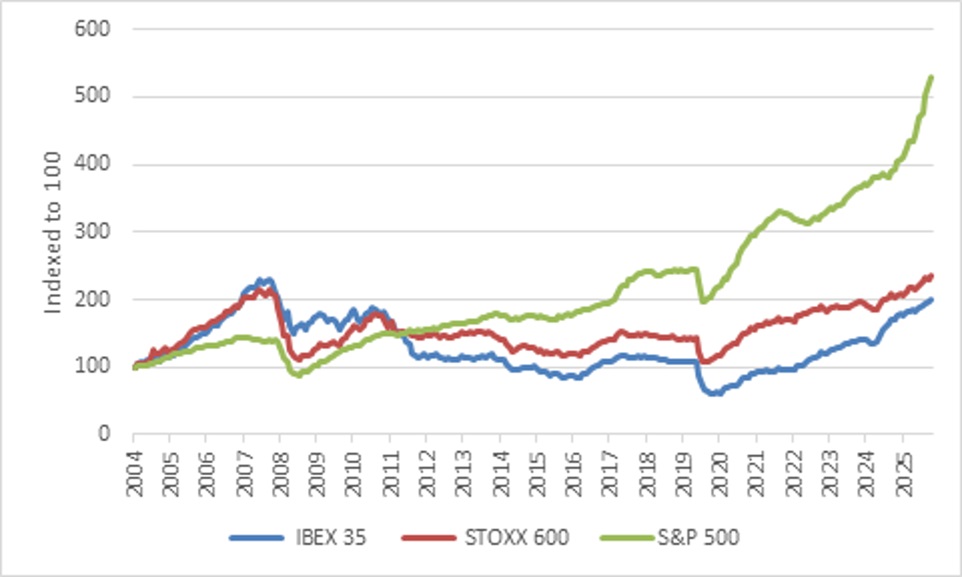
The fourth and final lesson is that you don’t necessarily need to have a big theme to drive the market higher. Over the past year, the Spanish equity market has comfortably outperformed the tech-heavy US S&P 500 despite a lack of high-profile companies or exposure to the artificial intelligence value chain, the big story of the day. The broader European Stoxx 600 index is also ahead in dollar terms, a silent rally that has largely gone unnoticed.
Chart 4: Equity benchmarks in US dollars
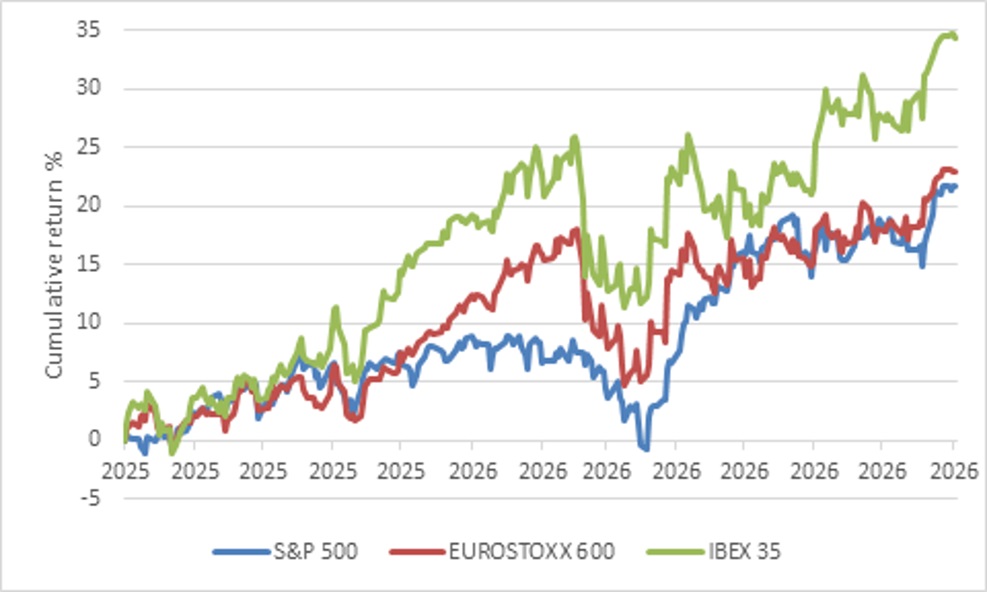
Source: LSEG Datastream
The reason is simple: over time, equities follow earnings. Earnings growth was weak in Spain and across Europe during the crisis years of the early 2010s, while US earnings growth has been much more consistent. However, over the past five years, from a low base, Spanish equities generated 19% earnings growth per year in euros.
Chart 5: Forward earnings per share in US dollars
Source: LSEG Datastream
Despite this, Spain’s IBEX Index trades at 14.2 times forward earnings, compared to 20 times for the S&P 500. The Stoxx 600 trades at 14.8 times. US equities deserve a higher rating given the better track-record of earnings delivery, but the valuation gap between markets on the two sides of the North Atlantic is twice as large as it has historically been. For South African investors concerned about valuation levels in global equity benchmarks, it is a reminder that there are markets trading at reasonable valuations.
The point is not to rush out and buy Spanish or European shares. Rather, it is to highlight that neither the lack of AI champions nor the other deep-seated problems make Europe a hopeless continent from an investment point of view. By implication, we should also not write off other markets, including South Africa’s, because of economic challenges or the lack of direct AI exposure. On the contrary, South African equities remain a useful hedge against the AI concentration risk in the US market.
ENDS